
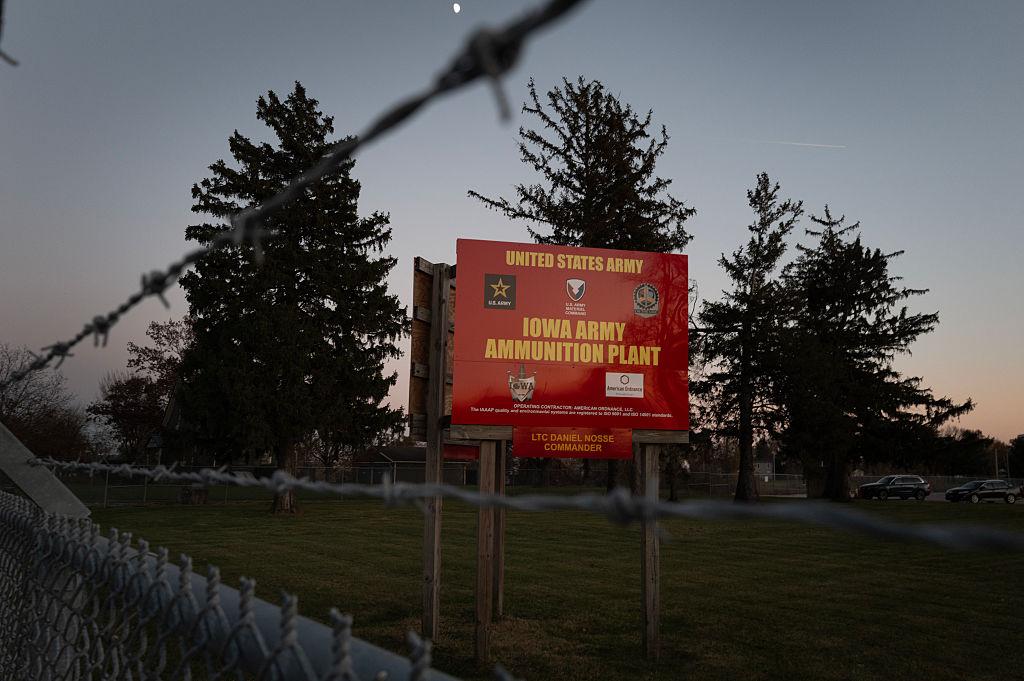
The U.S. Army is set to carry out a closely watched controlled detonation of 68 barrels of degraded lead azide at the Iowa Army Ammunition Plant this Wednesday, following a rapid volley of legal, political, and environmental maneuvers. The decision clears the way for what Army leaders have called a necessary intervention to avert the risk of an uncontrollable explosion, but it has triggered sustained outcry from environmental advocates and some regional officials.
The crisis began in March 2026, when workers discovered dozens of barrels of deteriorated lead azide—a highly sensitive explosive used in munitions—stored at the historic Iowa Army facility. Army officials argue the urgency: as the material degrades, it becomes even more unstable, making physical handling or chemical neutralization hazardous. “The safest course is detonation on site under controlled conditions,” Army spokespersons have stated, a point repeatedly echoed in court filings and emergency permit requests.
Plans for detonation have shifted repeatedly in the face of public alarm and interventions by local and state officials. Originally scheduled for November 20, the operation was postponed first to November 23, then to November 25, as weather and safety concerns were evaluated. President Donald Trump, responding to mounting regional unease, called for a pause on November 23 and suggested the incoming Iowa governor review the plan, but the matter ultimately rested with the courts.
Environmental groups including the Iowa Environmental Council and Sierra Club scored a temporary victory last week when the Eighth Circuit issued an emergency stay, halting Army preparations. But after arguments and further review, the court lifted the stay on Monday, November 23, allowing the Army to proceed after noting that the danger posed by inaction outweighed the speculative risks of the controlled explosion.
That calculation is precisely what many local residents and activists are challenging. Their lawsuits argue that the Army’s EPA-issued emergency permit inadequately considered the risk of lead-laden dust or particles contaminating air or surfaces nearby—a concern heightened by the proximity to neighborhoods and schools. Scientific studies underscore the acute risk that airborne lead can pose, especially for children and pregnant women, although Army officials have promised on-site monitoring and rapid mitigation steps.
Iowa Governor Kim Reynolds has activated the state disaster response office, while Illinois officials have moved to bolster regional monitoring—an unusual display of interstate coordination prompted by the threat of airborne toxic release. The Illinois Environmental Protection Agency has begun preparations to track air and water quality following the planned detonation.
Despite the recent court decision favoring the Army, the underlying legal challenge against the EPA’s permit remains active. Environmental groups vow to press their case even as the November 25 detonation approaches, and the debate over how the U.S. manages the legacy hazards of its military facilities has been reignited. The coming week may bring both the controlled explosion and new answers to how much environmental fallout, if any, the region will face from this intervention.