
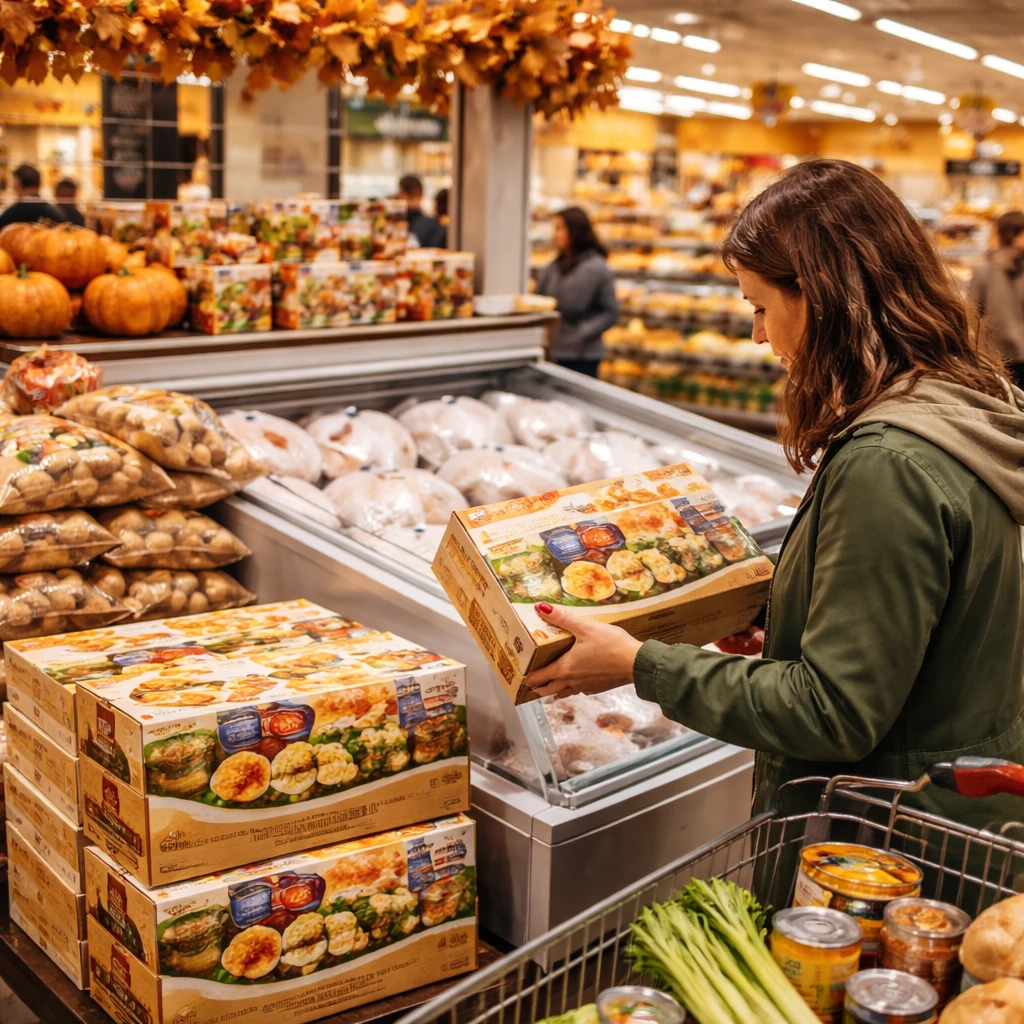
As the price of preparing a traditional Thanksgiving feast rises for American families, supermarket retailers across the United States are racing to offer steeply discounted meal deals, directly absorbing higher wholesale costs on holiday staples in hopes of attracting budget-conscious consumers testing by persistent inflation.
This holiday season, the average cost for a Thanksgiving dinner for ten has climbed to $58.63, a 6.3% increase from last year, according to the American Farm Bureau Federation. Prices are being driven up by sharp moves on key ingredients: wholesale turkey prices have jumped 12% to $2.00 per pound, and potatoes have soared 46% higher—deepening the pressure felt by households already squeezed by a 3.8% annual rise in overall consumer prices recorded in October. Time, TradeVae, AP.
Despite these triggers for higher retail prices, chains including Walmart, Aldi, and Amazon have announced holiday meal bundles for as low as $25 and rarely above $39—offered both in physical stores and via digital delivery channels. In some cases, these bundles are sold at or even below wholesale cost, positioning them as so-called ‘loss leaders,’ a classic retail maneuver to draw shoppers in with eye-catching deals and recoup profits through additional sales. QZ, IGD, IJR.
To maintain these bundle deals at last year’s prices—or lower, as in Aldi’s case—retailers are adjusting by modifying menu items, changing portion sizes, or negotiating with suppliers, even as margin pressures mount. Traditional names are keeping turkeys sizable despite their own costs ticking upward. Costco and comparable outlets face near-identical challenges and are shifting bundled offerings accordingly. Axios.
Industry analysts say this strategy is as much about perception as price, with grocers hoping to reinforce the sense that shopping with them delivers rare value amid inflation. Retailers expect the sharply priced bundles will drive higher foot traffic—in-store and online—where customers, lured by the promise of a lower holiday bill, will stock up on a wider range of groceries and holiday goods.
The retailers’ bet comes at a time when consumer anxiety over food budgets and broader financial stress is peaking: a recent survey found 82% of U.S. households believe food costs are rising faster than their incomes, forcing difficult choices like reducing meals or cutting spending elsewhere. Regional data suggests the cost squeeze is sharpest in the Northeast and less severe in the South, but the hunt for value is nationwide. El País, Time.
For now, the underlying inflationary pressures—especially on proteins and produce—show no signs of abating, and supermarket profit margins may remain tight through the peak holiday period. Yet, as Thanksgiving approaches, retailers remain locked in a contest to offer the most attractive bundles, underscoring the high stakes and enduring cultural significance of the American holiday table—even when economic pressures rise.