
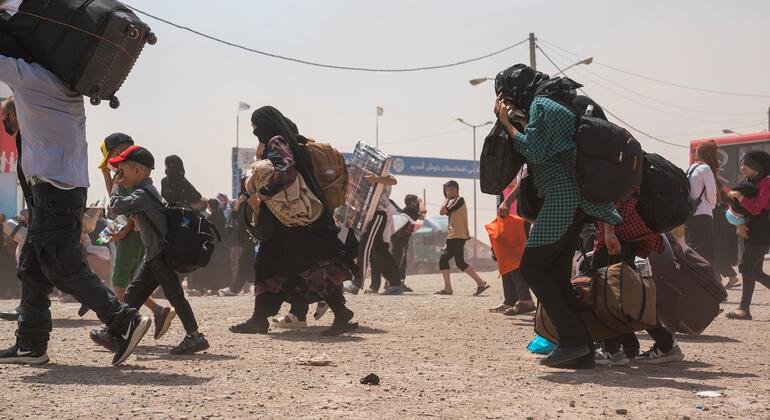
For Afghan women forced to return from Iran, the promise of a better life quickly evaporates in the grinding uncertainty of present-day Afghanistan. Zahra, a trained midwife, once supported herself by caring for the elderly in Iran. Now, back in Herat, she is unemployed, separated from her son who lives with her ex-husband, and struggling to find any meaningful opportunity for work. Her story mirrors that of countless other Afghan women whose hopes for stability and independence have been caught between deportation and the harsh reality of home.
In the last three years, more than 6.5 million Afghans have returned from Iran and Pakistan, according to the UN refugee agency, UNHCR. Nearly 3 million returned in 2025 alone, adding over ten percent to Afghanistan’s population and overwhelming already limited resources. Women and children comprise the majority of these returnees, accounting for nearly 82% of those assisted by UNHCR, with urgent needs for shelter, food, and protection becoming ever more acute.
The circumstances that drove women to leave Afghanistan in the first place continue to define their struggle after returning. Zahra left her home initially because of the Taliban’s restrictions, economic unrest, and the basic fact of her education—a status that, under Afghanistan’s current authorities, limits her prospects. Homa, another returnee, had cleaned apartments and collected recyclable plastic in Iran, earning enough to support her family. Back in Afghanistan, she is her family’s only breadwinner, living in a cramped single room, sometimes begging in the streets as precarious day work fails to cover even basic necessities.
While both Zahra and Homa have received some assistance from UNHCR and its partners—including cash grants, mental health support, and vocational training—their stories emphasize that such aid, though crucial, offers only a temporary reprieve. With a sewing machine purchased from cash assistance, Homa has managed to earn some income working from home, a change that partly spares her from heavy manual labor following surgery. Yet, medical costs, strained family relations, and the constant threat of food shortages remain persistent hurdles.
Despite the lifeline provided by humanitarian agencies, the underlying uncertainty for returnee women is only intensifying. UNHCR is running more than 150 vocational projects across the country, yet the scale of need far exceeds available resources. Legal barriers and entrenched discrimination, such as the Afghan courts’ routine preference for men in custody cases, compound the daily struggles for women like Zahra, who desires both work and the right to raise her son.
Afghanistan’s future, as seen through Zahra’s and Homa’s eyes, is clouded by insecurity. Both women asked not for long-term plans, but for simple necessities: a safe place to live, enough food to survive the coming winter, and a measure of stability. As ongoing waves of forced return continue, the question remains whether the international aid system—and Afghanistan itself—can meet the mounting needs of millions trying to rebuild lives in a homeland transformed by conflict and deprivation.