
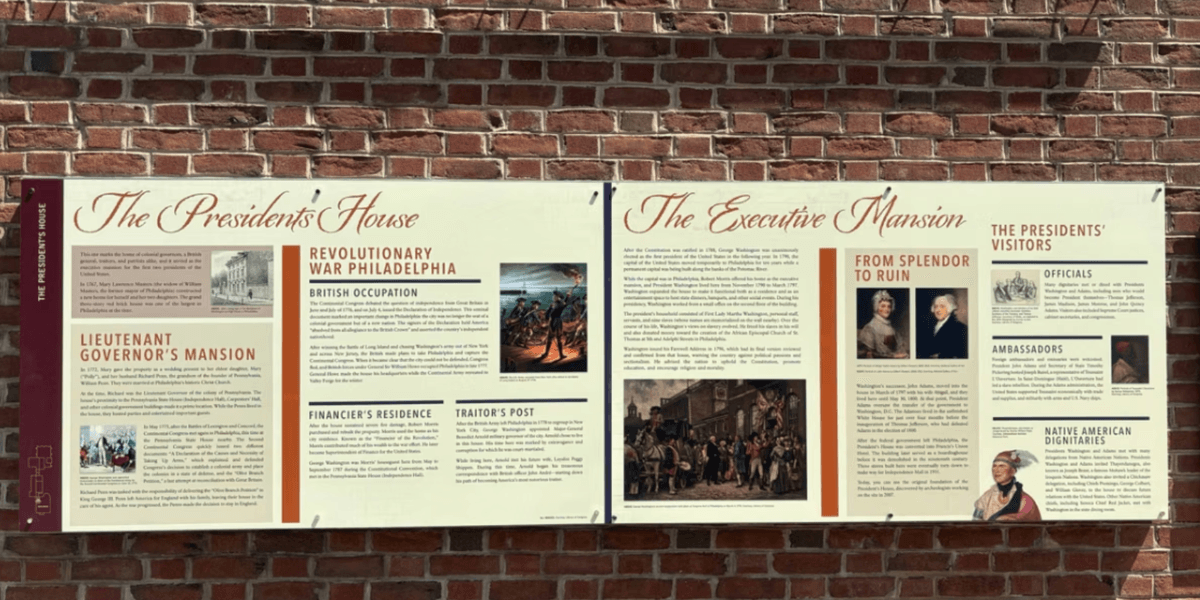
A new chapter has begun in the fight over historical memory at Philadelphia’s President’s House. On November 23, 2026, the Avenging the Ancestors Coalition (ATAC) filed a federal lawsuit against the U.S. Department of the Interior and the National Park Service (NPS), seeking the immediate restoration of the original exhibit that commemorated those enslaved by George Washington on the site once home to the first U.S. executive mansion.
The lawsuit follows months of conflict over how presidential history—and its deep entanglement with American slavery—is told. The President’s House, an open-air memorial at Sixth and Market Streets, became a flashpoint in January 2026 when the NPS removed 30 interpretive panels. Installed in 2010, those panels chronicled the lives of nine enslaved individuals and highlighted the nation’s founding paradox. But, after an executive order issued by then-President Donald Trump called for the removal of federally funded displays labeled “divisive” or “race-centered,” new panels replaced the originals, drawing immediate backlash from descendants, city officials, and historians.
The City of Philadelphia challenged the removals in federal court, winning a preliminary injunction in February 2026. U.S. District Judge Cynthia Rufe ordered the federal government to restore the original exhibits, likening the removal to revisionist censorship reminiscent of George Orwell’s dystopia. Still, the Third Circuit Court of Appeals stayed that ruling just days later and ultimately denied the city’s request for a rehearing in September, a setback for advocates seeking a return to the previous interpretive framework.
Now, with the city’s legal avenue paused, ATAC—a coalition that has advocated for decades for public recognition of slavery at the nation’s landmarks—has launched its own federal lawsuit. The group argues that the new NPS panels fail to honor the integrity, suffering, and personal histories of Austin, Christopher, Giles, Hercules, Joe, Moll, Ona Judge, Paris, and Richmond, all enslaved at the President’s House during Washington’s tenure. While no ruling is imminent, the case adds momentum to the national debate over how and whether the government should acknowledge the legacy of slavery at sites of founding importance.
Views remain sharply split. Some community members support the new panels, citing what they call a more balanced treatment of the site’s broader history. Others, including ATAC and many in academic circles, contend that minimizing the stories of those enslaved amounts to historical erasure. As of this week, the original slavery-focused exhibit remains absent, and the legal process is expected to play out over months or longer. The question of how history should be told at the President’s House now heads once again to a federal judge’s bench.