
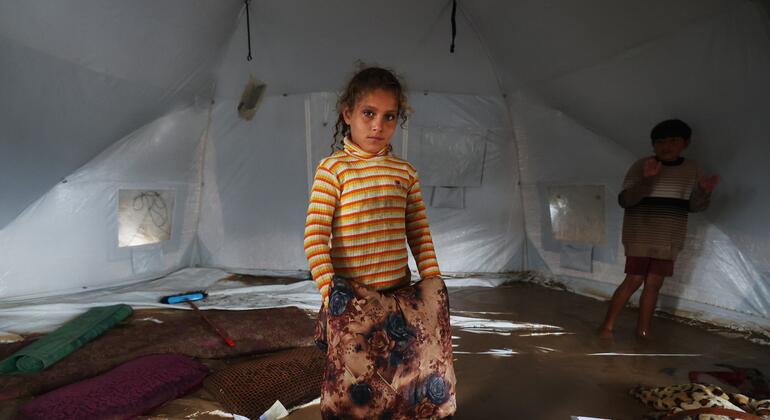
Even the garbage burned for heating is too wet to use: as winter rainstorms lash Gaza, the situation for over 1.7 million displaced residents has turned dire, according to United Nations officials briefing from Geneva. Makeshift camps, already overflowing from months of conflict, now face flooding, destroyed food supplies, and mounting fatalities as families struggle to survive exposure and deprivation.
Floodwaters have swept through tent communities, carrying sewage and bringing deadly hazards. At least five people died last week in a sand bank collapse; separate camp fires—caused by desperate attempts to cook inside inadequate tents—claimed the lives of two children, according to Karl Baker, regional crisis coordinator for the UN’s International Organization for Migration (IOM). “After just one day of rain, tens of thousands of shelters were damaged or destroyed,” Baker reported, underscoring the accelerating vulnerability.
Access to basic necessities continues to shrink. The World Food Programme’s country director for Palestine, Shaun Hughes, explained that families now alternate days for their sole hot meal as aid stocks dwindle: once a daily routine, WFP rations must now stretch to every two days. Yet, even these precarious provisions rely on fragile humanitarian access. Hughes described the harsh reality: Israeli military control over nearly 70 percent of Gaza, combined with bans on fishing and catastrophic unemployment, leaves “almost no alternate means of survival.”
Camp management agencies urgently call for action. Engineers have spent months digging drainage, reinforcing walkways, and repurposing materials like flour bags for sandbags, but winter’s advance has quickly outpaced their modest resources. IOM estimates $9 million is needed in the coming months for flood prevention, emergency repairs, and even basics such as shovels and nails. Securing these supplies remains a bureaucratic challenge: Israel’s security clearance process means even shipments deemed essential—like emergency tents—are routinely delayed or denied based on parameters as narrow as the diameter of a tent pole.
More than 100,000 robust tents reportedly await delivery from Egypt but remain stalled at crossing points amid Israel’s stringent criteria. Humanitarian teams say every delivery counts, yet with aid cuts and restrictions compounding winter’s dangers, their effort risks being overwhelmed. No significant improvements in Gaza’s food security or shelter infrastructure are anticipated without immediate and predictable delivery of humanitarian supplies—including more durable, weatherproof shelters.
As Karl Baker emphasized, “Anything that can come in at any time, we just highly appreciate it and from any source; but of course, it needs to be durable and that’s what we’re looking for in order just to get through this winter.” The key unresolved question is whether Israeli and international authorities will enable enough timely aid to prevent further disaster as Gaza’s rains and restrictions continue to collide.