
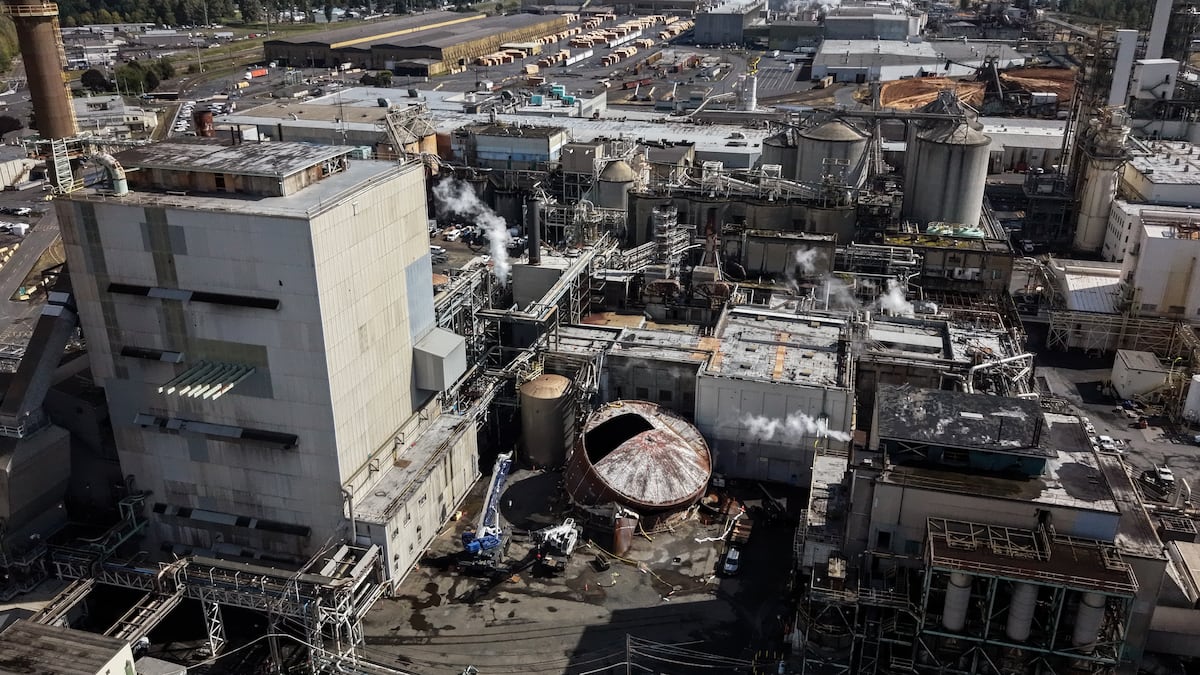
The rupture of a massive chemical tank at Nippon Dynawave Packaging’s Longview pulp mill on May 26 has led to state and federal findings of egregious safety violations, after the disaster killed 11 workers, injured 12 more, and spilled over 900,000 gallons of highly corrosive ‘white liquor’ into the environment. Investigations have found that the company had been warned about the tank’s dangerous condition but did not act, prompting state regulators to impose a $9 million fine—the largest ever for a workplace safety violation in Washington.
The chemical known as white liquor, essential in the paper manufacturing process, poured from the ruptured tank into storm drains, the Columbia River, and a nearby ditch. The release decimated local fish populations and raised broad alarm about the impact on both workers and the surrounding ecosystem.
The Washington State Department of Labor and Industries (L&I) investigated and found evidence of a systemic breakdown in safety culture at Nippon Dynawave. According to L&I, multiple ultrasonic tests as early as 2025 showed the tank was unsafe to operate, with a private inspector explicitly declaring it ‘not fit for continued service’ due to deterioration. Nevertheless, the unit was neither repaired nor decommissioned. L&I ultimately determined there were 75 occupational safety violations at the mill—64 of them egregious, willful, and serious. These findings support the historic penalty announced on November 20.
Alongside the worker safety failures, the Washington Department of Ecology found 34 separate environmental violations tied to contamination of local water and air, levying an additional $961,000 penalty and emergency cleanup costs. The U.S. Chemical Safety Board corroborated reports about the advanced corrosion and warning signals that went unheeded by the company.
Nippon Dynawave has acknowledged the L&I findings but is contesting characterizations of its actions as “egregious and willful,” and plans to appeal the citations. The company aims to restart operations in December under strict state monitoring.
In the aftermath, at least one wrongful death lawsuit has been filed, alleging the company failed in its duty to train, supervise, and protect its workforce and did not maintain necessary safety policies or emergency plans. The Washington Attorney General’s Office has also launched a criminal investigation, underscoring the gravity of the regulatory and legal fallout.
This incident follows documented patterns: records show multiple safety complaints at the mill dating back to 2018 and prior environmental violation notices from as early as 2016. Technical investigations are ongoing into the root cause of the rupture, with conflicting reports on the total quantity of white liquor released, ranging as high as 900,000 gallons. The state continues to supervise and assess efforts to rebuild, while families seek justice and regulators weigh possible criminal charges.