
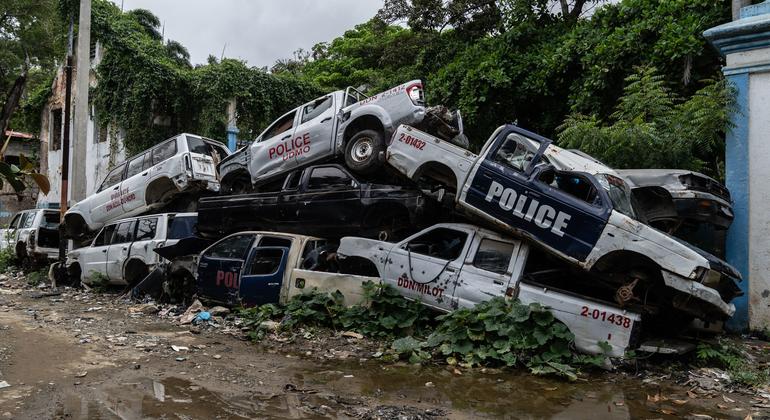
Civilian life in Haiti is faltering under a dual onslaught: brutal gang rule and aggressive security operations, according to a stark United Nations human rights report released Tuesday. Despite hopes that intensified crackdowns would restore order, the UN says “atrocious abuses” persist — with civilians increasingly caught in the crossfire, displaced, and facing alarming food shortages.
The UN Human Rights Office (OHCHR) documented 4,595 killings and 2,050 injuries due to armed violence from January through October 2026, a toll that includes hundreds of children and women. “Although some numbers have gone down a little,” noted spokesperson Marta Hurtado, “killings, rapes and child recruitment by gangs remain awfully high,” with gang-related sexual violence affecting girls as young as seven and elderly women up to eighty. From July to September alone, at least 340 women and girls suffered sexual assault — bringing the year’s total to 1,497 reported cases.
Violent groups retain control over vast swathes of Port-au-Prince and beyond, the report confirms, while law enforcement’s expanding anti-gang campaigns have had ambiguous results. The long-delayed UN-backed Gang Suppression Force has not yet fully deployed, leaving national forces and private security contractors to fill the void — often with deadly consequences. At least 514 deaths and 235 injuries occurred during security operations in the last quarter, with an additional 44 people reportedly killed in extrajudicial police actions outside official anti-gang raids.
The UN warns that police and military operations must strictly adhere to international law, emphasizing that lethal force is permissible only as a last resort. Yet, the report highlights retaliatory gang killings targeting residents believed to aid authorities, forced child recruitment, and attempts to manipulate upcoming elections — including documented killings of whistleblowers who exposed a gang-backed candidate list in Cité Soleil.
Against this violent backdrop, Haiti’s food crisis has mounted. More than 5.94 million people — more than half the population analyzed — now face acute food insecurity, according to the latest Integrated Food Security Phase Classification. Disruptions to farming, markets, and aid convoys are traced primarily to gang activity. At least 1.49 million people have been forced from their homes, while basic services shut down across affected neighborhoods. Inflation hit 17% year-on-year in August, and drought tied to El Niño further strained agricultural output.
International actors, led by UN High Commissioner for Human Rights Volker Türk, urge the rapid deployment of the sanctioned Gang Suppression Force and tighter embargo enforcement against illicit arms shipments. While OHCHR has trained over 1,300 Haitian police this year in human rights norms, UN officials insist real improvement requires oversight, investigation of abuses, and urgent protection and assistance for survivors — especially those suffering sexual violence.
The indisputable fact: Haiti’s intertwined security and humanitarian emergencies continue to deepen, with international intervention slow to materialize and civilians enduring the worst consequences. Whether these warnings will prompt meaningful change in policy and conditions on the ground remains the unanswered question the nation faces as the year draws to a close.