
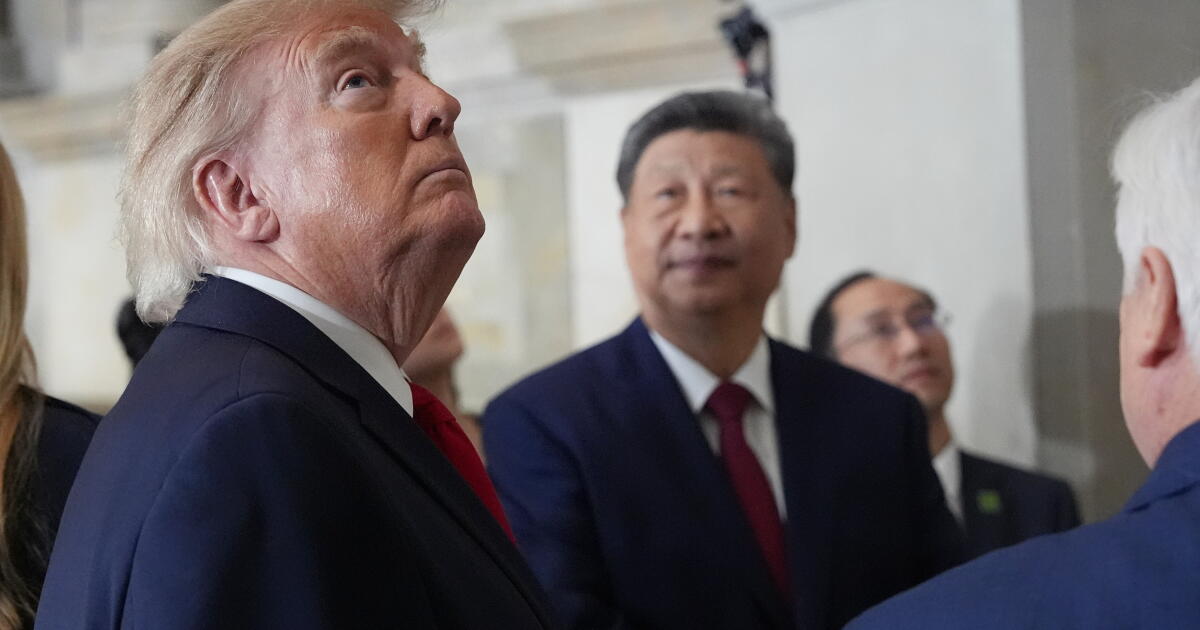
Persistent anxieties are mounting among U.S. allies across Asia as President Donald Trump embarks on an Asia-Pacific trip under the shadow of political challenges at home, fueling speculation that Washington may reconsider its approach to Beijing. Diplomatic contacts and region-watchers report behind-the-scenes unease about whether the United States might, in a bid for international wins, lean toward accommodation with China—potentially at allies’ expense.
This unease intensified in the run-up to President Trump’s visit to the ASEAN Summit in Manila, preceded by a high-profile, weather-disrupted flight route and compounded by headlines from Washington around leadership turmoil and policy unpredictability. According to Asian and European diplomatic sources, as cited in published reports, several capitals have privately discussed scenarios in which U.S. policy could pivot—deliberately or by drift—toward greater alignment with Beijing’s interests, particularly as President Trump prepares for a trilateral summit with China’s Xi Jinping and Russia’s Vladimir Putin later this week in Shenzhen.
Some regional officials point to lingering disputes over issues such as Taiwan arms sales and China’s assertiveness in the South China Sea, noting that allies rely on a steady U.S. security posture. But these same officials now express apprehension that ongoing concerns about the sustainability of U.S.-led coalitions—and President Trump’s search for diplomatic breakthroughs—could drive Washington to seek rapprochement or substantial concessions with Beijing.
While American officials maintain that there are no imminent plans for dramatic changes in Indo-Pacific strategy, the perception of volatility itself is affecting alliance dynamics. As cited in the Los Angeles Times, local envoys worry that any abrupt U.S. moves to ease tensions with Beijing, whether over economic or security issues, could signal a fundamental realignment and embolden China’s regional agenda.
These frictions come as both Washington and Beijing continue to manage a fragile détente following a September summit that yielded few breakthroughs on core disputes but reiterated the goal of a “constructive relationship of strategic stability.” With the upcoming Trump-Xi-Putin meeting in China expected to address nuclear disarmament and other big-power stakes, analysts and diplomats say regional allies are scrutinizing every overture for signs of either deepened engagement or sudden retrenchment.
For now, the uncertainty remains—underscoring how complex, and consequential, America’s next moves in Asia may prove for allies worried about being left on the margins of dealmaking between superpowers.