
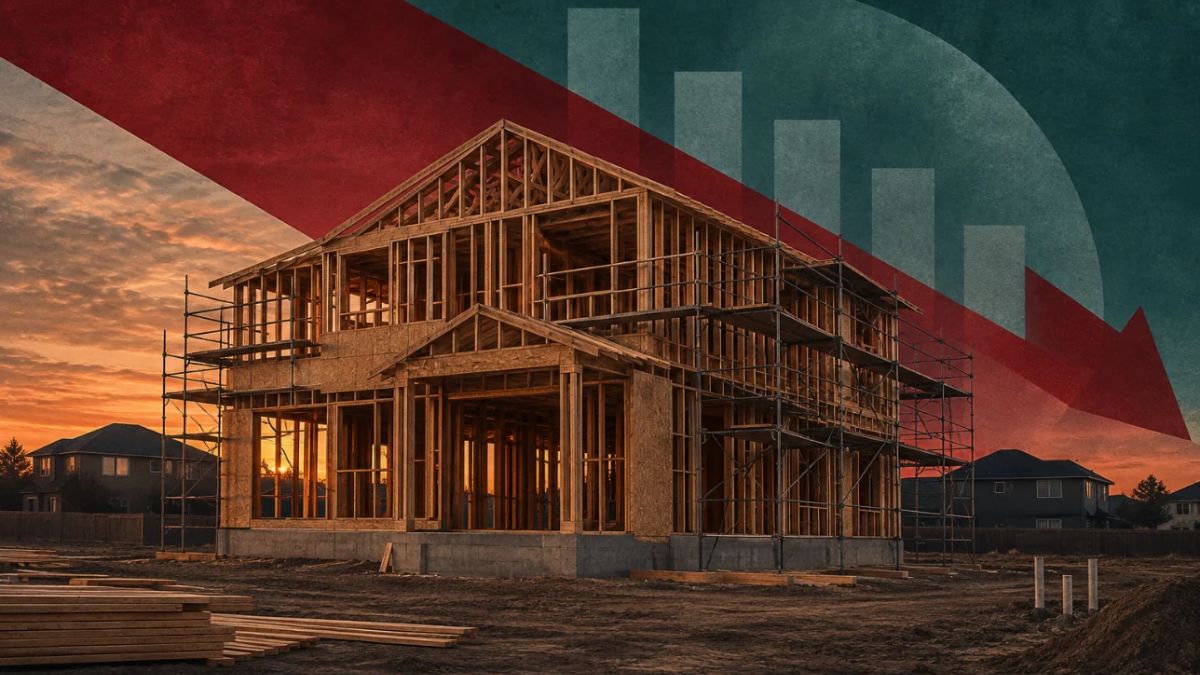
Confidence among American homebuilders hit its lowest point in over a decade this November, slipping to a score of 25 on the National Association of Home Builders (NAHB)/Wells Fargo Housing Market Index—its weakest reading since April 2012. The sharp downturn, reported by the NAHB, highlights deepening challenges in the housing sector as builders grapple with sluggish demand, driven by elevated mortgage rates and soaring construction costs. [housingwire.com]
As interest in new homes wanes, developers have responded by cutting prices at historic rates. Forty-six percent of U.S. builders reported slashing home prices in November, surpassing any period since the early months of the COVID-19 pandemic. These price reductions, intended to revive buyer interest, are also a reflection of reduced affordability and tighter financial conditions for prospective buyers. Still, their effectiveness in drawing buyers back to the market remains unclear. [investing.com]
The multi-pronged pressure comes at a time when the cost to borrow remains stubbornly high and construction expenses, fueled by labor shortages and inflation, continue to rise. This combination has led to a bottleneck in both sales and new projects, with some regions—such as Colorado—notably hard-hit. Data from October show a 19% year-over-year decline in home sales across the state, including a 21% plunge within the Denver metropolitan area, underscoring the uneven impact across markets and the particular stress in local economies that depend heavily on real estate activity. [axios.com]
The repercussions extend beyond builders and buyers. A broad slowdown in new home construction could hamper overall economic growth, as housing has historically played a pivotal role in driving both employment and investment. Industry leaders have called for government intervention, such as policies to alleviate workforce shortages or rein in building costs. But with uncertainties swirling around the timing and impact of such policies, stakeholders across the sector are bracing for continued volatility. [housingwire.com]
Despite the prevailing gloom, some analysts see potential for recovery further down the line, if economic conditions—such as borrowing rates and inflation—improve. Housing markets have recovered from downturns before, though the duration and scale of this recovery will depend heavily on future developments in both fiscal policy and consumer confidence. For now, homebuilders, buyers, and policymakers alike are watching indicators closely, searching for signals of stability in one of the U.S. economy’s most critical engines.