
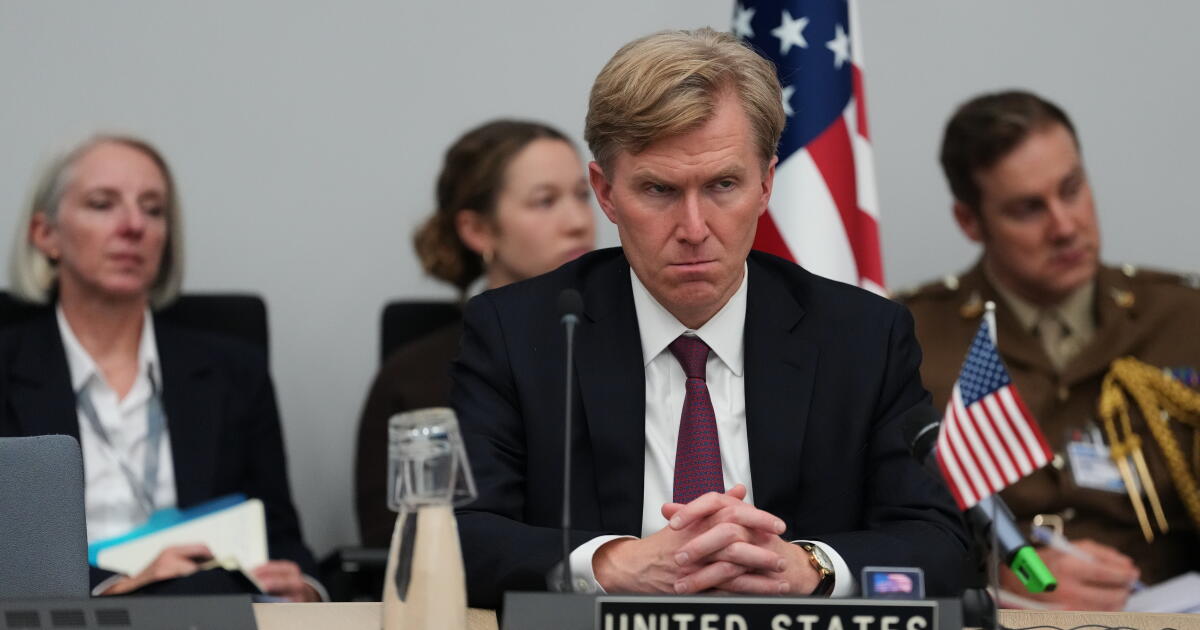
The United States warned Ukraine’s Western backers on November 17 that continued military deep strikes inside Russia had proven ineffective in ending the war, urging instead a concentrated shift toward supplying front-line combat and mid-range strike resources. The call, delivered by Undersecretary of Defense Elbridge Colby at a NATO summit in Brussels, marks a pivotal moment in the divided Western strategy toward Ukraine as the war drags into its fourth year.
Colby asserted that deep long-distance attacks in Russian territory “have not been effective in driving an end to the war, nor do they contribute to blunting Russia’s advances on the front line,” according to statements reported by multiple international outlets. The U.S. message comes amid ongoing Ukrainian operations targeting high-value Russian economic and military logistics sites—including repeated attacks on Wildberries, the Russian retail giant accused by Ukraine of supplying military components, a charge the company denies.
Colby’s recommendation was unequivocal: Western support should prioritize enabling Ukraine’s direct defense and counteroffensives closer to the front lines, rather than focusing resources on operations deep inside Russian territory. “Supporting front-line and mid-range capabilities is what Ukraine needs now to stabilize its defenses and create conditions for a sustainable end to the conflict,” Colby said, drawing a clear line between the U.S. and nations favoring more aggressive military tactics.
Reaction from other key NATO partners was swift and divided. German Defense Minister Boris Pistorius criticized the U.S. position as shortsighted, arguing that failing to address the totality of Russian military activity—including its own attacks on Ukrainian civilian infrastructure—ignores the broader challenges Ukraine faces. Meanwhile, Britain’s Defense Secretary Wes Streeting defended deep strikes, citing their role in disrupting Russian operations, buying time, and sparing Ukrainian lives.
This open rift exposes the continuing debate over how best to support Ukraine’s battlefield efforts and diplomatic leverage. The disagreement is particularly acute as winter approaches, amid fears that restrictions on Ukraine’s use of SpaceX’s Starshield satellite system could leave vital energy infrastructure exposed to Russian assault. While President Volodymyr Zelenskyy has voiced strong concerns over such restrictions, Colby declined to address the issue directly in Brussels.
Analysts note that Ukraine’s development of advanced drone technology has allowed for unprecedented strikes against deep Russian targets, including fuel depots and military supply lines, since the full-scale invasion in 2022. Still, the U.S. has frequently warned of the risk of escalation and potential fallout for global energy supplies.
As NATO allies continued their closed-door discussions, it remained unclear whether the U.S. call for a shift in strategy would win broad support. This evolving debate foreshadows ongoing tensions within the alliance, with no unified approach yet in sight for ending the conflict or deterring renewed Russian offensives.