
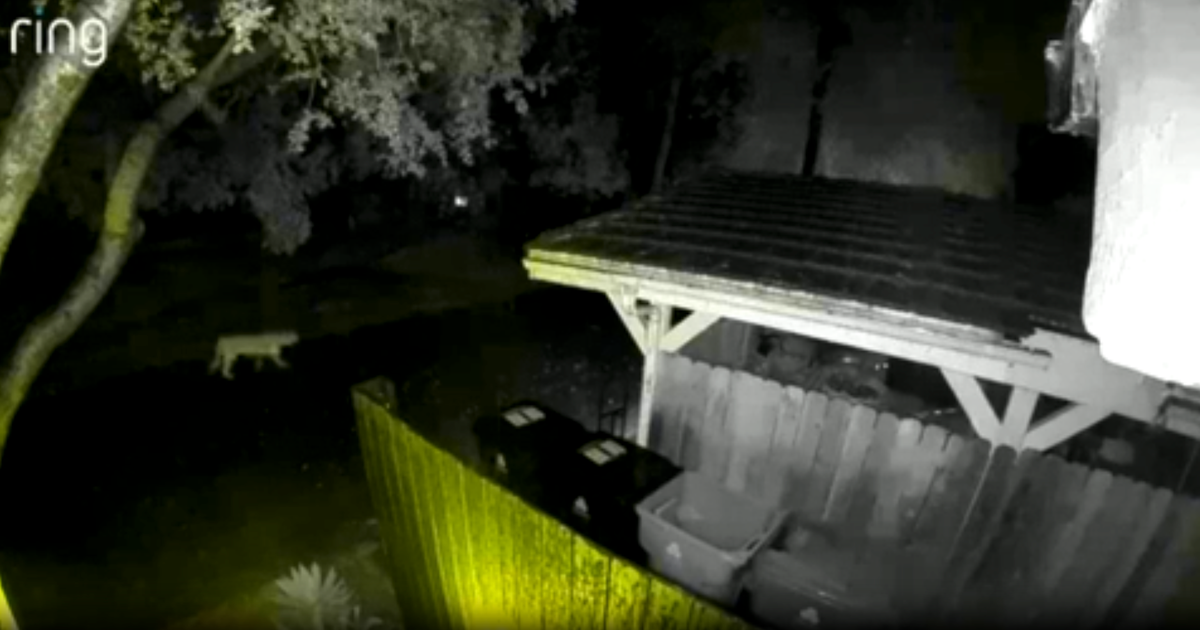
Residents of Woodland Hills awoke to a flurry of concern after two uncollared mountain lions were spotted in separate locations overnight from November 13 to 14, 2026, marking an unusual confluence of sightings in this urban stretch of Los Angeles. Home security footage captured the first big cat after 9:55 p.m. on Gaona Street, bordering the Woodland Hills Golf Course. Less than nine hours later, a second sighting was logged a mile west near Mulholland Drive and Mulholland Highway, according to consistent reports from CBS Los Angeles and statements from the Santa Monica Mountains Conservancy (SMMC).
Wildlife officials have not identified the lions, both of which lacked GPS collars—unlike many studied in the region. The SMMC’s executive director, Joseph T. Edmiston, pointed to the episode as fresh evidence of the mounting pressures faced by mountain lions hemmed in by urban sprawl: “This single night and early morning concentration of mountain lion movement shows both the value of Woodland Hills habitat areas and that these magnificent animals are pressed for space,” Edmiston said in a statement reported by CBS News.
The Urban-Wildlife Frontier Tightens
The back-to-back sightings unfolded against the backdrop of a growing conversation about habitat fragmentation and the increasing interface between predators and people in Southern California. Mountain lions have long been established residents of the Santa Monica Mountains and surrounding ecosystems, but the expansion of freeways and neighborhoods has made their travels more perilous and unpredictable, as documented by the National Park Service and local conservation groups.
Just weeks from now, on December 2, the Wallis Annenberg Wildlife Crossing—a massive bridge spanning the 101 Freeway in Agoura Hills—is set to open. Conservationists hope the crossing will restore safe passage for wildlife, including mountain lions, which often risk deadly vehicle encounters while searching for territory or mates. The crossing is the culmination of years of planning and fundraising, a direct response to data showing isolated populations shrinking on either side of the freeway.
Link to Conservation Plan
The timing of the sightings coincides with the implementation of the SMMC’s “Big Wild-Topanga State Park North Slope Habitat Conservation Plan,” adopted in May. The plan maps out vital wildlife corridors and is designed to preserve the urban-wildland edge now increasingly traveled by lions and other species. “Habitat connectivity is at the heart of our survival strategies for LA’s largest wild predators,” Edmiston said in remarks documented by CBS.
While rare, urban appearances of mountain lions are not unprecedented. In May 2024, a lion in Griffith Park drew recall to the famous P-22, reinforcing the region’s complex relationship with these solitary felines. No further encounters were reported in Woodland Hills as of November 15, and officials say there is no evidence of aggressive behavior toward residents or pets.
Ongoing Monitoring, Unanswered Questions
Wildlife agencies remain on alert in light of these movements. The lions’ identities and next steps are unknown—without collars, state biologists cannot track them. Officials urge the public to take routine safety precautions and avoid feeding wildlife, while conservationists reiterate that sustained investment in habitat connectivity is critical for both human and animal safety in a changing Southern California landscape.