
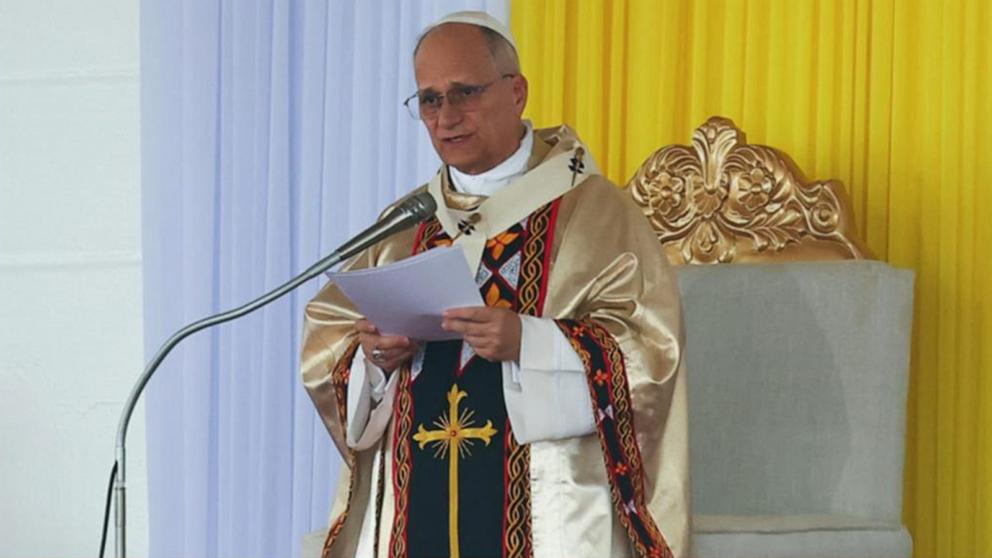
The public rift between President Donald Trump and Pope Leo XIV, the first American to lead the Vatican, has fractured usual boundaries between faith and state, drawing intense scrutiny to the political allegiances of the country’s Catholic voters as the 2026 elections approach.
The dispute erupted in April, after Pope Leo XIV condemned recent U.S. military actions in Iran, prompting President Trump to launch an unusually direct criticism of the pontiff on social media. Trump branded the pope as ‘weak on crime’ and questioned his leadership—a move some Catholic leaders described as without precedent in modern American history.
Polarizing Responses Emerge
Pope Leo XIV was quick to respond publicly, stating he had ‘no fear of the Trump administration.’ The public nature of the exchange set off a chorus of voices within the American Catholic Church. Archbishop Paul Coakley, echoing a widespread sentiment among clergy, expressed regret over the president’s remarks and emphasized that the pope’s role is spiritual, not political. The U.S. Conference of Catholic Bishops and prominent Catholic organizations issued statements defending Pope Leo XIV and urging respect for his peacemaking message.
Political leaders were also compelled to weigh in. Some Republican officials, like Senator Dave McCormick, voiced discomfort. “I wish he hadn’t done it,” he remarked, distancing himself from any criticism of the Vatican’s leader.
A Divided Electorate
America’s Catholics, representing a crucial demographic in swing states, appear deeply divided. A June 2026 Pew Research Center survey found that 84% of U.S. Catholics maintained a favorable view of the American pontiff. However, 70% of Catholic Democrats viewed Trump’s critique as excessive, while 39% of Catholic Republicans, conversely, felt Pope Leo had overstepped by criticizing Trump. The survey highlights the complex intersection of political identity and religious allegiance, especially amid ongoing debates over U.S. actions abroad.
According to expert commentary reported by ABC News, Trump’s attacks may undercut the Republican Party’s recent gains among Catholic voters—gains that had been instrumental during previous elections. Some Catholics reportedly feel ‘appalled’ by the tone of the president’s rhetoric, potentially undermining the party’s coalition-building efforts.
Long-Term Impact Uncertain
The confrontation continues to reverberate within both the Church and the wider electorate. While some political observers suggest Trump’s populist base is largely unaffected, the dispute has reopened questions about the party’s ability to maintain support among religious constituencies amid periods of national and international conflict.
Historically, disputes between American presidents and Catholic popes have been rare, marking this episode as particularly significant. As campaigns for 2026 proceed, both parties are watching closely to see whether Trump’s break with Vatican tradition will reshape the delicate political and religious balance for Catholic Americans.