
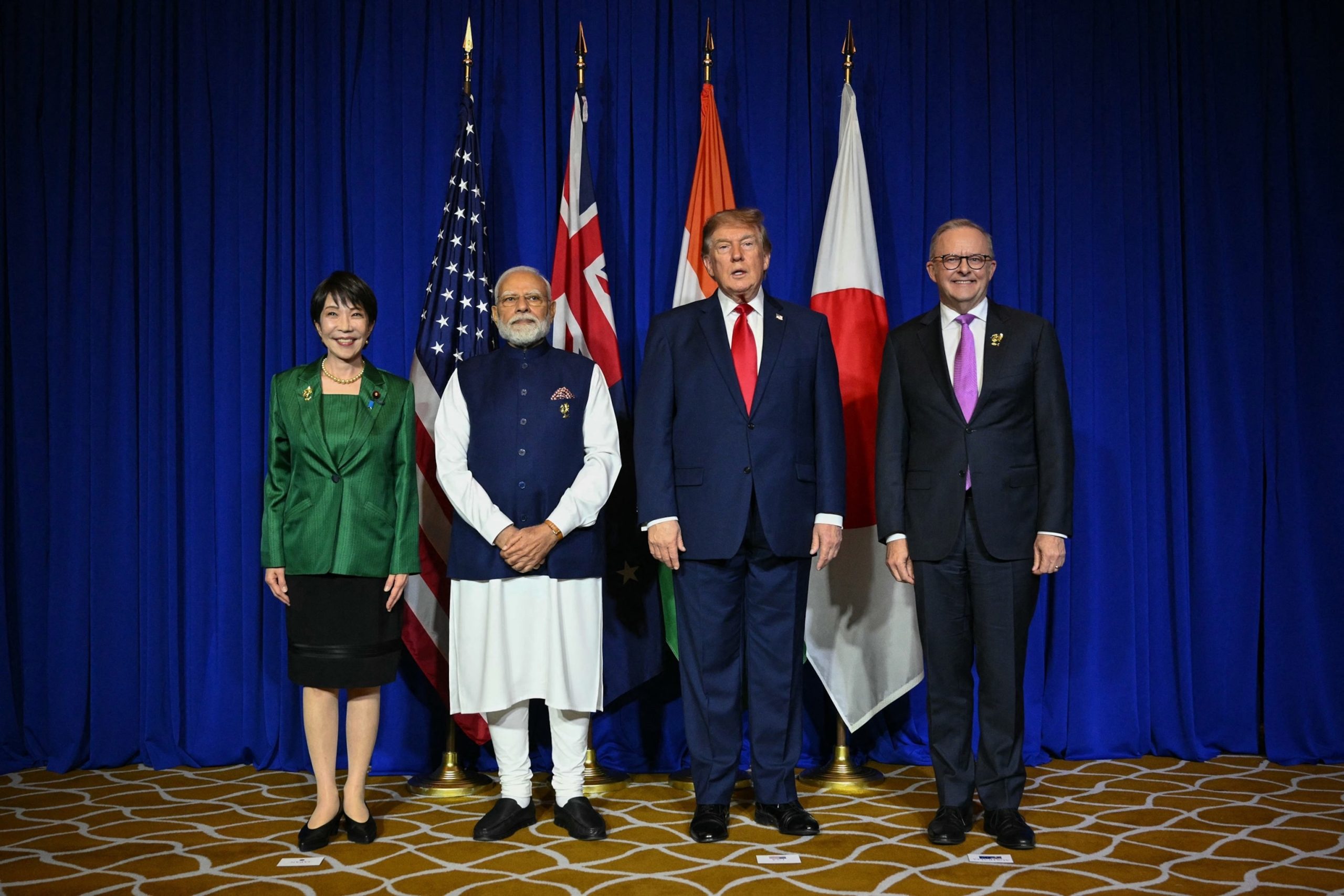
U.S. President Donald Trump joined the leaders of Japan, India, and Australia in Manila on November 17, 2026, for the Quad Leaders’ Summit—the first such gathering since 2024—underscoring renewed diplomatic focus on security and economic cooperation across the Indo-Pacific.
Arriving at Ninoy Aquino International Airport amid a full military welcome and traditional performances, President Trump was met with both official ceremony and public controversy. The summit, hosted at Manila’s Solaire Resort, brought together Trump, Australian Prime Minister Anthony Albanese, Indian Prime Minister Narendra Modi, and Japanese Prime Minister Sanae Takaichi. Their closed-door discussions and subsequent joint statement emphasized a shared commitment to ‘a free and open Indo-Pacific,’ voicing concerns about regional economic coercion and calling for enhanced technological and supply-chain security. The joint press release further marked the tenth anniversary of the Indo-Pacific vision first articulated by former Japanese Prime Minister Abe Shinzo.
Speaking to reporters before the leaders’ main meeting, Trump addressed questions about potential security threats, stating, ‘We’re looking into it’ in relation to reports of Iranian activity. On domestic industrial policy, he asserted that the U.S. was ramping up rare earth mineral production—vital for technology manufacturing—and aimed to rival China’s output within the year.
Outside the secure summit perimeter, crowds gathered to protest U.S. regional influence and ongoing conflicts in the Middle East. Some demonstrators burned effigies of Trump and criticized the so-called Pax Silica initiative, drawing attention to local concerns over the Quad’s policies and the broader global context. Authorities reported that protests remained largely peaceful, though their presence underscored simmering public opposition.
As the summit concluded, the four leaders departed Manila with pledges to strengthen cooperation. Despite committed agreements, much remains uncertain about their implementation. The practical impact of the summit on Indo-Pacific security and economic dynamics will depend on sustained dialogue and action in the coming months—a reality observers and local critics alike will be watching closely.