
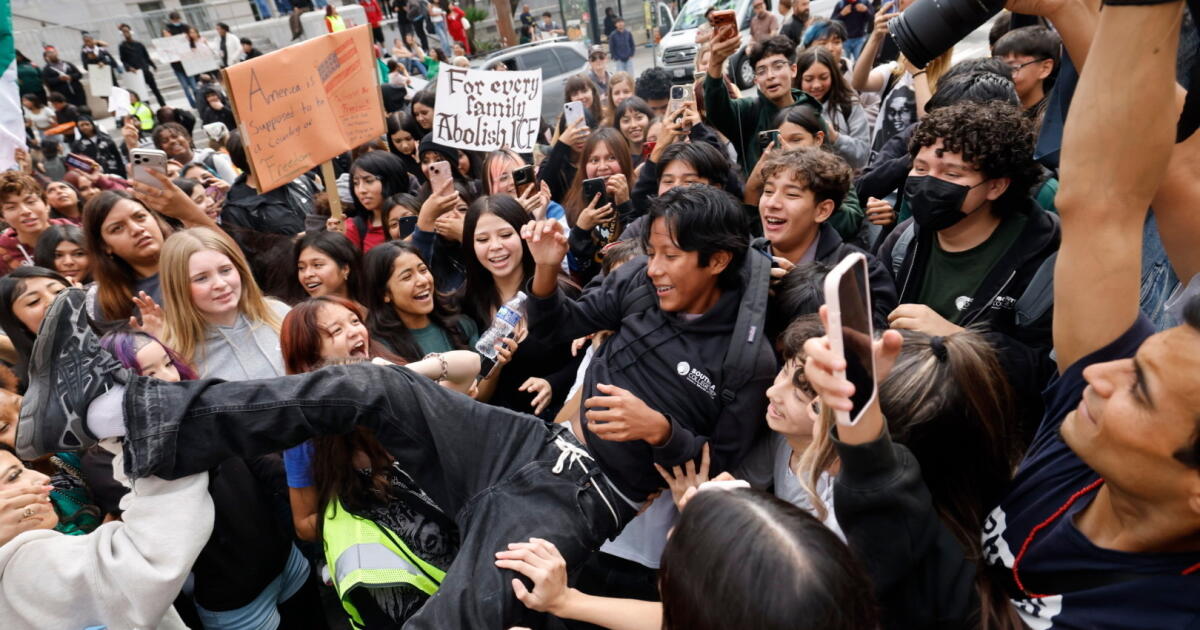
Thousands of students across Los Angeles and Long Beach took to the streets on November 16, 2026, staging walkouts that highlighted deep community concerns over U.S. Immigration and Customs Enforcement (ICE) activities in Southern California. Organizers and participants described the coordinated protests as a stand against federal immigration enforcement, which they say sows fear and instability among local immigrant families.
From the start of the school day, over 7,000 students from the Los Angeles Unified School District (LAUSD) left their classrooms, joining peers in public demonstrations stretching from campus sidewalks to Los Angeles City Hall. In parallel, students in Long Beach Unified School District (LBUSD) marched to Long Beach City Hall, waving banners and chanting slogans sharply critical of ICE operations. Motifs like “Stop ICE terror now” and “Tear down the borders” were seen on placards, reflecting a mix of urgency and frustration with current federal policy.
In Los Angeles, the protest followed a well-worn path of youth activism, drawing energy from both recent and historic acts of student-led resistance to immigration enforcement. While the demonstration in front of City Hall was largely peaceful, a brief altercation was reported near the downtown Federal Building, but authorities confirmed there were no serious incidents or escalations as the event concluded.
Long Beach rallies were organized in part by the Party for Socialism and Liberation Long Beach (PSL), which coordinated speeches and performances to draw attention to the wider impacts of ICE activity on students’ families and neighborhoods. In both cities, local immigrant rights groups, such as South Central Community, played a role in mobilizing students and framing the walkout as an act of community solidarity rather than a simple protest.
Both LAUSD and LBUSD issued statements acknowledging the students’ right to expression but clarified the actions were not sanctioned by the districts. Administrators stressed students would be marked absent for leaving class and urged youth to pursue dialogue about immigration concerns within the structure of their schools.
The November 16 demonstrations come during renewed national debates over ICE’s role in local communities. Student activism in Southern California has a storied history, with earlier walkouts reported in the East Bay, San Francisco, and Carson in recent years—each triggered by shifts in federal policy or local enforcement action.
By the morning of November 17, officials reported the protests concluded peacefully, with no mass detentions or significant injuries. Local leaders, educators, and families remain engaged in discussions about the broader consequences of ICE operations and the power of youth organizing. While participants have returned to their daily routines, the question of how immigration enforcement should intersect with schools and families in Southern California remains far from resolved.