
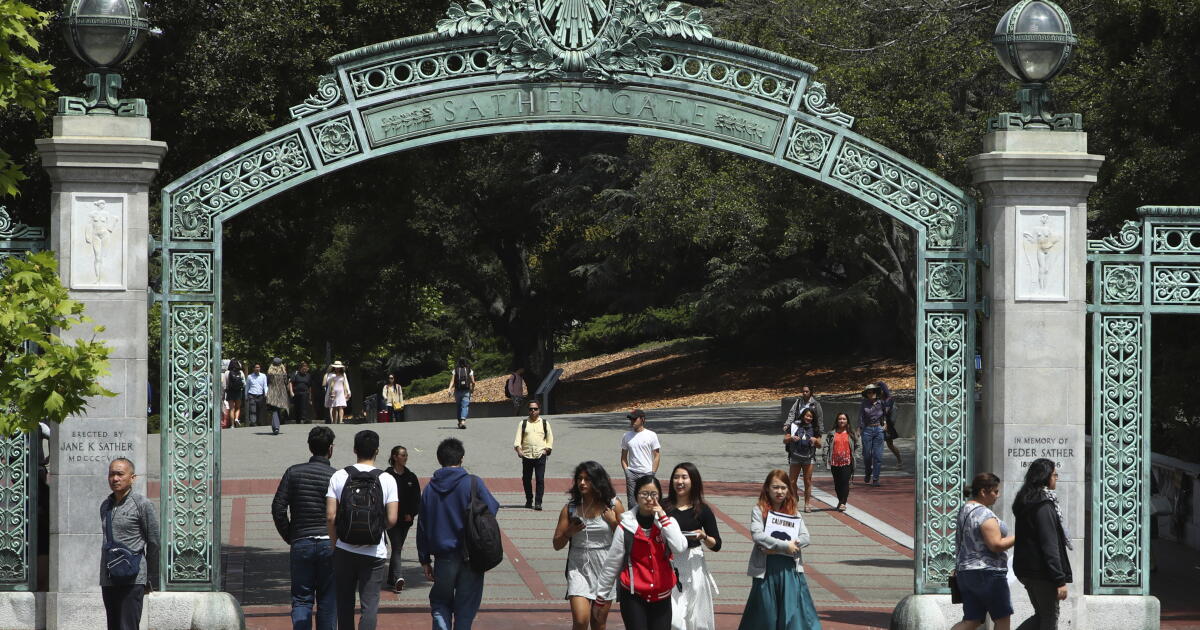
In a development with major implications for academic freedom and federal research policy, the U.S. Supreme Court on November 16 declined to hear the Trump administration’s effort to reinstate the cancellation of $59 million in federal grants awarded to University of California researchers for projects associated with diversity, equity, and inclusion (DEI) initiatives.
The administration’s bid—stemming from executive orders in January 2025 that directed federal agencies to eliminate programs tied to DEI considerations—left affected researchers facing halted funding from the National Science Foundation and the National Endowment for the Humanities. The abrupt terminations prompted six University of California scholars to file a class-action lawsuit, alleging the cancellations were punitive and violated their constitutional rights on the basis of viewpoint discrimination.
In the legal battle that followed, U.S. District Judge Rita Lin, in June 2025, issued a preliminary injunction to restore the grants. Judge Lin cited a high likelihood that the government’s actions unlawfully targeted the perceived DEI viewpoints of the researchers, thus violating the First Amendment. The Ninth Circuit Court of Appeals upheld Lin’s injunction in May 2026, emphatically asserting that federal funding decisions may not turn on the ideological viewpoints of eligible grantees.
The Trump administration’s request to the Supreme Court sought to overturn these findings and grant agencies wider discretion to define funding criteria. However, the high court’s refusal to intervene leaves the lower court rulings in force, requiring the restoration of the terminated grants pending further proceedings. Though the Supreme Court offered no comment on its denial, the move is a tacit endorsement of the principle that viewpoint discrimination by the government remains constitutionally suspect, even in the allocation of federal research support.
While the immediate effect is to reinstate the funding for the affected University of California researchers, broader constitutional questions surrounding the federal government’s authority to set research funding priorities, especially with regard to social policy and academic content, remain before the lower courts as the underlying lawsuit continues. For now, researchers nationwide are watching closely: the Supreme Court’s absence from the case is itself a consequential moment in the ongoing debate over the bounds of DEI policy in public institutions and the protection of academic expression under the First Amendment.