
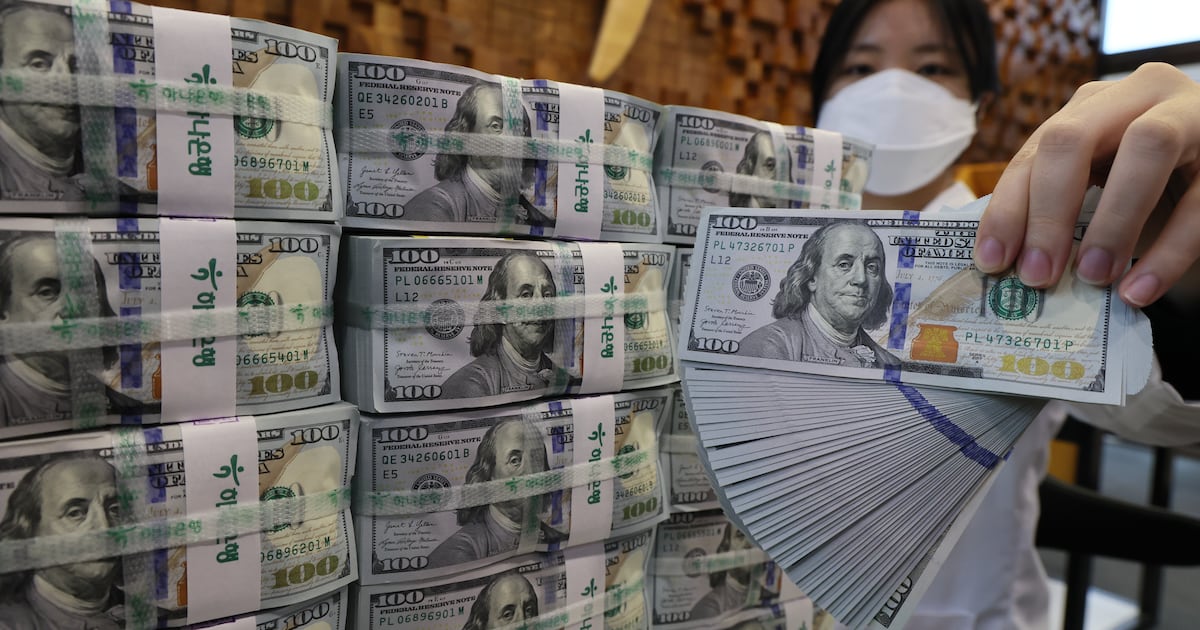
The South Korean won weakened to 1,335.5 per U.S. dollar on November 20, 2026, falling 0.41% from the previous day, as a sell-off swept through the nation’s stock market and global uncertainties roiled investor sentiment. The drop highlights how rapidly shifting international conditions and domestic concerns can fuel capital flight and currency pressure across Asia’s fourth-largest economy.
The slide in the won came after significant declines in major U.S. indices the previous day, with the S&P 500 falling 2.02%, the Nasdaq down 2.25%, and the Dow Jones dropping 2.19%. That rout rattled Korean investors, helping push the Korea Composite Stock Price Index (KOSPI) down more than 4% at its opening, accelerating the retreat of foreign funds from Korean equities.
Foreign investors were net sellers of approximately 1.4 trillion won (US$1.05 billion) in local shares as of November 17, according to public trading data. Market analysts have attributed this outflow to a mixture of global market weakness and fading confidence in a near-term rebound for sectors like artificial intelligence, long seen as a driver for Korean tech and semiconductor exports.
The currency’s latest bout of weakness is also closely tied to external monetary policy. The potential for a U.S. Federal Reserve interest rate hike in December has drawn capital toward the dollar, making emerging market assets—like those in South Korea—relatively less attractive. While dollar sales by Korean semiconductor firms have occasionally offset the trend, these have failed to halt the rising exchange rate as market pressures mount.
This episode fits a broader historical pattern: the won has experienced bouts of volatility in tandem with shifts in global economic conditions, U.S. policy, and domestic corporate operations. Currently, many analysts point to the continued vulnerability of the Korean stock market to foreign capital movements and global sentiment as reason for caution.
As of this report, uncertainty persists over how long the won’s losses will last. Much rides on the next steps from the U.S. Federal Reserve, changes in foreign investor appetite, and whether Korea’s key industries—especially semiconductors—can generate a countervailing force through exports and repatriated revenue. For now, policymakers and investors alike are watching closely, attuned to signs of further turbulence or stabilization ahead.