
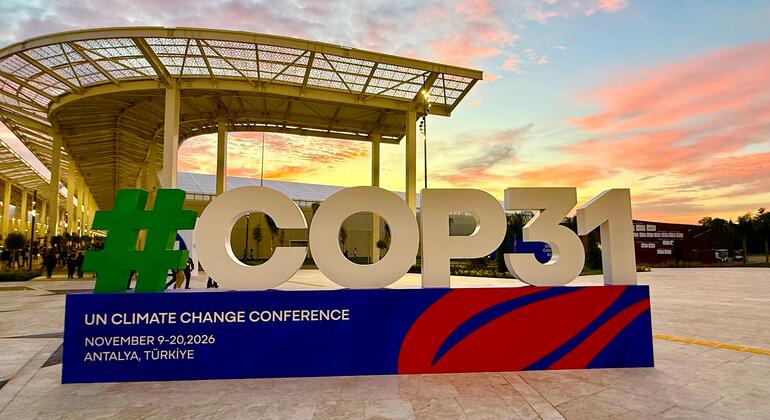
The opening day of the COP31 climate summit in Antalya, Türkiye, set the stage for a high-stakes confrontation over climate justice, fossil fuel accountability, and the future of international cooperation against global warming. UN Secretary-General António Guterres did not mince words: as world leaders converged under tight security for a two-day summit, he warned, “It’s make or bake time,” a pointed reminder that existing pledges still put the world on course for more than 2.5°C of warming before 2100.
The Secretary-General’s address underscored a hardening divide. With packed hallways and a festive opening ceremony—featuring Turkish dancing and a COP31 theme song—the mood in Antalya nonetheless quickly gave way to urgent appeals. Guterres accused fossil fuel interests of distorting science and delaying action, proposing a global ‘climate justice compact’ built around four pillars: accelerating the shift from fossil fuels, safeguarding vulnerable populations, delivering affordable and accessible climate finance, and strengthening international cooperation to overcome trade, technology, and geopolitics. The thrust of his message: “Polluters must pay.” He urged governments to tax extraordinary profits reaped by oil majors, citing the $95 billion earned in a single quarter by the industry’s giants—dwarfing, he noted, the entire $600 million delivered to international loss-and-damage funds for vulnerable countries during that same period.
This call for climate finance and redirection of windfall corporate profits comes as old debates remain unsettled. According to agenda documents released by the UNFCCC, negotiations centered on adaptation finance, long-delayed targets for developed-country climate support, and how—if at all—to coordinate new loss-and-damage mechanisms at speed. Developing nations pressed hard for predictable, accessible funding, highlighting obstacles in tapping the Green Climate Fund and Global Environment Facility—issues echoed in Nepal’s plea for rapid help following a catastrophic glacial collapse. Delegates also clashed over how to extend and structure the UN’s accelerated emissions reduction program, and how to guarantee a ‘just transition’ protecting both communities and workers in transitioning economies.
Amid these talks, leaders framed political context as a barrier and opportunity. Turkish President Recep Tayyip Erdoğan acknowledged decades of negotiations had “not produced the same results when it comes to implementation.” Brazilian President Lula da Silva warned the climate crisis had slipped down the global agenda as wars and trade disputes once again dominated headlines. He pledged new national roadmaps to reduce Brazil’s fossil fuel dependence and halt deforestation, holding up the Amazon’s centrality from last year’s talks as an example of progress needing urgent follow-through.
Yet, Antalya’s session was not merely debate—it was also a showcase for attempted solutions. Methane, the short-lived but potent warming gas, was brought to the fore in a ‘Zero Waste’ thematic day. Guterres called on the UN Environment Programme to create a global near-zero standard for methane emissions in oil and gas. The UNEP’s satellite-and-AI monitoring system has helped cut major leaks in over a dozen countries, but, despite issuing more than 5,000 alerts since 2023, fewer than one in eight have prompted government or company action. The urgency is clear: as one UNEP official explained, slashing methane could provide the world a crucial “emergency brake” to slow warming while carbon cuts are ramped up.
Practical climate solutions gained ground through grass-roots entrepreneurship as well. Botswana’s Makwena Moesi was highlighted for turning over 1,000 tonnes of food waste into fertilizer using half a million worms—a nod to the summit’s Zero Waste and circular economy priorities. Ongoing initiatives such as the Antalya Compact for Energy Efficient Buildings, the Sustainable Urban Resilience Financing Facility, and the progressing Climate Implementation Bridge Mechanism all show efforts to channel public and private capital, build resilience, and turn negotiations into projects—a COP31 hallmark, according to conference organizers.
Outside the plenary, the structure of the summit reflects the mounting complexity of climate diplomacy: a Blue Zone for official business, a Green Zone to highlight solutions, and a host of side events feeding into ten priority themes—ranging from resilient cities to gender and climate. Australia’s Chris Bowen serves as President of Negotiations, and Türkiye’s Murat Kurum as overall host, reflecting the summit’s dual leadership between a developing and a developed nation.
Despite years of progress lowering projected warming from over 4°C to around 2.6°C, the core question—can world leaders deliver finance and implementation as promised—remains unresolved as COP31 unfolds. The summit’s opening days revealed both the deep frustrations and thin remaining hopes that global climate action will catch up with a crisis moving faster than diplomacy itself.