
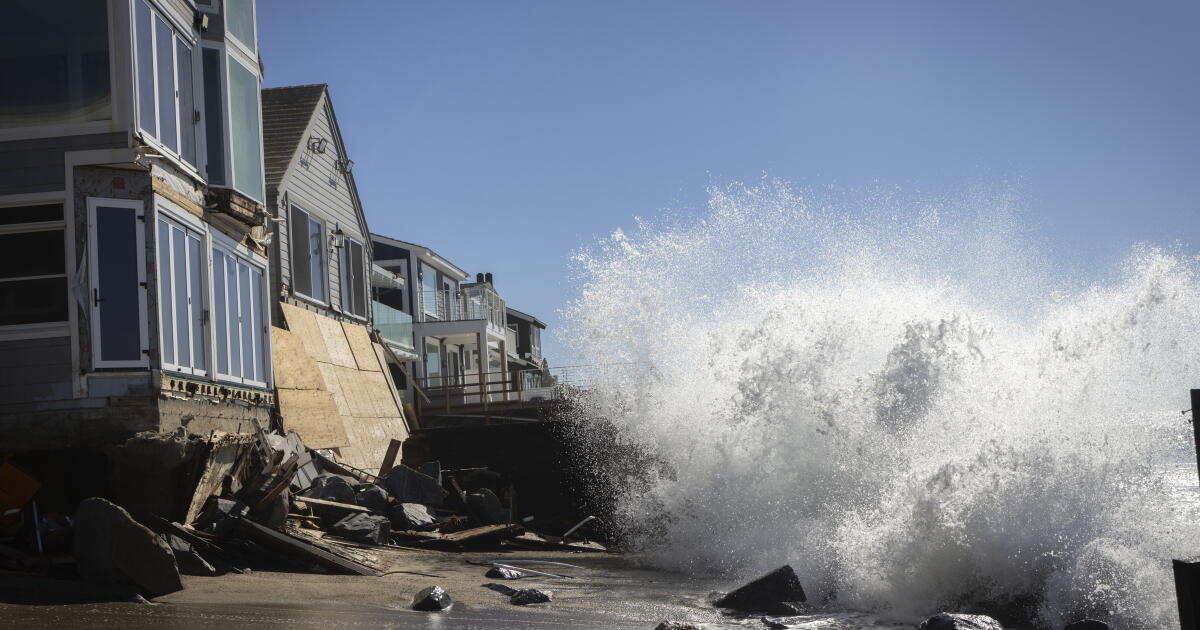
In a striking display of natural power, Southern California’s coastline faced its most dramatic battering in recent years when, between November 10 and 15, 2026, massive waves—some exceeding 50 feet—slammed into shores from Long Beach to Malibu. The immediate toll has been visible and costly: one Long Beach home, listed at $4.95 million last summer, was left uninhabitable as waves shattered its living room, forcing a new listing at $2.9 million and drawing interest from developers rather than traditional homebuyers.
The coastal assault was the result of a confluence of meteorological phenomena. A strong El Niño, known for its global weather disturbances, significantly boosted the intensity of waves, while a coastally trapped Kelvin wave moving north along Mexico’s Pacific shore contributed to an additional rise in sea levels, up to 12 inches in some spots. These dual forces led to higher-than-normal tides and widespread flooding in low-lying neighborhoods.
Long Beach’s Alamitos Peninsula emerged as one of the area’s most affected regions. Here, severe erosion undercut beaches and foundations, prompting authorities to red-tag at least eight residential and apartment buildings—deeming them too dangerous for occupancy. The city’s response, to launch an $11.4 million dredging and sand replenishment project, underscores the scale of the challenge. The program, aiming to restore up to 200 feet of lost shoreline by February 2027, will serve as a test for coastal defenses amid climate-driven extremes.
Warnings from the National Weather Service were explicit, as officials emphasized the persistence of dangerous waves, urging the public to avoid beachfronts and adhere to all evacuation or closure orders. The link between such events and broader climate trends adds urgency: scientific consensus points to stronger, more frequent El Niño cycles as ocean temperatures rise, threatening to make scenes like these not exceptional but routine.
As the immediate danger recedes and the physical cleanup begins, underlying questions remain unresolved. Property values along California’s fragile coastline have not collapsed—yet—but the latest round of destruction is rekindling debates about sustainable coastal development and resilience. Whether current measures like dredging are enough, or if a fundamental shift in coastal land use is inevitable, is a conversation that will continue through this winter and beyond.