
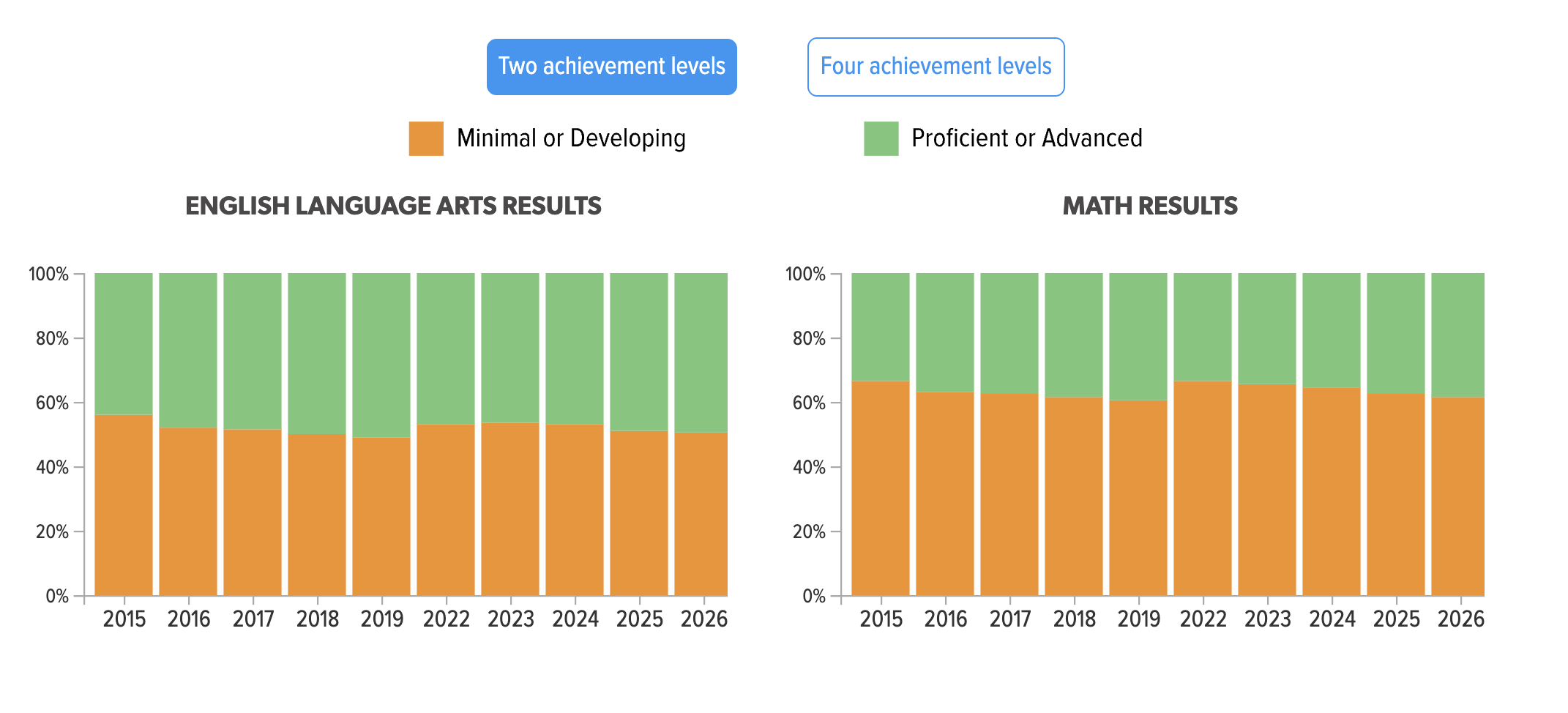
Amid statewide improvements in academic achievement, students with disabilities in the Santa Barbara Unified School District have shown measurable gains in recent assessments. According to the most recent release from the California Department of Education, the graduation rate for students with disabilities rose by 3.7 percentage points over the past year, aligning with a broader trend of gradual progress across the state.
Local results from spring 2026 underscore the academic momentum: 53.18% of Santa Barbara Unified students met or exceeded the state standard in English Language Arts, and 43.86% in mathematics, as reported by CAASPP (California Assessment of Student Performance and Progress) results. While these figures represent all students, educators and advocates note that students with disabilities have contributed to the district’s upward trajectory, reflecting ongoing emphasis on inclusion and targeted instruction.
Still, the improvements mask enduring disparities. According to the Los Angeles Times and additional data from the California Department of Education, achievement gaps remain significant between students with disabilities and their general education peers, both locally and statewide. This mirrors a broader pattern in California, where recent academic gains have yet to fully reverse the effects of pandemic-era learning loss for the most vulnerable student groups.
To address these challenges, the California Department of Education continues to provide resources and specialized programs aimed at students with disabilities. This includes ongoing support for inclusive education and the availability of assessment accommodations, as well as local initiatives like Santa Barbara High School’s Visual Arts and Design Academy, which integrates academic and career-focused instruction for all learners.
Efforts to close achievement gaps extend to programs funded under Title I, Part A, which directs resources to schools serving high proportions of eligible students, including those with disabilities. For families, tools such as the California Alternate Assessments (CAA) parent guides and broad student accessibility resources remain available to ensure equitable participation in academic evaluations.
Despite the positive direction in graduation rates and test performance, educators caution that progress requires sustained attention, particularly in improving accessibility and instructional quality for students with disabilities. As Santa Barbara Unified and other districts analyze outcomes for the 2025–26 year, the ongoing work to advance equity and inclusion remains in sharp focus.