
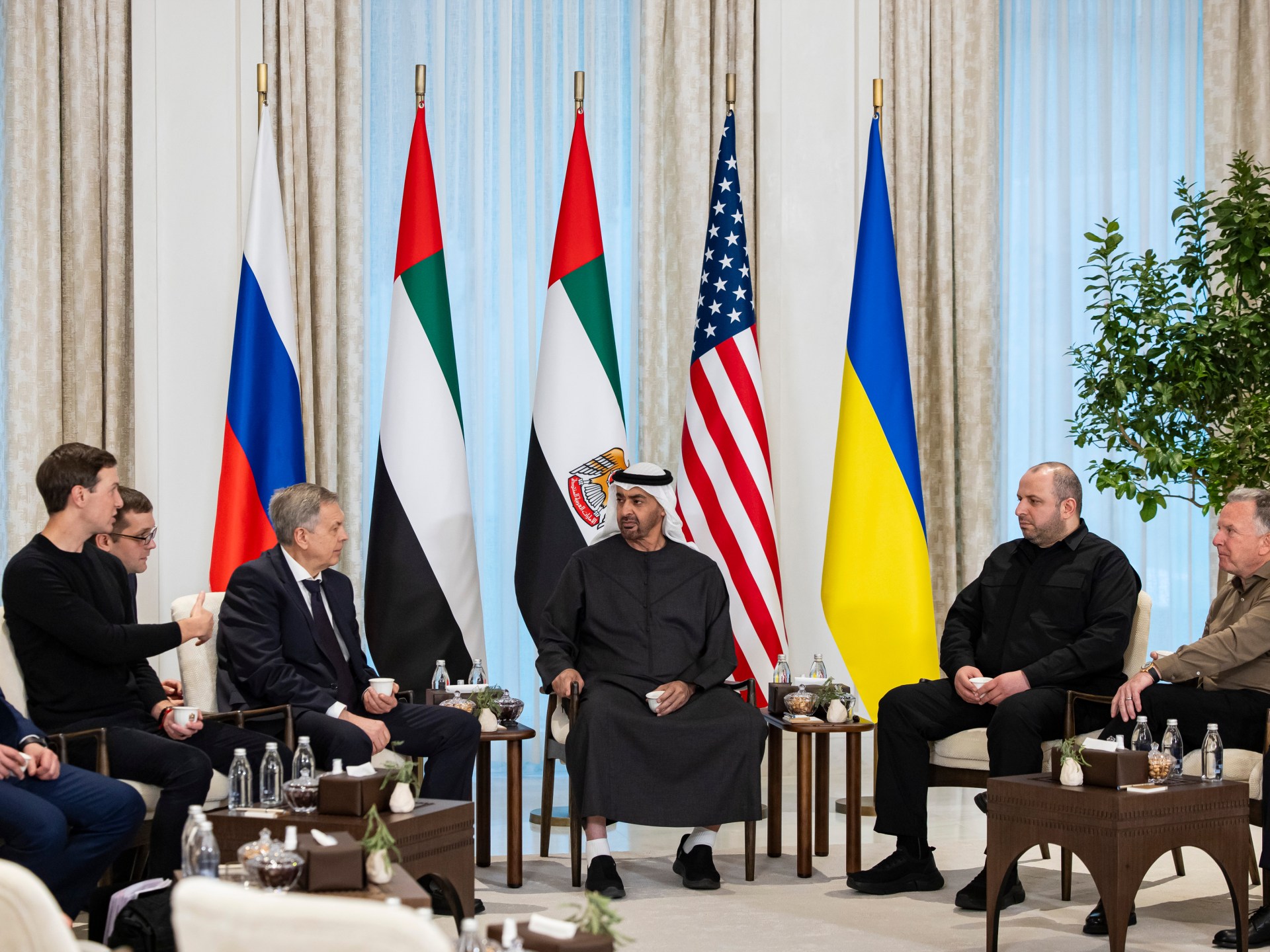
After nearly four years of conflict, Russian and Ukrainian negotiators met face-to-face for U.S.-mediated talks in Abu Dhabi on November 10–11, 2026, hoping to inch toward an elusive peace. Despite the high-profile setting and the involvement of senior intelligence and diplomatic officials, the summit produced scant movement on the most divisive issues—though it did achieve a tentative agreement for a large prisoner swap.
The two-day discussions took place in the palatial Emirates Palace Mandarin Oriental hotel, convened with the assistance of U.S. Special Envoy Steve Witkoff and Jared Kushner. Ukraine dispatched Rustem Umerov, the country’s intelligence chief, and Kyrylo Budanov, President Zelenskyy’s chief of staff. Across the table, Russia relied on Vladimir Medinsky, close aide to President Vladimir Putin, and military intelligence head Igor Kostyukov. (latimes.com; apnews.com; lemonde.fr)
Core Disagreements and Areas of Focus
Talks focused on three main areas: a potential prisoner exchange, future territorial arrangements, and security guarantees. Only the first delivered measurable progress. According to multiple outlets, both parties agreed in principle to orchestrate a large-scale swap of prisoners of war, with further details to be finalized in future technical talks. (apnews.com)
However, the other agenda items quickly ran aground on old and well-documented antagonisms. Russia pressed for Ukrainian withdrawal from regions it has claimed since 2022, insisting on formal recognition of its annexations. Ukraine, meanwhile, maintained its longstanding refusal to discuss ceding territories, calling for full restoration of its borders and referencing international law. These diametrically opposed positions left little room to maneuver. (latimes.com; lemonde.fr)
Security frameworks also proved difficult to resolve. Russian negotiators reportedly rejected the prospect of international—particularly European—oversight of any potential settlement, while Ukraine continued to call for robust guarantees from its Western allies. Discussions on this front remain open, with future European engagement anticipated but yet to take clear form. (lemonde.fr)
Context: Years of War, Cautious Hopes
The Abu Dhabi session marks the latest, and so far most public, in a long series of attempts at negotiation since Russia’s large-scale invasion of Ukraine began in 2022. The war has left tens of thousands dead, forced millions from their homes, and destabilized global security calculations. All previous major negotiations have failed to deliver lasting ceasefires or address underlying disputes. (latimes.com; apnews.com)
U.S. mediators described the latest round as “constructive,” but privately acknowledged there was little substantive progress beyond the symbolic show of renewed dialogue and the prisoner exchange understanding. Conflicting signals emerged about Russia’s true intentions, with some American officials indicating that Moscow might enter a broader peace framework under certain (unspecified) conditions, while Ukrainian officials remained cautious about the prospects for genuine compromise. (anewz.tv)
Armed clashes persist across the front lines, with casualties and infrastructure damage reported by both sides as talks concluded. The international community, though wary of the lack of concrete outcomes, continues to encourage further negotiations. European nations are expected to play a more prominent role if talks continue in the coming months, though specifics remain unsettled.
What Comes Next?
As of mid-November 2026, both militaries are still locked in conflict, and the summit’s real impact hinges on whether the agreed prisoner swap materializes—and whether further meetings bridge the deeply entrenched divides over territory and security. For now, the war’s end remains out of reach, and the daily realities of violence and displacement in Ukraine endure.