
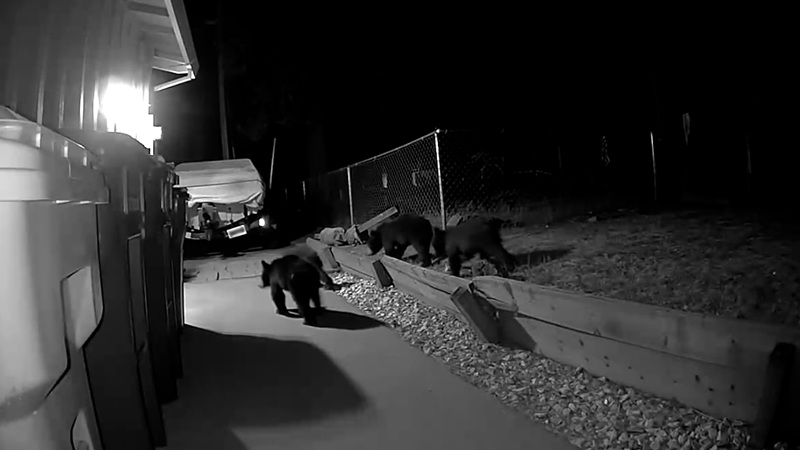
California’s lower elevation neighborhoods are seeing an unusual surge in black bear sightings, setting local communities on alert and prompting the state’s wildlife officials to reexamine strategies for human-bear coexistence. The California Department of Fish and Wildlife (CDFW) confirmed multiple instances throughout 2026 of bears venturing far beyond their mountain habitats—including a yearling bear appearing in the city centers of Roseville and Rocklin in Placer County this August and several cubs believed to have been born in community greenbelts rather than traditional forests.
Photographic evidence captured in July from Pollock Pines, El Dorado County, showed a mother bear shepherding quadruplet cubs along quiet residential streets, further illustrating the new patterns of wildlife movement. Meanwhile, on the edges of Los Angeles County, in suburbs like Monrovia, residents reported frequent bear visits, often drawn in by swimming pools, unsecured garbage bins, and backyard fruit trees. These sightings, widely shared across neighborhood networks, have both fascinated and unsettled residents unused to such animal encounters.
Although black bears are not new to California—they were introduced to the San Gabriel and San Bernardino ranges nearly a century ago—the recent trend marks a shift. According to CDFW, the appearance of very young cubs in suburbs suggests not just migration but successful breeding in lowland environments, possibly for the first time at this scale. However, the department cautions against drawing firm conclusions on causes: the underlying drivers remain unconfirmed, with habitat pressures, food availability, and climate change all under consideration for future study.
Wildlife officials are ramping up education campaigns, advising residents to remove accessible attractants and secure trash. The state emphasizes that feeding bears, intentionally or accidentally, increases the risk of conflict and can destabilize both animal and human communities. With research ongoing, the CDFW and partners have called for comprehensive cooperation from the public as they monitor the expansion of ‘bear country.’
How this development will shape everyday life in California’s valleys and foothills remains to be seen. But with confirmed sightings expanding and cubs born in unexpected places, both authorities and residents recognize that learning to live with bears might become a defining feature of the state’s evolving landscape.