
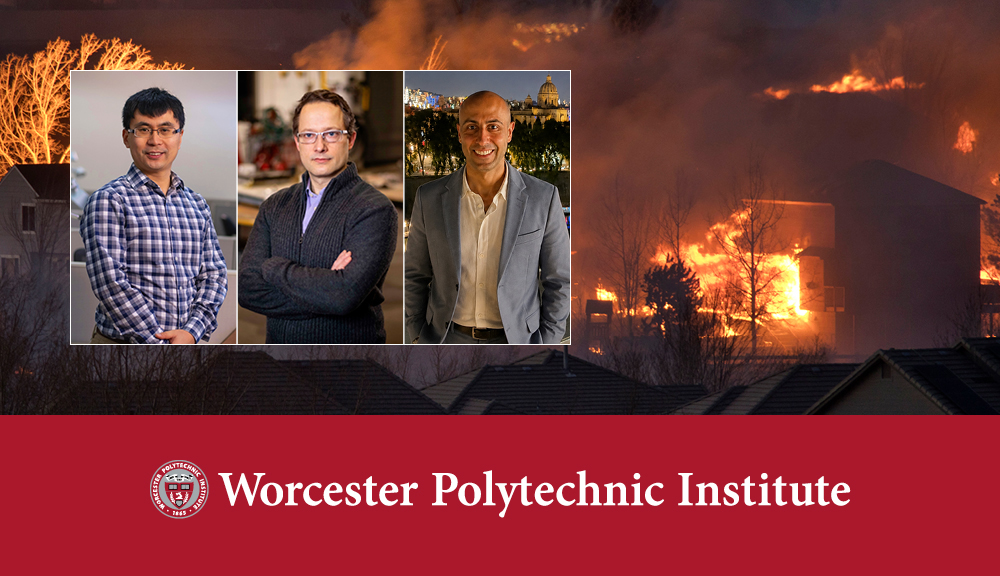
With destructive wildfires increasingly encroaching on towns and cities, researchers at Worcester Polytechnic Institute (WPI) have announced a major new effort to decode the complex—and potentially hazardous—chemical emissions released when modern buildings burn. The project, revealed November 19, 2026, aims to address growing concerns over public safety as wildfires routinely overwhelm both natural landscapes and built environments.
Backed by a $1.19 million grant from the National Science Foundation, the three-year study unites WPI faculty with collaborators at Northeastern University. Their goal: systematically characterize the toxic plumes created when plastic, foam, treated wood, and other synthetic building materials ignite in the path of a wildfire. The research marks a significant shift from traditional wildfire smoke studies that have almost exclusively focused on the combustion of trees and vegetation.
“Smoke from wildfires that destroy homes is drastically different from smoke from burning vegetation,” noted WPI Fire Protection Engineering faculty in the official project announcement. A recent study of the 2025 Eaton Fire in Los Angeles, published in Science Advances, found that smoke from buildings ravaged by wildfire contained sharply elevated levels of toxic heavy metals and synthetic chemicals, raising concerns for both emergency responders and local residents.
WPI’s team, led by Shichao Liu, Albert Simeoni, and Reza Ziazi, will deploy a two-stage experimental approach to this little-explored challenge. Initial combustion tests of small-scale construction materials—including glass-fiber insulation, nylon floor coverings, petroleum-based shingles, engineered woods, drywall and polyester foams—will take place in Northeastern University’s controlled laboratories. These will be followed by larger burns at WPI’s own fire protection engineering department, where complex physical building models will be assembled and ignited to mimic real-world conditions.
Throughout the trials, researchers will use advanced monitoring instruments to measure chemical emissions, heat output, and particulate size distribution. The collected data should clarify how various materials contribute to the release of hydrocarbons, chlorine compounds, trace metals, and other potentially toxic agents detected in previous post-fire field investigations.
Understanding the precise makeup and danger of these smoke plumes is considered vital for modern urban planning and disaster response. Public health experts have warned that the ash and residue from wildfire-razed buildings may harbor substances like lead and arsenic, with lingering effects on air quality and interior environments. The study is intended to inform new building codes, indoor air purification strategies, and improved protections for affected communities downwind of urban wildfires.
The first phase of the laboratory experiments is set to begin immediately at Northeastern University. Subsequent phases will continue at WPI as the team strives to bridge the gap between wildfire science and urban environmental safety.