
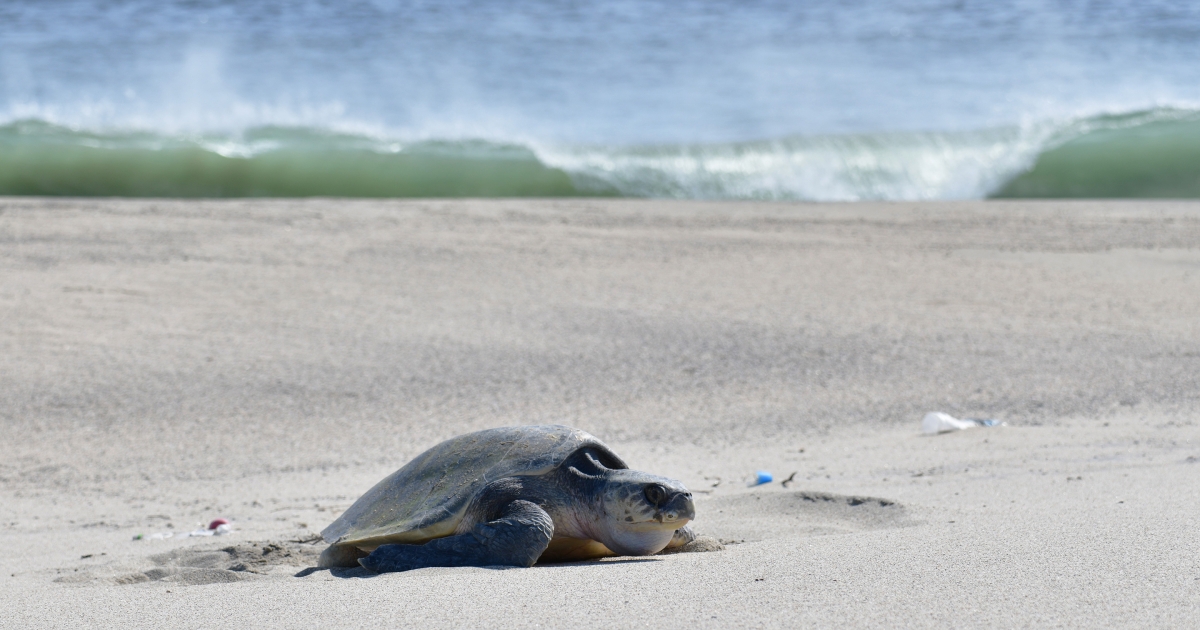
A landmark for conservationists on California’s coast has ended in disappointment after high surf and powerful tides destroyed a rare olive ridley sea turtle nest at San Buenaventura State Beach, Ventura County. The incident, confirmed on November 13, 2026, comes only days after the nest—a first for the county and the most northerly known instance of this endangered species nesting—was celebrated as a sign of dramatic change in Pacific coastal wildlife.
Sea turtle experts say the loss, which occurred when waves and elevated tides inundated and exposed the turtle nest, rendered the eggs unviable before any hatchlings could emerge. The event disrupts what had been viewed as an extraordinary expansion in olive ridley nesting patterns, with earlier confirmed nests in September 2026 on Orange County’s Seal Beach and Huntington Beach marking the first-ever documented sea turtle nesting on the U.S. West Coast (FWS.gov).
Those initial Orange County nests, threatened by Hurricane Polo’s hazardous weather, prompted an urgent and coordinated intervention: more than 200 eggs were delicately relocated to the Aquarium of the Pacific in Long Beach for incubation—a deviation from standard policy driven by the nests’ exceptional significance and imminent risk. Conservation teams, working across multiple government agencies, later succeeded in releasing hatchlings from these eggs back into the wild in mid-November 2026.
“Within 24 to 48 hours, we had to move really quickly [to avoid inundation of the nests]. We were able to bring a team together and the partnership was amazing,” said Jonathan Snyder, acting field supervisor with the U.S. Fish and Wildlife Service’s Carlsbad Fish and Wildlife Office, in an official statement following the Orange County response.
In contrast, the Ventura nest—left in situ near the iconic Ventura Pier—was not relocated prior to the surge and was entirely lost. The reasons behind the sudden appearance of nesting olive ridleys this far north remain under investigation. Scientists suspect a combination of unusually warm ocean temperatures, potentially linked to El Niño and broader climate change, have played a role in extending the turtles’ range.
The U.S. Fish and Wildlife Service, which leads sea turtle conservation on land, and its partners urge beachgoers to report any further sightings to lifeguards or the NOAA West Coast Sea Turtle Stranding Hotline, emphasizing the need for ongoing vigilance. The Service also advises beach residents to limit artificial light at night, a known hazard for disorienting both nesting females and hatchlings.
Though the loss in Ventura is a setback, successful releases from the rescued Orange County eggs mark a significant step and a call for adaptive, science-driven management as California’s beaches become the stage for unprecedented wildlife adaptation under changing environmental conditions.