
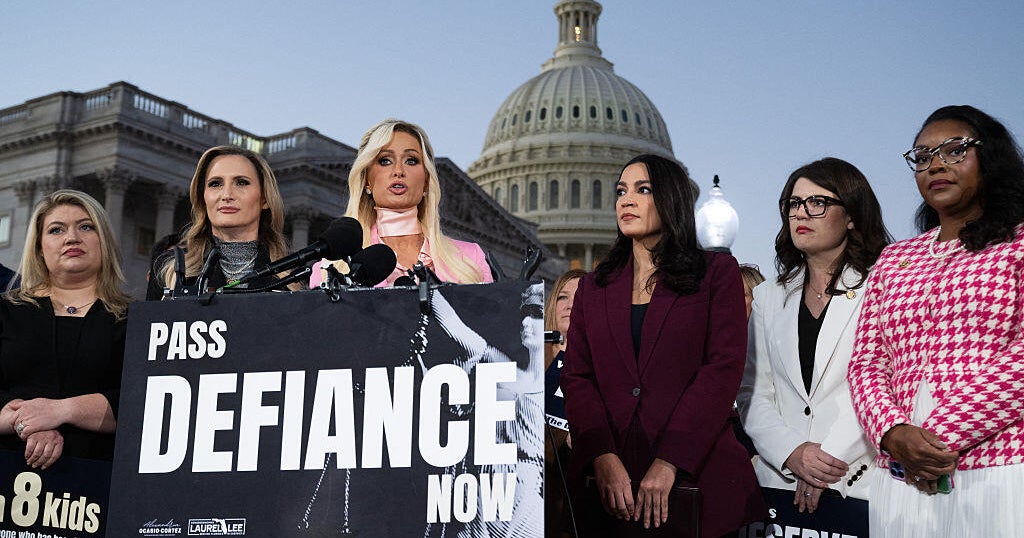
On November 17, 2026, Paris Hilton joined Representatives Alexandria Ocasio-Cortez (D-NY) and Laurel Lee (R-FL) at a Capitol Hill press conference, urging lawmakers to pass the Disrupt Explicit Forged Images and Non-Consensual Edits (DEFIANCE) Act. The bipartisan bill, unanimously passed by the Senate in January, would create sweeping new tools for victims to seek civil remedies for the creation and distribution of AI-generated sexual deepfakes made without their consent.
Hilton, speaking publicly about her own experience with the nonconsensual sharing of intimate images at age 19, remarked on the inadequacy of legal protections available to earlier generations faced with similar abuses. Now, she argues, technology poses entirely new threats. ‘For far too many women, the nightmare of having your likeness weaponized is no longer hypothetical,’ Hilton emphasized, returning to Washington as a public advocate.
Rep. Ocasio-Cortez echoed the urgency, citing research indicating more than 90% of nonconsensual deepfake pornography targets women. ‘It is women and girls who overwhelmingly bear the brunt of this exploitation,’ Ocasio-Cortez stated, arguing the House’s inaction leaves victims unprotected even as digital forgeries proliferate.
The proposed DEFIANCE Act would empower victims to file lawsuits against those responsible for creating or distributing explicit deepfakes. The bill also sets a 10-year statute of limitations, beginning either when a victim learns of the violation or, for minors, upon turning 18. Supporters see these provisions as critical for offering justice to those harmed by content that can take years to uncover or remove.
Despite bipartisan sponsorship, the DEFIANCE Act has stalled in the House Judiciary Committee since May 2025. Speaker Mike Johnson’s office has yet to offer a public explanation for the delay, according to reporting by CBS News. If the House fails to vote before the legislative session ends on January 3, 2027, the bill would need to be reintroduced from scratch in the next Congress.
This push arrives after the 2025 passage of the TAKE IT DOWN Act, which focused on criminalizing the publication of nonconsensual intimate images and required their removal from platforms within 48 hours. However, the rapid evolution of AI technology creating new forms of digital sexual exploitation has left significant accountability gaps, advocates argue. The DEFIANCE Act is seen as a necessary step to keep legal protections in step with technology.
As lawmakers face mounting public pressure, the debate centers not only on digital privacy, but also on the pace and priorities of federal legislation in responding to emerging harms. Both Hilton and Ocasio-Cortez have vowed to continue fighting for passage, warning that delays risk leaving survivors without meaningful recourse in an era of unprecedented digital risk.