
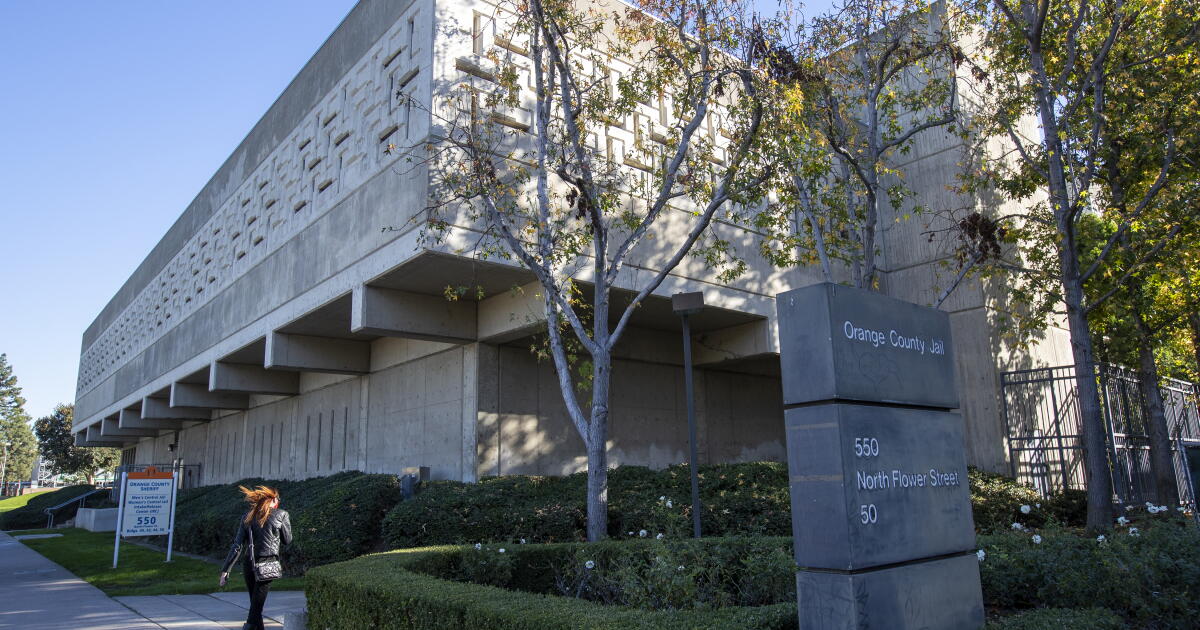
The Orange County Sheriff’s Department (OCSD) has placed a deputy and a sheriff’s special officer on administrative leave as it investigates their recent interaction with federal Immigration and Customs Enforcement (ICE) agents outside the county jail in Santa Ana. The incident, which unfolded on October 31, 2026, has reignited scrutiny over collaboration between local law enforcement and federal immigration authorities in California, where state law explicitly limits such cooperation.
According to an official complaint received by the department on November 3, surveillance footage from Halloween night showed the OCSD deputy and special officer exiting the jail’s Intake Release Center and conversing briefly with occupants of an unmarked black SUV parked on a public street. Shortly thereafter, two vehicles with ICE agents approached the jail’s public courtyard, where agents apprehended 69-year-old Jesus Esparza, who had just visited his son in custody and was reportedly trying to avoid their attention.
This chain of events triggered an internal investigation amid concerns the OCSD staff may have assisted federal agents, potentially violating California’s Values Act—commonly known as SB 54—which restricts local police from using public resources to support most federal immigration enforcement efforts.
Sheriff Don Barnes sought to assure the public, emphasizing, “The department does not enforce federal immigration law,” while noting that any personnel found to be acting outside of the law or departmental policy would be subject to accountability measures. Both employees connected to the exchange were immediately placed on leave while the probe continues.
Community members and local officials have expressed unease about the possible violation of both the state statute and longstanding department policy. Advocates argue that even the appearance of cooperation with ICE by local law enforcement can undermine trust in policing, especially among immigrant communities.
Key aspects of the situation remain unclear, including the content of the conversation between the OCSD employees and the ICE agents, and whether any privileged information was exchanged that may have contributed to Esparza’s arrest. The department has not detailed what, if anything, was communicated. Nor has it publicly disclosed how ICE agents located Esparza, leaving room for speculation and community concern.
The OCSD’s investigation is ongoing, and its findings may have significant legal and reputational consequences for the department. This episode echoes previous incidents in Orange County, where deputies were placed on leave after allegations of misconduct within the jail—highlighting the persistent tension between state sanctuary laws and federal immigration enforcement on California’s front lines.