
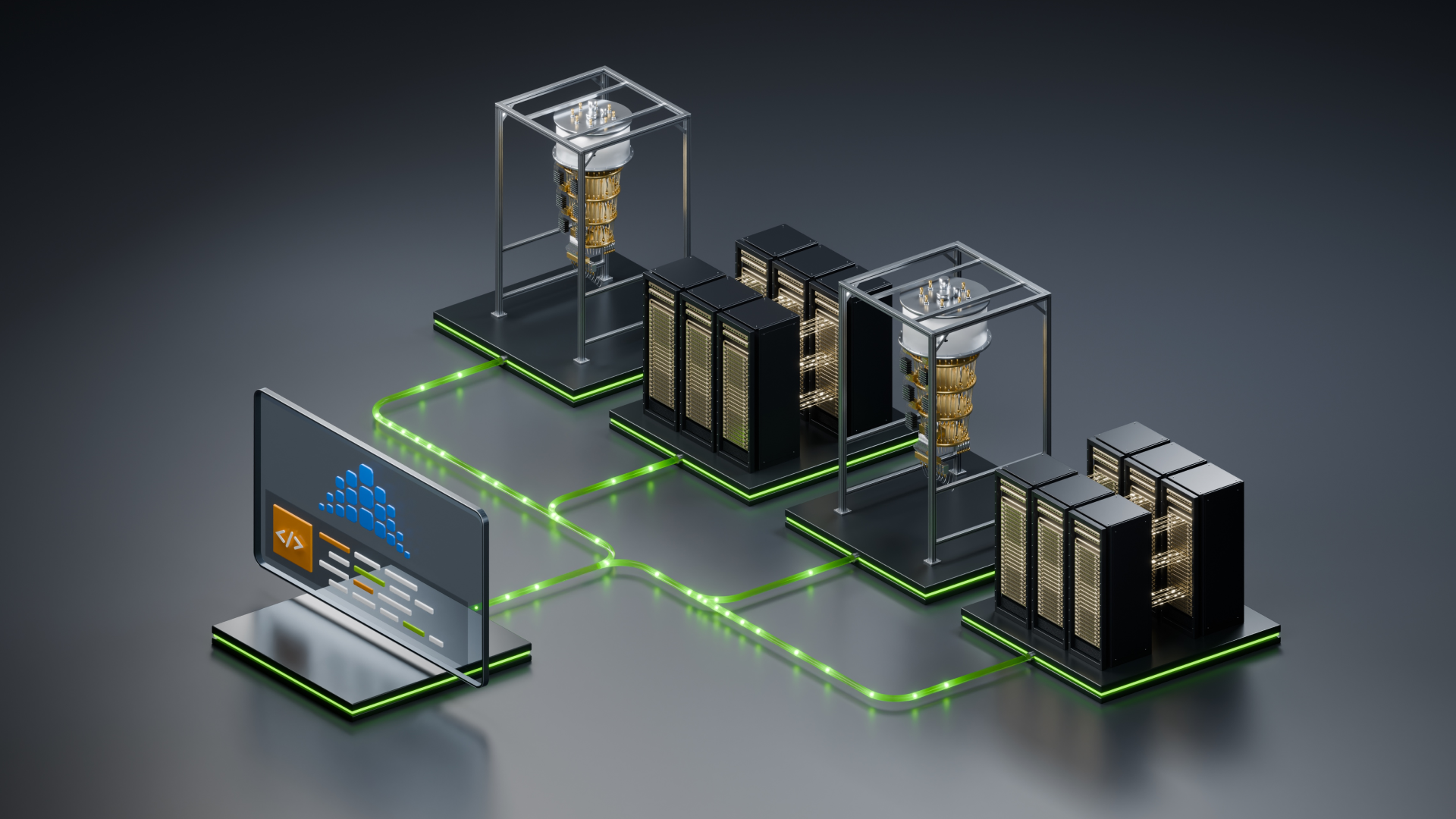
CHICAGO — The long-envisioned merger of quantum and classical supercomputing took a decisive step forward on November 16, 2026, as NVIDIA announced at the SC26 conference that its widely adopted Slurm workload manager now natively supports quantum processors. This breakthrough comes amid surging global deployments of quantum chips and sets a new standard for how scientific discoveries may unfold in the years ahead.
The expansion of Slurm—an open-source tool central to the daily science operations at nearly 30 supercomputing centers worldwide—means that quantum computing hardware can be scheduled and managed as seamlessly as traditional CPUs or GPUs. Institutions chasing the next leap in fields like drug discovery, financial modeling, and materials research now see the prospect of routinely running hybrid quantum-classical applications using familiar software infrastructure.
According to NVIDIA, quantum processor installations at supercomputing centers have grown by nearly sevenfold in five years, with over 50 quantum processors now in operation globally. Previously, scientists faced a patchwork of bespoke integrations—each new quantum processor required unique software and scheduling adaptations. Slurm’s new capabilities, building on collaboration with quantum hardware and software leaders like IBM, IQM, MQSC, and others, standardize these connections. Efforts such as the integration with the Quantum Resource Management Interface (QRMI) and Quantum Device Management Interface (QDMI) are now adopted by players including Alice & Bob, Pasqal, Quantinuum, and MQSC, streamlining how quantum resources plug into traditional supercomputing environments.
Industry Partnerships and Orchestration Advances
The impact of this announcement extends beyond software. Key partnerships unveiled at SC26 include joint work between NVIDIA, IBM, and the U.S. Department of Energy’s Fermi National Accelerator Laboratory (Fermilab) on a modular quantum-classical codesign platform. This platform aims to accelerate research into quantum error correction and the scalable integration of quantum hardware with supercomputers—both critical hurdles for unlocking practical scientific applications.
IQM Quantum Computers announced its support for the initiative, enabling its quantum systems to become schedulable Slurm resources. Meanwhile, Munich Quantum Software Company showcased their MQSC Orchestrator, a technology that bridges Slurm’s scheduling hierarchy with quantum device management, highlighting the growing maturity of ecosystem orchestration tools.
Next Steps and Ongoing Challenges
While enthusiasm is high, practical integration and widespread scaling remain a work in progress. The newly released features—expected to roll out broadly with Slurm 26.11—set the groundwork, but supercomputing centers will have to implement and customize these capabilities for their specific workflows and quantum hardware profiles.
With these collective advances, NVIDIA and its partners are betting that quantum processors will become a routine part of the world’s top computing centers. If successful, scientists could see a dramatic acceleration in research cycles, with complex simulations that once took months turning into tasks completed in days. As quantum-classical platforms mature, stakeholders within and outside the supercomputing community are watching to see which scientific frontiers will open first.