
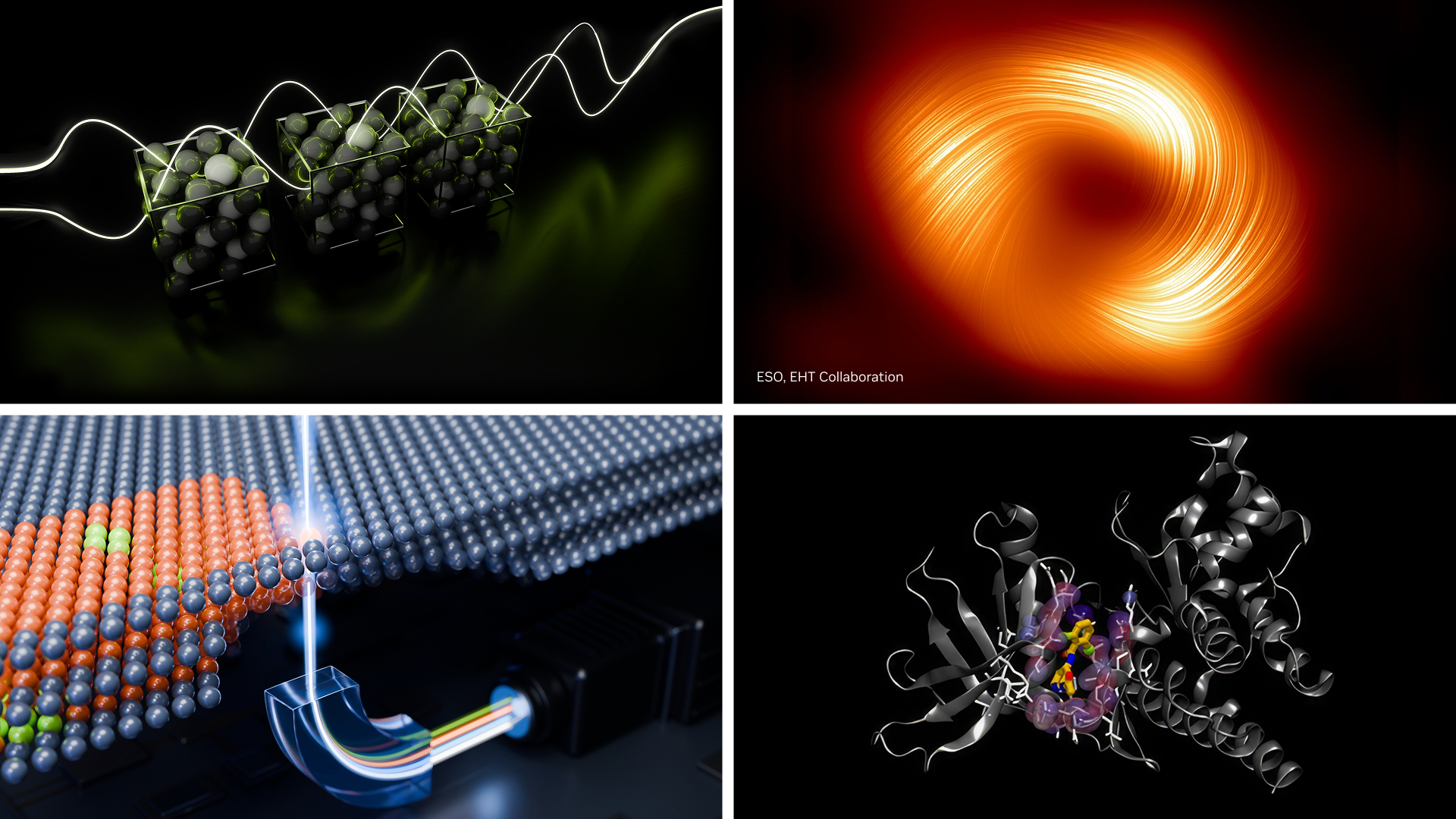
NVIDIA has unveiled a slate of new CUDA-X libraries aimed at transforming how scientists process the world’s most complex datasets, marking a pivotal breakthrough for disciplines ranging from astrophysics to drug discovery.
The announcement, made November 16, 2026, introduces three cornerstone libraries—cuPhoton, cuPotential, and cuSpa—that are already setting records for speed and analytical potential. These tools focus on helping AI agents and researchers handle massive data volumes and sophisticated models faster and more effectively than ever before, according to details released by NVIDIA (blogs.nvidia.com).
From Black Hole Images in Minutes to Real-Time Fusion Analysis
Perhaps the most dramatic leap comes in astrophysics. NVIDIA’s cuPhoton.xBeam module, part of the larger cuPhoton toolkit, enables the correlation of data from the Event Horizon Telescope at unprecedented speed. What previously took over a month of processing now takes just eight minutes, making real-time reconstruction of black hole images a reality. This not only accelerates research but could fundamentally change how astronomers respond to and interpret new cosmic phenomena.
Meanwhile, fusion researchers are already applying another new module, cuPhoton.xLens, to monitor plasma simulations as they unfold. This upgrade allows for ongoing probe and steerage of experiments, a feat previously impossible when data pipelines lagged far behind experiment timelines. By coupling these imaging tools with AI-powered agents, fusion teams can now adjust simulations on the fly—potentially hastening progress toward viable fusion energy systems.
Molecular Science and Drug Discovery Accelerate
In the molecular and pharmaceutical sciences, cuPotential stands out for its ability to triple the speed of simulations used to evaluate drug designs and analyze molecular interactions. NVIDIA is collaborating with leading organizations such as Schrödinger and several academic software communities to push these capabilities into mainstream drug discovery workflows. The rapid improvements in speed and accuracy promise to reduce the cost and time associated with finding new medicines.
Biology at Scale: Tackling the Cell’s Complexity
Single-cell biology and cancer modeling are set to benefit as well. The cuSpa library, now open source, brings a 900-fold speedup to cell polygon calculations—a computational hurdle in building spatial graphs for large biological datasets. Labs like Memorial Sloan Kettering are among early beneficiaries, using rapid single-cell analysis to facilitate therapeutic development and unlock new insights into patient data.
Looking Ahead
All three libraries are available for integration, and NVIDIA emphasizes their role as accelerators for research workflows rather than standalone tools. As scientists and organizations adopt these technologies, ongoing feedback and further application will shape their evolution and reveal new frontiers for AI-driven scientific discovery.