
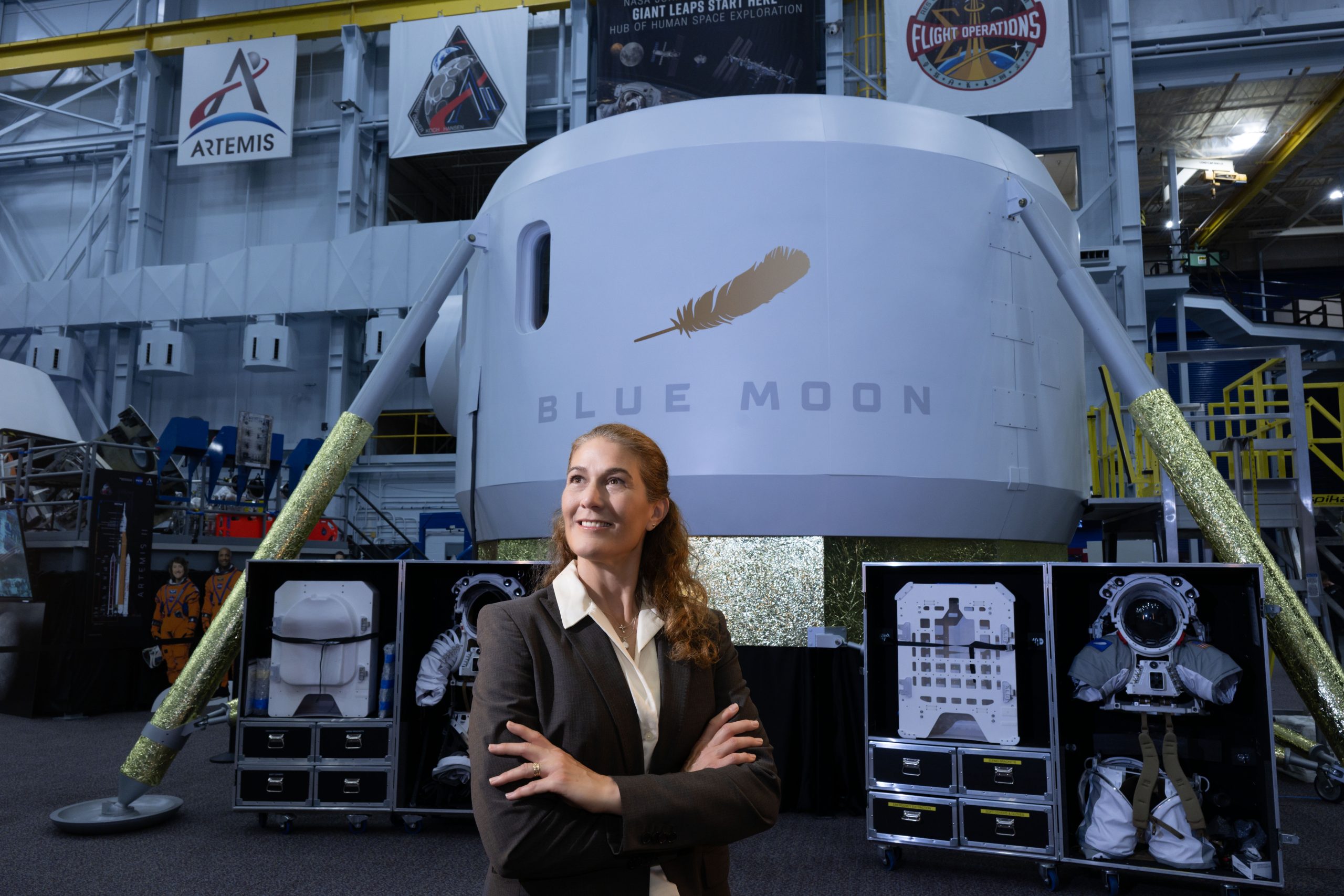
Katie Spicer stands where engineering and exploration converge. At NASA’s Johnson Space Center, she leads the meticulous integration of Blue Origin’s Blue Moon Mark 2 lander—the next-generation vehicle set to ferry astronauts from lunar orbit to the Moon’s surface for NASA’s Artemis crewed missions in 2028.
Rather than taking the smooth assurances of technical blueprints at face value, Spicer is engaged in a continual process of evaluation and adaptation. Her role as lander integration lead isn’t just about requirements checklists but about anticipating, and often redesigning, the experience for astronauts who will rely on every system aboard. She works hand in hand with engineers at Blue Origin, scrutinizing everything the crew will touch or operate. “How easy will it be for crew to grab handles or handrails? Can they operate push-button displays in microgravity?” Spicer demands. Even the operation of hygiene systems in the cramped quarters of a lunar lander falls under her remit.
This granular focus might seem small compared to the scale of lunar landings, but the stakes could not be higher. The Blue Moon Mark 2 is one of just two commercial human landing systems chosen by NASA to deliver Artemis astronauts safely to and from the lunar surface. As Blue Origin races to evolve its design, Spicer’s team faces twin tasks: supporting the Artemis III rendezvous and docking demonstration in low Earth orbit and developing a fully crew-ready lander for Artemis in 2028. At every stage, Spicer balances NASA’s mission objectives with the lived reality of astronaut operations, ensuring even mundane design details support the larger ambition of sustainable lunar exploration.
With her background in NASA’s Flight Operations Directorate, Spicer brings a blend of systems-level rigor and crew-first thinking. She evaluates not just whether technical requirements are met but whether the human interface—from gripping handrails in weightlessness to handling displays and daily hygiene—is intuitive and fail-safe for the crew. Her process extends beyond blueprints to actual training and procedures, forming tight feedback loops between crew needs, spacecraft design, and operational safety.
This partnership between NASA and Blue Origin, embodied in roles like Spicer’s, marks a new era of commercial collaboration in human spaceflight. Success will hinge not just on rocket science but on the kind of detailed scrutiny that Spicer applies day by day, ensuring that when astronauts next step onto the Moon, they do so using systems honed for human ingenuity and safety. Whether every element of the Blue Moon Mark 2 will pass her stringent criteria before the 2028 Artemis mission remains the pivotal question in the months ahead.