
Photo: NASA
NASA has unveiled an ambitious $1 million Moon Base Challenge, inviting high school and post-secondary student teams from across the United States to contribute their creativity to the agency’s push for a permanent outpost at the Moon’s south pole. Announced November 8 at the MAX POWER event in Florida, the challenge was launched amid a surge of new investments and mission milestones connected to NASA’s broader lunar strategy.
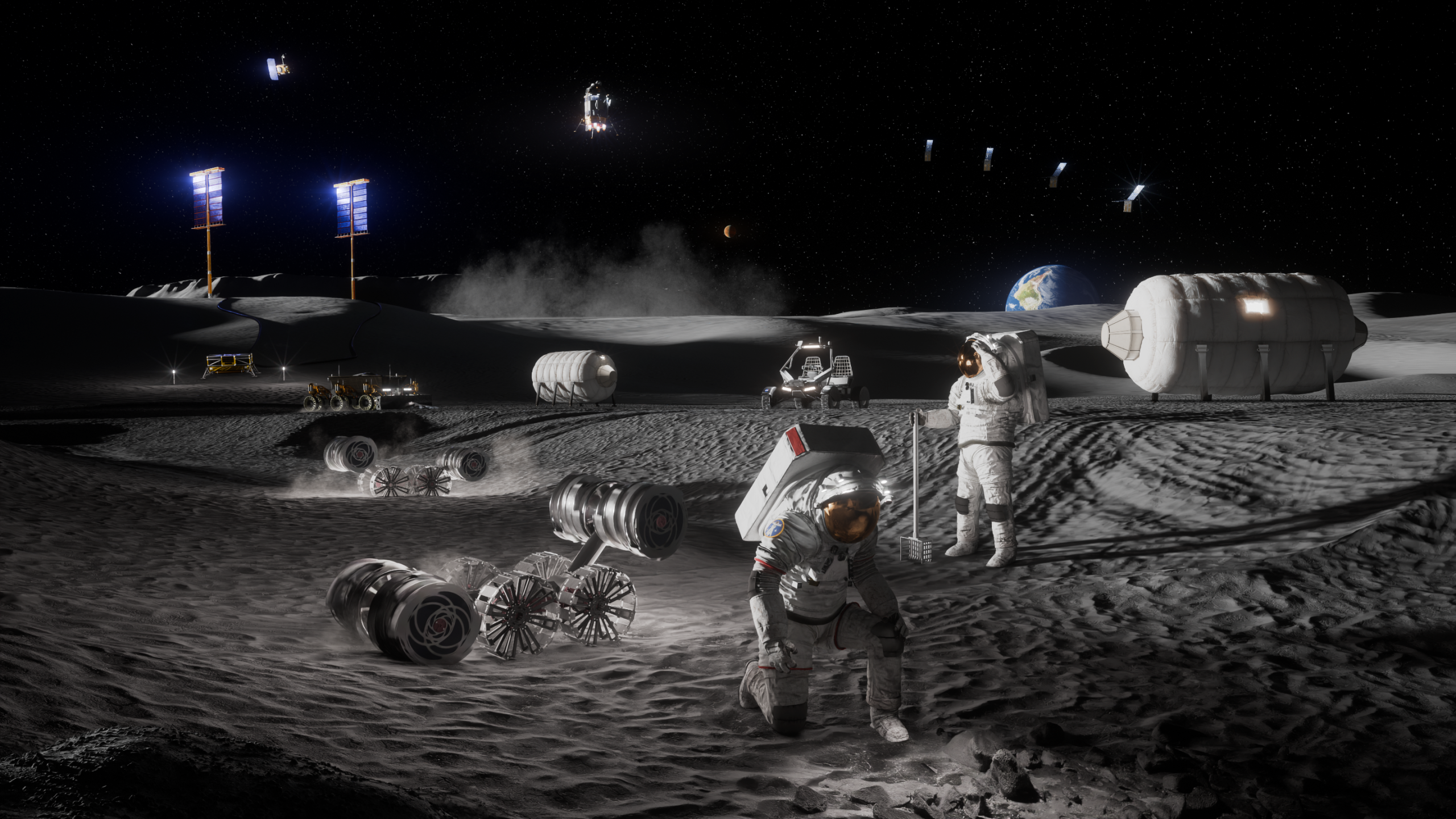
The competition is part of NASA’s multipronged effort to overcome the technical and environmental hurdles of building a sustainable lunar base. Students will be asked to design solutions spanning six categories: power generation and storage, surface construction, life-support systems, mobility, communications networks, and astronaut safety—domains central to operating a crewed Moon outpost. Registration is open until January 25, 2027, according to NASA’s official guidelines.
“As we build and design the foundations of Moon Base, we want to leverage all the ingenuity and innovation to think of every consideration our explorers might need to live and work there,” said Carlos García-Galán, NASA’s Moon Base Program manager, in a statement issued by the agency. Officials stress the challenge’s dual goal: advancing critical concepts for lunar living while cultivating skills among America’s future aerospace workforce.
An Expanding Lunar Campaign
This student challenge arrives as NASA accelerates its Moon Base campaign with new partnerships and technology initiatives. On November 7, the agency announced contracts valued up to $10 billion for commercial lunar payload services, supporting robotic and cargo deliveries crucial for staging infrastructure. Notably, Blue Origin was awarded up to $234 million to deliver the PROMISE rover—a nuclear-powered vehicle set to begin excavating and scouting for water ice at the lunar south pole in late 2028, leveraging proven Mars rover technology for the unique lunar environment.
NASA’s strategy is phased: initial robotic explorers and cargo missions are set to pave the way for sustained human occupation around the late 2020s. The Artemis program remains central, with Artemis III targeting a crewed lunar landing by mid-2027, followed by expanded capabilities in Artemis IV and beyond. The permanent base is seen as a linchpin for future Mars expeditions and international partnerships, as outlined in the Artemis Accords.
Science, Challenges, and Public Engagement
The lunar south pole presents formidable scientific and engineering challenges—from extreme cold and weeks of darkness to rugged, dust-laden terrain. Developing technologies for efficient energy use, robust habitats, and autonomous surface vehicles remains critical. NASA’s ongoing investments include lunar terrain vehicles, high-performance computing for space, and novel surface power systems.
Alongside infrastructure efforts, the agency has launched public outreach initiatives, including educational resources and a dedicated trailer, “Moon Base: Humanity’s First Outpost,” aimed at igniting interest among students and the wider public.
NASA’s Moon Base Challenge is now open for team entries via the NASA STEM Gateway, marking a pivotal moment in the agency’s bid to marry public engagement, youth innovation, and the realization of humanity’s first enduring staging post beyond Earth.