
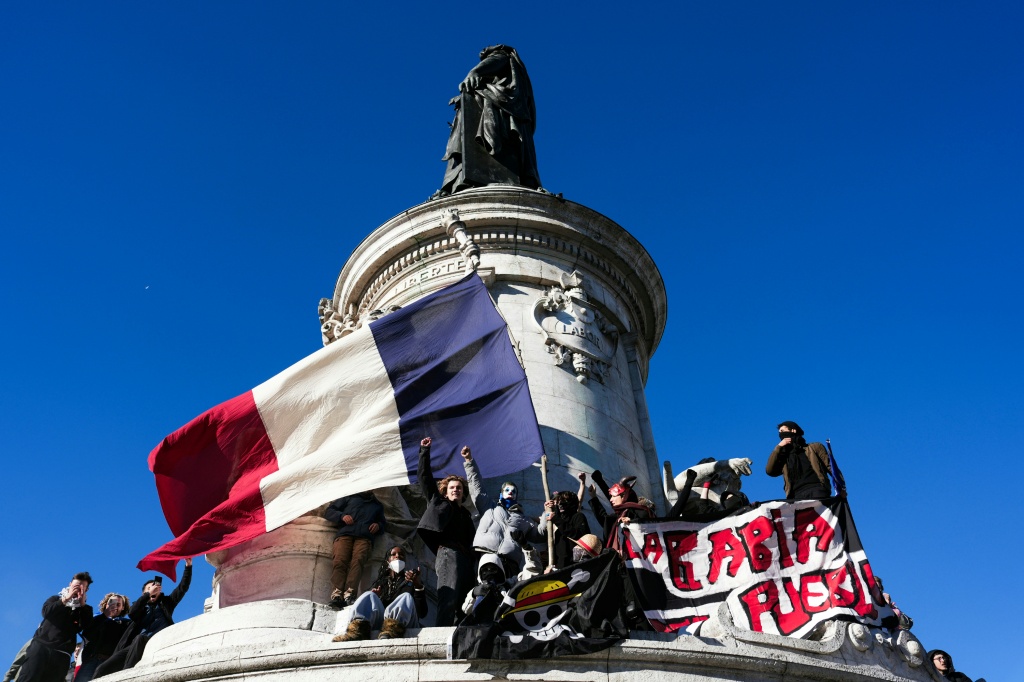
On November 14, 2026, tens of thousands of French citizens filled city squares and boulevards from Paris to Lyon, voicing mounting frustration at surging living costs and a controversial police bill many fear would weaken law enforcement accountability. The coordinated demonstrations, among the largest in months of social unrest, reflected deepening dissatisfaction with economic and political conditions across France.
According to the Interior Ministry, 106,000 people protested across the country, including an estimated 24,000 at Paris’s Place de la République; organizers and student unions asserted even higher turnout, with claims reaching 200,000 nationwide. In Lyon, authorities tallied more than 8,000 participants, while union estimates there reached 15,000. The crowds, described by French daily Le Monde as diverse and determined, ranged from labor unionists and university students to families and activists with differing yet overlapping concerns (AFP, Le Monde).
The demonstrators’ rallying cries centered on exploding daily expenses—anxieties about rents, food, and transportation costs under relentless inflation dominated speeches and banners. Yet the marches also served as a referendum on a newly proposed police bill, which would establish a presumption of self-defense for officers who use their weapons. Critics, citing a pattern of rare prosecutions for excessive force, warn that the measure would further erode police accountability. Placards reading “No justice, no peace” and chanted slogans against impunity echoed these concerns (AFP).
While the rally atmosphere was described as peaceful in most locations, authorities reported some confrontations as the day unfolded. In Paris, police deployed riot squads and tear gas to disperse parts of the crowd once fireworks and projectiles were set off. Nationwide, 219 arrests were made, with 45 in Paris alone, according to Interior Ministry figures (Rapporteur). Organizers criticized the security response as disproportionate, renewing debate over policing tactics at demonstrations.
The November 14 marches followed weeks of intensifying mobilizations sparked by economic grievances, echoing waves of protest in France over government policies and social inequality in recent years. Unions immediately called for additional strikes and demonstrations on November 17, after rejecting the government’s proposed 0.6% minimum wage increase as insufficient to counter rising expenses (Straits Times).
As of November 16, the street protests have subsided, but public debate remains urgent on both fronts: how France will address inflation and whether lawmakers will move ahead with the contested police bill. The events have tested government resolve and opposition mobilization, setting the stage for more turbulent weeks ahead.