
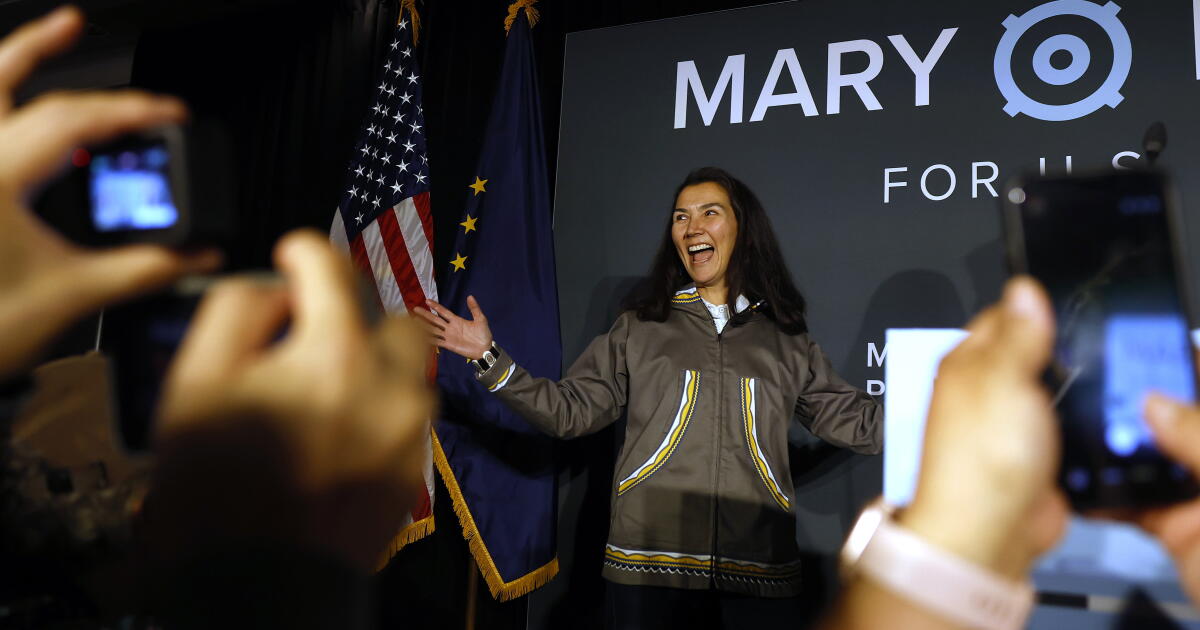
Mary Peltola has been declared the victor over incumbent Senator Dan Sullivan in Alaska’s fiercely contested 2026 U.S. Senate race, marking a watershed moment in the state’s political history. The Associated Press and multiple independent election monitors confirmed Peltola’s win on November 17, with the Democrat capturing 50.1% of the vote to Sullivan’s 45.8%, making her the first Alaska Native woman ever elected to the Senate and the state’s first Democratic senator in nearly two decades.
While Alaska is no stranger to political upsets, Peltola’s victory stands out both for its historical resonance and the controversy that has surrounded the campaign. In a state former president Donald Trump claimed by double digits in 2024, Peltola’s win underscores a notable shift in voter sentiment. Her campaign, defined by pledges to address soaring living costs and region-specific challenges, resonated strongly enough to yield a clear majority, sidestepping Alaska’s ranked-choice runoff process altogether.
Allegations and Ongoing Legal Dispute
The electoral result has not gone unchallenged. Shortly before the polls closed, allegations surfaced suggesting that Peltola’s campaign played a role in recruiting Daniel J. Sullivan Jr.—a candidate whose name closely resembled that of the Republican incumbent—to split the conservative vote. Both Peltola and the similarly named candidate have denied any coordination, yet the issue prompted the Trump administration to seek judicial intervention.
A federal judge moved swiftly to dismiss the case, citing insufficient evidence of coordinated efforts or tangible voter confusion. That outcome, however, has not settled the matter: the Justice Department is now appealing the ruling, ensuring ongoing legal uncertainty even as Peltola prepares to take office in January 2027.
Implications for Alaska and the U.S. Senate
Peltola’s election helps hand Senate Democrats a 56-44 majority, capping what national observers describe as the party’s largest net gain in more than half a century. Locally, her win is expected to have reverberations for federal policy in Alaska, particularly around energy, indigenous rights, and cost-of-living relief. As the state transitions from one of its most recognizable Republican figures to an historic Democratic successor, attention now turns to how Peltola will navigate both high expectations and an omnipresent legal backdrop.
A New Chapter Amid Uncertainty
With legal contests pending and accusations unresolved, Alaska’s 2026 Senate race reflects both the evolving diversity of American representation and the perennial turbulence of close-fought elections. For the moment, the results stand, cementing Peltola’s place in state and national history, and altering the dynamic in Washington set to unfold beginning in January.