
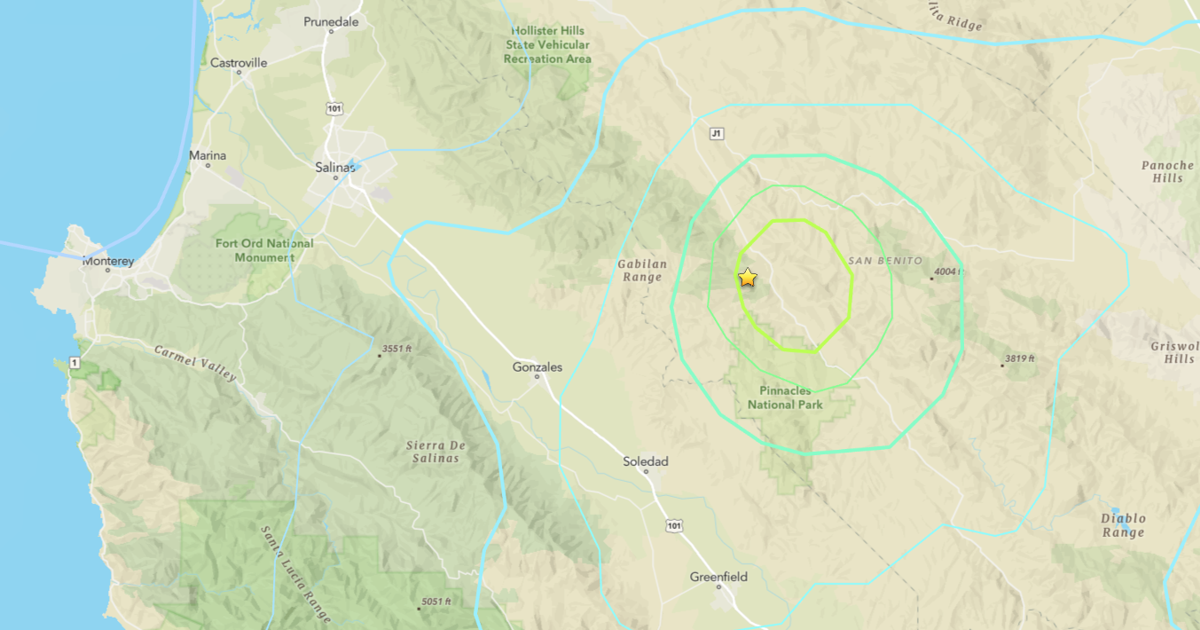
Late Thursday night, residents across central California were jolted by a magnitude 5.0 earthquake centered near Soledad, Monterey County, according to the U.S. Geological Survey (USGS). The quake struck at 10:49 p.m. Pacific Time on November 19, 2026, with its epicenter located roughly 10 kilometers northwest of Pinnacles National Park in neighboring San Benito County, at a depth of about 6.7 kilometers (4.2 miles).
Initial reports from the USGS had placed the earthquake at a magnitude of 5.4 before it was revised to 5.0 as more data became available. The shaking triggered California’s ShakeAlert early warning system, which provided residents with several seconds of notice before the seismic waves arrived—an activation that may have given households along the Salinas Valley and beyond a brief chance to prepare. There were no immediate reports of injuries or major damage, according to available information as of Friday morning.
The mainshock was followed by a series of at least 14 aftershocks with magnitudes of 2.5 or greater, the strongest being a magnitude 3.4 tremor at 11:14 p.m. that same night. While seismic activity is not uncommon in this stretch of California’s coast—home to the infamous San Andreas Fault—the event served as a fresh reminder of the region’s vulnerability. The shaking was felt as far north as Stockton, indicating the quake’s broad reach despite its moderate magnitude.
Authorities emphasized that the National Tsunami Warning Center found no risk of tsunami resulting from the quake. Past events in the region, such as the 1989 Loma Prieta earthquake, have highlighted the importance of monitoring even moderate seismic events given their potential to disrupt lives and infrastructure. For the moment, officials are continuing aftershock monitoring and advising residents to remain alert by following instructions from local emergency management agencies.
Monterey County’s latest quake did not appear to bring structural devastation or cause casualties, but geologists cautioned that aftershocks could persist over the coming days. Californians are encouraged to review earthquake safety plans and ensure emergency kits remain stocked as the seismically active region continues to experience periodic movement along its networks of faults. The USGS and emergency services remain engaged in ongoing response and assessment efforts.