
Kansas school districts remain caught in a difficult cycle of underfunded special education services as both declining enrollment and longstanding funding shortfalls complicate efforts to meet students’ needs. According to state audit and budget documents, more than a decade of unmet statutory obligations has left districts stretched, as discussions in the Kansas Legislature struggle to produce a sustainable solution.
During the 2021–2022 school year, public school districts in Kansas provided special education support for about 88,400 children—a population requiring substantially higher resources than general education students. State law mandates that Kansas fund 92% of the excess costs of special education, but records from the legislature’s own auditors and budget analysts show the state has consistently fallen short since at least 2010, with local districts left to bear the remainder or cut services elsewhere.
The Kansas State Department of Education’s latest analysis for the 2023–2024 year estimated total special education excess costs at $762.2 million. However, only $528.2 million of state aid was approved—covering just 69.3% of costs. To fulfill the statutory requirement, an extra $173 million would have been needed, according to budget documentation. Requests from the education department to increase the state’s contribution to even 80.9% of excess costs have yet to be fulfilled or approved by the Legislature for coming fiscal years (
budget.kansas.gov).
Recent proposals in the Legislature, including Senate Bill 387 introduced in 2024, have suggested changing the formula for how excess costs are calculated and distributed. Advocates and school leaders have voiced concerns that such formula revisions could risk further underfunding special education if not paired with increased appropriations. The Kansas state audit notes that while targeted new funding may improve outcomes for some groups of students, broad-based underfunding makes it difficult for districts to guarantee compliance with federal and state standards for student achievement and services (
kslpa.gov).
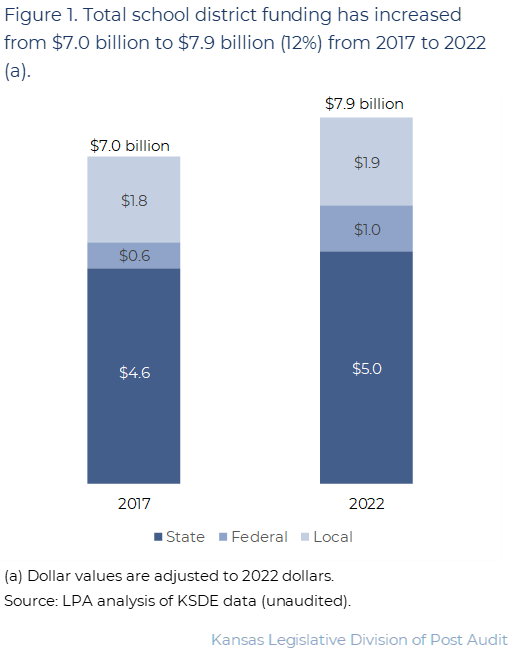
Despite a 12% overall rise in state and federal education funding statewide from 2017 to 2022—driven partly by pandemic-era federal dollars—rising costs and stagnant state appropriations for special education have kept the shortfall in place. Local school districts, limited in what they can raise through property taxes, are often forced to siphon from other budget areas or operate at a deficit. The Kansas State Department of Education, meanwhile, continues to urge lawmakers to increase support, warning that continued gaps may impact both the quality and availability of specialized services to some of the state’s most vulnerable students.
For over a decade, Kansas has not met its legal funding promise for special education. As of November 2026, legislative solutions remain on hold and budget requests unresolved—leaving educators and families in uncertainty about the path forward.