
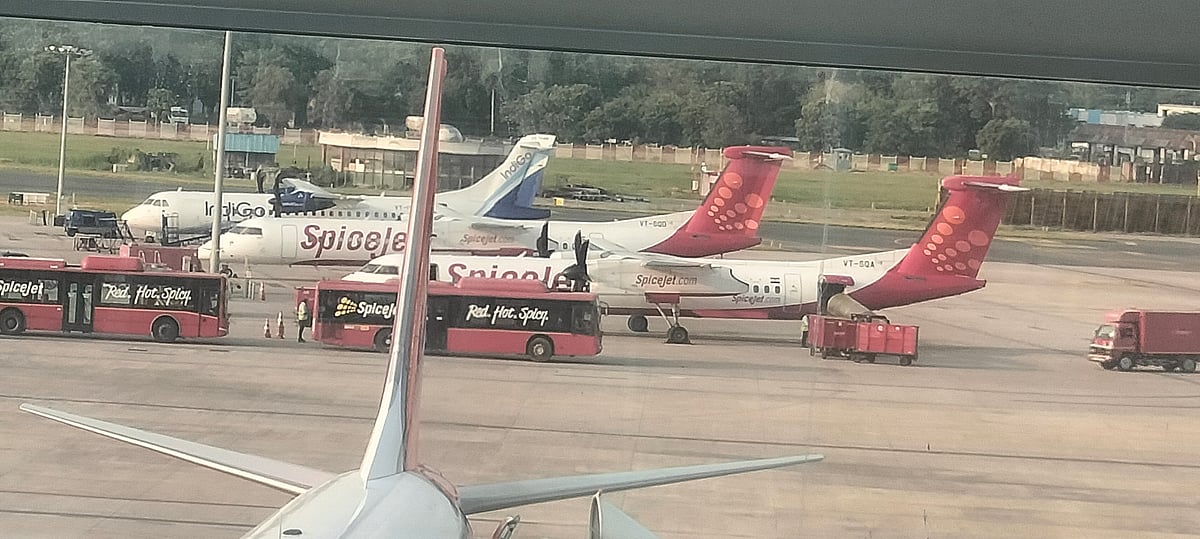
India’s Directorate General of Civil Aviation (DGCA) has issued a show-cause notice to SpiceJet, one of the country’s prominent carriers, citing a cascade of operational failures, grounded aircraft, and repeated violations of aviation regulations. The move, communicated on November 17, 2026, has placed the financially embattled airline on the brink, with the regulator demanding a detailed response within seven days—a deadline that could determine the company’s future in India’s competitive aviation sector.
The DGCA’s action comes against a background of sharply deteriorating performance. Over recent months, SpiceJet’s on-time performance has markedly declined, while delays and flight cancellations have surged, leaving passengers stranded and shaking public confidence. The airline is now operating with the majority of its fleet grounded, a situation attributed both to a lack of credible plans to restore aircraft to service and persistent financial woes. The regulator noted that SpiceJet had not provided an effective strategy to reactivate its non-operational aircraft, further undermining its ability to maintain a reliable schedule.
Regulatory concerns extend beyond punctuality. The DGCA’s notice highlights SpiceJet’s repeated breaches of Route Dispersal Guidelines (RDG)—rules designed to ensure that carriers serve less-profitable regional routes in addition to lucrative metro-city corridors. Despite past penalties, including one imposed on May 11, 2026, SpiceJet has reportedly continued to violate these requirements and, significantly, has failed to pay previous fines.
Financial distress lies at the core of the crisis. According to the DGCA’s findings, SpiceJet’s delayed payments to service providers have led to further operational disruptions, while uncertainty over the renewal of mandatory insurance coverage raises additional safety and regulatory concerns. These factors have coincided with a dramatic reduction in market share: in September 2026, SpiceJet commanded just 0.6% of domestic traffic—halved from 1.2% the previous month.
The greatest immediate impact has been on travelers. Passengers have faced increasing cancellations and inadequate customer support, prompting Indira Gandhi International Airport in Delhi to advise fliers to check their SpiceJet flight status in advance.
SpiceJet now has seven days from the notice date to respond fully to the DGCA’s detailed concerns. Failure to do so could result in severe regulatory actions under India’s Aircraft Rules and Civil Aviation Requirements, ranging from fines to suspension or even revocation of the carrier’s license. As of November 21, SpiceJet’s official response remained pending, and industry observers are watching closely to see whether the airline, once regarded as a nimble low-cost innovator, can muster a credible path to operational and regulatory recovery.
This episode marks another chapter in a history of regulatory scrutiny for SpiceJet, whose operational rebound—amid continued financial strain—remains uncertain. For now, the airline stands at a critical crossroads, awaiting a judgment that could reshape India’s aviation landscape.