
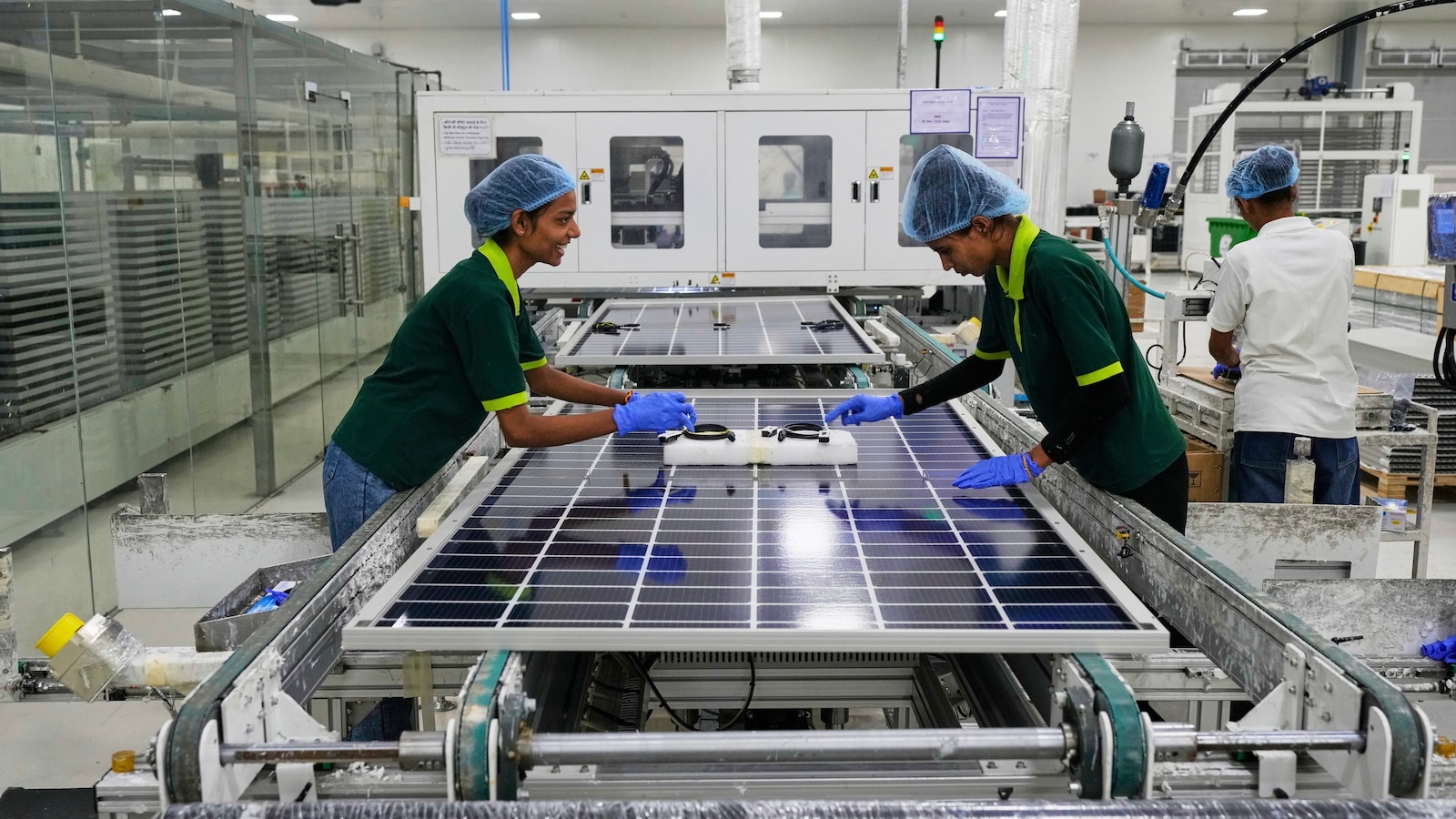
In an ambitious bid to accelerate its energy transition, the Indian government has announced plans to nearly triple its non-fossil fuel-based power capacity to 900 gigawatts (GW) by 2035. The new target, issued in late September 2026, puts India at the forefront of global renewable energy ambitions, yet surfaces urgent questions about the country’s grid readiness and persistent dependence on coal for electricity generation.
India recently surpassed 300 GW in non-fossil capacity—more than half its total power infrastructure—as of July 2026. Government figures show that solar contributes 164.59 GW, wind 58.14 GW, hydropower 57.24 GW, bio-power 11.75 GW, and nuclear 8.78 GW. Having previously achieved its 2030 target of 500 GW ahead of schedule, India now looks to extend this rapid pace over the next decade. The move has drawn attention internationally, with the country now ranking third in global installed renewable capacity according to the International Energy Agency and India’s Power Ministry.
Ambition Meets Infrastructure Bottlenecks
Despite the remarkable momentum, India faces tough realities in scaling up. The infrastructure required to transmit clean power across its vast expanse has struggled to keep pace. According to multiple sector reports and analyst commentary, grid limitations have forced curtailment of solar generation sufficient to power approximately 10 million homes, underlining the gaps between capacity and actual power delivered to customers. These bottlenecks have become a persistent obstacle, threatening the reliability and bankability of future clean energy projects.
The government has responded with robust policy measures. Initiatives under the Green Energy Corridor plan earmark nearly $20 billion for power grid upgrades and battery storage—essentials for facilitating greater flows of intermittent renewable resources like solar and wind. The Union Budget for 2026-27 reflects this urgency, allocating over $5 billion to the Ministry of New and Renewable Energy, a 40% increase from the prior year.
Coal Remains a Shadow Over the Transition
Yet, even as clean capacity surges, coal continues to account for around 71% of India’s electricity supply as of 2025, highlighting a glaring contrast between installed renewables and real-time generation mix. This structural reliance on coal presents a tough challenge for decarbonization, raising concerns among climate advocates and industry experts about the pace of reform versus energy security needs for India’s 1.4 billion people.
Policy alignment, infrastructure investment, and energy market reforms will be pivotal if India is to deliver on its newly announced 2035 target. While the government has shown commitment—achieving 50% non-fossil installed capacity five years early—the coming years will test whether physical grid expansion and coal substitution can keep up with targets.
Global Impact and Next Steps
India’s clean energy expansion is a touchstone for other emerging economies. Sector analysts stress that, should India succeed or stumble, the effects will ripple across global emissions outcomes and technology markets. The next phase depends on the successful execution of grid modernization schemes, timely financing, and the managed phaseout of coal without jeopardizing economic growth or energy access in the world’s most populous nation.
The government will face ongoing scrutiny as it announces further policy measures and as assessments unfold over the effectiveness of the Green Energy Corridor plan. India’s progress in the coming months and years will both shape and signal the possibilities and limits of large-scale energy transition in the developing world.