
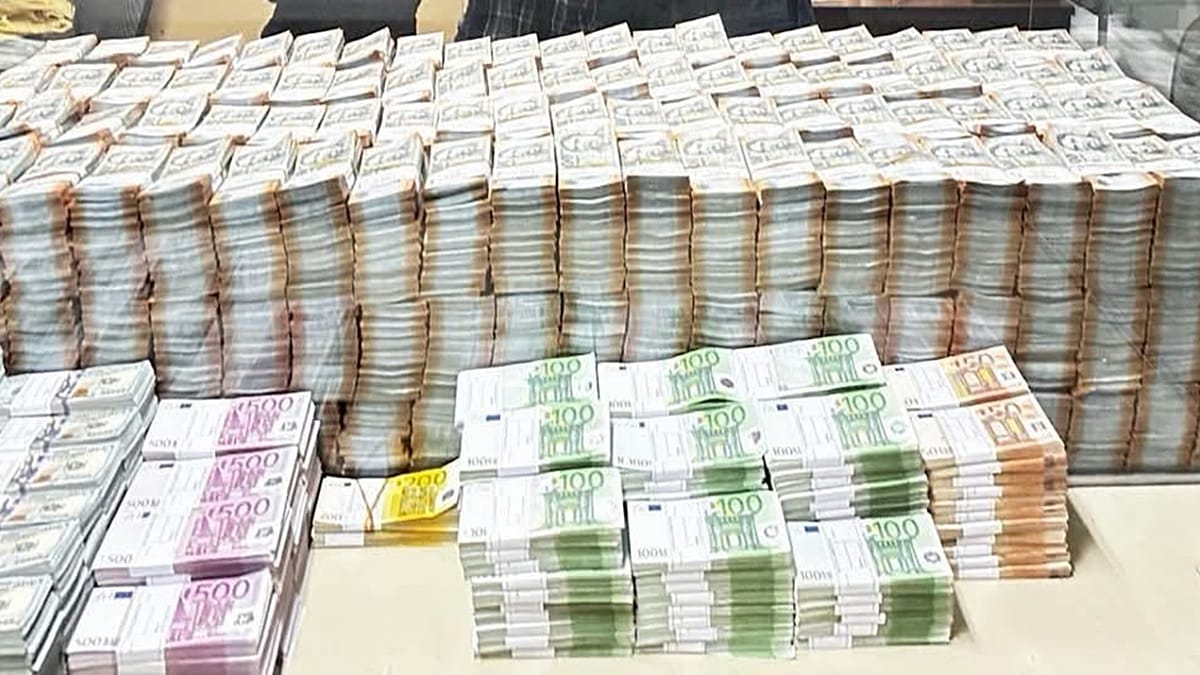
Hungarian authorities have uncovered and seized approximately $19.5 million in cash hidden in forests, agricultural buildings, warehouses, and private safes, marking one of the country’s largest anti-corruption operations in recent history. The dramatic sweep, which unfolded over November 12 and 13, 2026, targeted properties across Budapest as well as Pest, Békés, and Nógrád counties, according to multiple international press reports.
This operation is part of a wider criminal probe into corruption allegations against Miklós Seszták, Hungary’s former National Development Minister (2014–2018). He stands accused of accepting over $37.2 million in bribes and kickbacks, mostly linked to government transportation contracts and state construction work during his tenure. Authorities took Seszták into custody in late September, following an order from the Buda Central District Court on September 30. His detention has since been extended to January 30, 2027, as prosecutors assess both the magnitude of allegations and risk of flight.
New Government, New Tone
The investigation comes on the heels of April’s election, which brought Prime Minister Péter Magyar to power with a pledge to address longstanding corruption and promote transparency after more than a decade of rule by Viktor Orbán. For years, Orbán and his Fidesz party faced criticism at home and abroad for alleged misuse of public funds and opaque contracting. The new prime minister has characterized the cash seizure as a significant turning point, proclaiming on November 13 that it “officially marks the end of the Fidesz-KDNP mafia.”
Hungarian police and the National Asset Recovery and Protection Office report that their search uncovered stashes of cash in local and foreign currencies, often literally buried in forests or ensconced in remote agricultural buildings far from public eye. Sources confirm that some of the properties in question were tied directly to Seszták’s close associates, although further details remain under judicial seal due to the ongoing investigation.
Broader Crackdown, Ongoing Tensions
The sweep does not stop with Seszták. Since April, officials have launched investigations into several other high-profile Orbán-era figures, including the former central bank head and Orbán’s brother. These raids signal the broadest anti-graft action in Hungary’s recent memory, as the new administration seeks to draw a sharp line under the controversies of the past government. While Prime Minister Magyar’s camp frames the operation as a necessary purge, Orbán has denounced the investigations as political “tyranny” designed to forcibly eliminate his faction from the political scene.
Despite the stark rhetoric, the investigations continue to gather momentum. Prosecutors assert that asset recovery efforts are ongoing, and additional searches may yield further discoveries. Hungarian and European observers are closely watching the probes not just for legal outcomes, but as a potential bellwether for how the new Magyar government will distinguish itself domestically and in its relations with EU institutions historically critical of Hungary’s rule of law standards.
What happens next may redefine political and judicial norms in Hungary, with repercussions for accountability and governance well beyond this week’s dramatic search and seizure. For now, authorities signal no intention of scaling back, and the nation’s anti-corruption drive remains in full force as of November 15, 2026.