
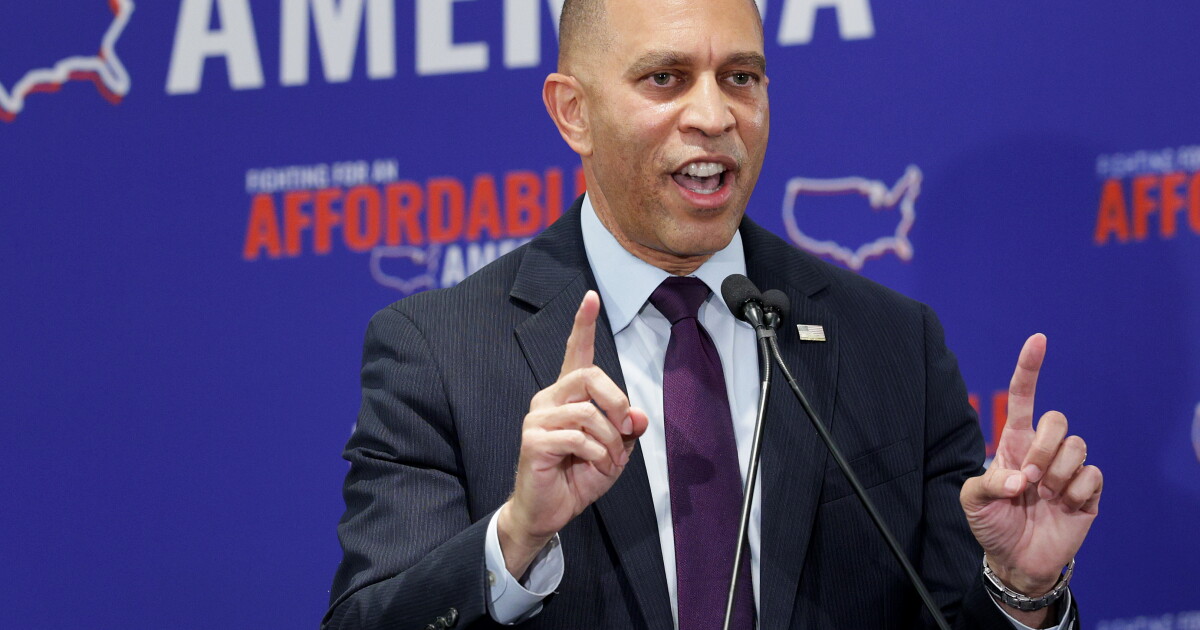
With the November 2026 midterm elections yielding a Democratic majority in the House of Representatives, Minority Leader Hakeem Jeffries has formally declared his candidacy for Speaker of the House—a post that, if secured, would mark a historic first for a Black lawmaker in congressional leadership. The path ahead, however, is complicated by vocal grassroots opposition, even as no credible challenger has emerged to contest Jeffries’ ascent within his party ranks.
On November 4, Jeffries laid out his vision in a letter to colleagues, seeking their support and outlining a Democratic agenda focused on affordability, accountability, and “American values.” He credited House Democrats with holding the line against what he called “MAGA extremism” in the previous congress, and pledged a legislative focus on reducing living costs and promoting transparency (jeffries.house.gov).
Democratic lawmakers have reported a surge of calls and emails from constituents urging members not to support Jeffries for Speaker. The reasons behind this grassroots pushback are varied, ranging from ideological concerns to frustrations over internal party dynamics. Yet, according to reporting from Axios and The Washington Post, such resistance has not coalesced into an organized challenge. In fact, the Democratic caucus has so far not produced a viable alternative, with prominent party figures like Katherine Clark (nominated as Majority Leader) and Pete Aguilar (as Majority Whip) joining Jeffries’ leadership slate (Axios; Washington Post).
Leadership elections within the Democratic caucus are scheduled for November 18, 2026. Jeffries’ bid is expected to advance uncontested at that juncture, setting the stage for the formal Speaker vote by the full House on January 3, 2027. Still, the extent to which progressive or grassroots unease might influence these proceedings—if at all—remains unresolved.
Jeffries, who has served as Democratic leader since 2022 and represents New York’s 8th congressional district, is known for a strategic legislative style and his ability to navigate the often-fraught dynamics of the House. The upcoming leadership transition follows a period of Republican control under Speaker Mike Johnson, who narrowly held the gavel after the 2025 speakership vote (Wikipedia).
Should Jeffries be elected Speaker at the opening of the 120th Congress, his tenure would represent a historic milestone for representation and party realignment in the post-Trump era. For now, Democratic unity appears to hold at the leadership level—though whether that consensus endures through the formal votes in the face of outside dissent will soon be tested.