
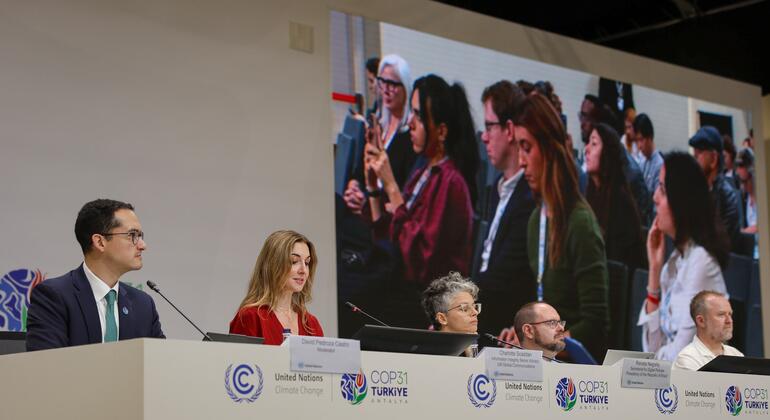
At COP31 in Antalya, where nations negotiate the future of global climate cooperation, a pivotal new initiative has emerged: an international blueprint for governing how artificial intelligence (AI) delivers and interprets climate change information. On November 13, the Global Initiative for Information Integrity on Climate Change, led by the United Nations, UNESCO, and Brazil, unveiled its Priorities for Action on AI and Climate Information Integrity—a set of standards and actions targeting the mounting influence and unchecked pitfalls of AI in this information-critical arena.
Unlike prior declarations, these priorities directly confront what organizers call the “AI information gap”: not only can AI generate fluent but unfounded climate claims, but its own environmental footprint remains obscured. During disasters, the panel warned, AI-generated images or text can go viral faster than any official correction or warning. Meanwhile, citizens and policymakers are asked to trust assertions regarding how much energy and resources AI consumes, without clear underlying evidence.
The guidance demands unprecedented transparency and accountability. AI companies are urged to rigorously assess how their products shape climate information, publish results, and disclose their energy usage and their carbon, water, and land footprints. For member states, the recommendations call for integrating information integrity tools into both their national AI strategies and climate plans—a sign of rising political momentum. These norms build on last year’s Belém Declaration, now signed by 29 countries and the European Union, which first cemented information integrity as a climate action priority.
Advertising’s powerful—yet often invisible—hand in funding climate disinformation also came under scrutiny. The Charter for Climate Information Integrity in Advertising, launched by groups including the Conscious Advertising Network and Climate Action Against Disinformation, demands that all actors in the online advertising supply chain step into the light. Brands are often unable to tell whether their digital ad buys unwittingly bankroll disinformation or greenwashing. The Charter calls for full transparency, verification of advertisers, stronger action on misleading environmental claims, and publicly disclosed relationships between advertising actors and fossil fuel firms.
Backing these ambitions with real resources, Germany has pledged over $2.2 million to a new global fund, administered by UNESCO, supporting research, communication campaigns, and public awareness on climate information integrity. Initiative partners want other countries to add their support to ensure the proposals can move beyond guidance and into practice.
The effort lands at a conference where COP31’s ten presidential priority themes, from zero waste to climate-resilient cities, are already pushing toward measurable, sector-wide change. Still, the initiative’s launch underscores an urgent, unresolved tension: amid rapid AI adoption, the question is no longer whether the technology holds promise or peril, but whether people can trust the climate truths—or fictions—it produces. Whether enough states and industries will take up the challenge before the next disaster places the world’s information systems to the test remains to be seen.