
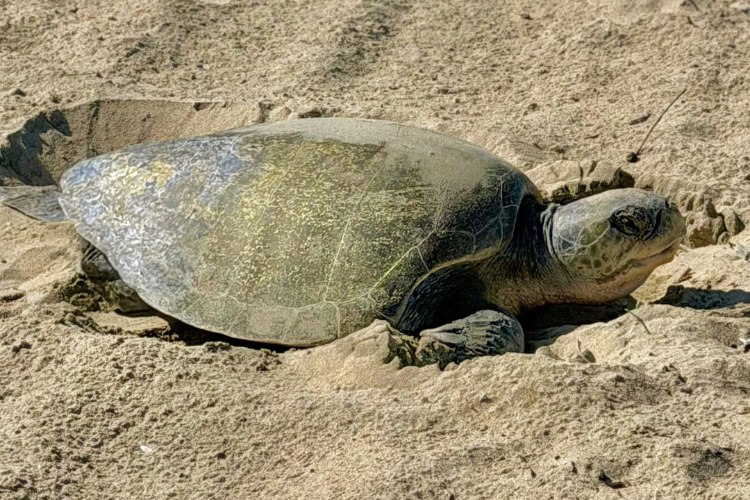
Southern California’s coastline marked a historic conservation milestone in mid-November as seventy-five olive ridley sea turtle hatchlings—believed to be the first native-born of their kind in California—made a vulnerable but momentous journey into the Pacific Ocean. These hatchlings arrived following an unprecedented series of events that began in September, when two female olive ridley sea turtles were seen nesting at Seal Beach and Huntington Beach, setting records as the first documented natural sea turtle nests on the U.S. West Coast.
The discovery of the nests on September 16 and September 19 by agencies and community volunteers prompted immediate protective action. As Hurricane Polo threatened the coast with high tides and surf, more than 200 eggs were carefully relocated to the Aquarium of the Pacific in Long Beach on September 25. There, scientists and staff ensured careful, controlled incubation over nearly two months—a process culminating with hatchlings breaking ground and emerging on November 13.
On November 14 and 15, conservationists, in coordination with NOAA Fisheries, the U.S. Fish and Wildlife Service, and regional partners, released a total of seventy-five viable hatchlings into the surf at their original Orange County nesting sites. The coordinated effort required monitoring the nests, fencing off vulnerable sites, and community outreach—crucial for both public awareness and the safety of this endangered species.
Olive ridley sea turtles (Lepidochelys olivacea) typically nest thousands of miles south in Mexico and Central America. The nearest previously known nesting location was about 700 miles south in Baja California Sur. The reasons for the northward shift are not fully known, though researchers point to warming ocean temperatures—possibly driven by marine heatwaves and the incoming El Niño event—as likely factors that prompted the turtles’ rare appearance on California shores.
While the release of hatchlings signals rare success for a species with natural survival rates below 1% from hatching to adulthood, officials caution that much remains uncertain. Whether these turtles will one day return to California to nest, and what this means for regional biodiversity, remains open to scientific monitoring. For now, the emergence and release of these hatchlings stand as a testament to rapid, collaborative conservation in the face of a changing climate and dynamic coastline.
Agencies and science teams look ahead
The inter-agency teams continue to track hatchling survival rates, monitor local beaches, and collect data in hopes of understanding whether this event signals a broader shift in olive ridley behavior or nesting range. Federal protections remain in place for all sea turtles in U.S. waters, with conservationists advocating for ongoing vigilance as climate and oceanic trends drive new patterns in marine wildlife.
The remarkable journey of these hatchlings—from unexpected nests to the ocean—has galvanized public support and scientific curiosity in California, making this a landmark chapter for West Coast marine conservation.