
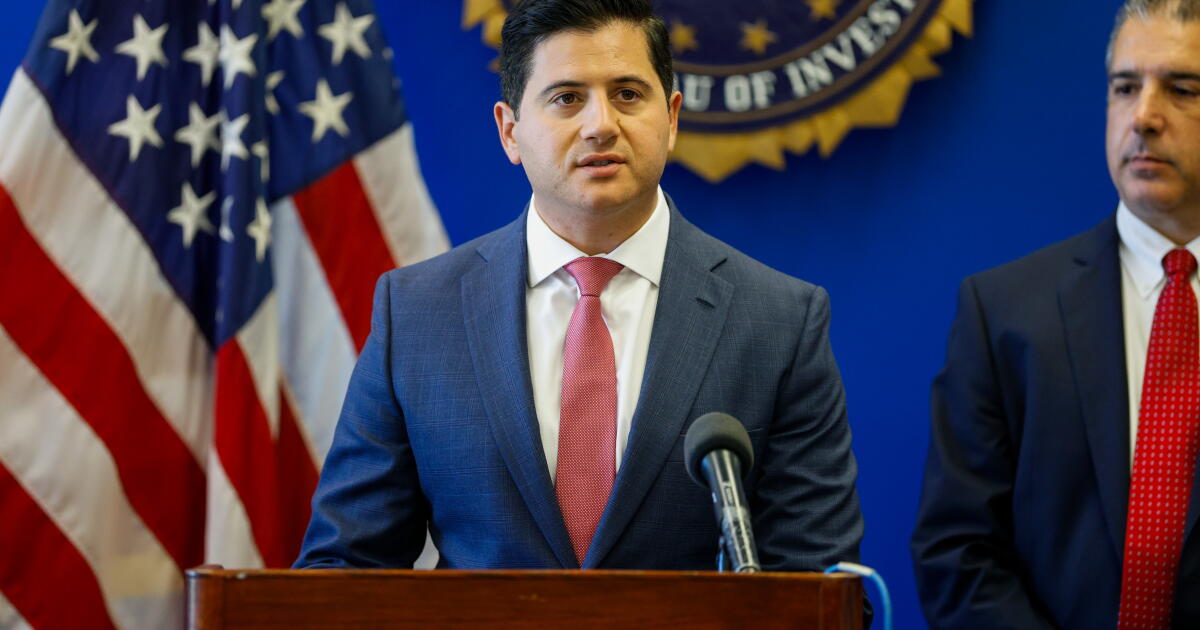
A federal judge has refused to delay an order barring Bill Essayli from serving as the U.S. Attorney for the Central District of California, deepening a high-stakes conflict over the legality of his appointment and raising urgent questions for ongoing prosecutions in the nation’s busiest federal court district.
Senior U.S. District Judge J. Michael Seabright on November 16, 2026, upheld his previous ruling that Essayli, a former Republican lawmaker installed through a succession of temporary roles by the Trump administration, was “unlawfully serving as a ‘de facto’ United States Attorney.” Seabright’s decision means Essayli is barred from participating in or supervising specified criminal cases – unless an appellate court intervenes quickly. (Sources: Los Angeles Times, CBS Los Angeles)
The Justice Department responded with an emergency request to the Ninth Circuit Court of Appeals, warning that Seabright’s interpretation of federal appointment laws could throw the status of roughly 5,000 criminal matters into doubt across the Central District’s jurisdiction. The immediate dispute centers on the administration’s strategy: after Essayli’s 120-day interim term expired, he was re-designated as both a special attorney and first assistant U.S. Attorney – a move that plaintiffs argue sidestepped the Senate’s constitutional advice and consent role required for permanent U.S. Attorney appointments. (Source: Los Angeles Times)
The controversy has deep roots in federal vacancy law. The Federal Vacancies Reform Act limits interim appointments to 120 days; at that point, the appointee must be confirmed by the Senate. Similar legal challenges have succeeded in other states, including recent court decisions in New Jersey and Nevada that invalidated comparable appointments. The Los Angeles legal community, meanwhile, faces growing uncertainty. (Source: Los Angeles Times)
For now, Essayli remains in office as the dispute races toward appellate review. He has expressed confidence that the U.S. Supreme Court will ultimately resolve whether his continued service violates federal statutes. “I look forward to serving in my current role until then,” he stated, underscoring the administration’s defiance of the lower court’s bar. (Source: Los Angeles Times)
As courts scrutinize the constitutionality of bypassing Senate confirmation for such a critical law enforcement post, public defenders and defense counsel have already begun challenging Essayli’s involvement in prosecutions, threatening further disruptions across the criminal justice system.
The final outcome – and the fate of thousands of prosecutions in Southern California – now rests with the federal appeals court, and potentially the Supreme Court, amid intensifying national legal debate over the boundaries of executive appointment power.