
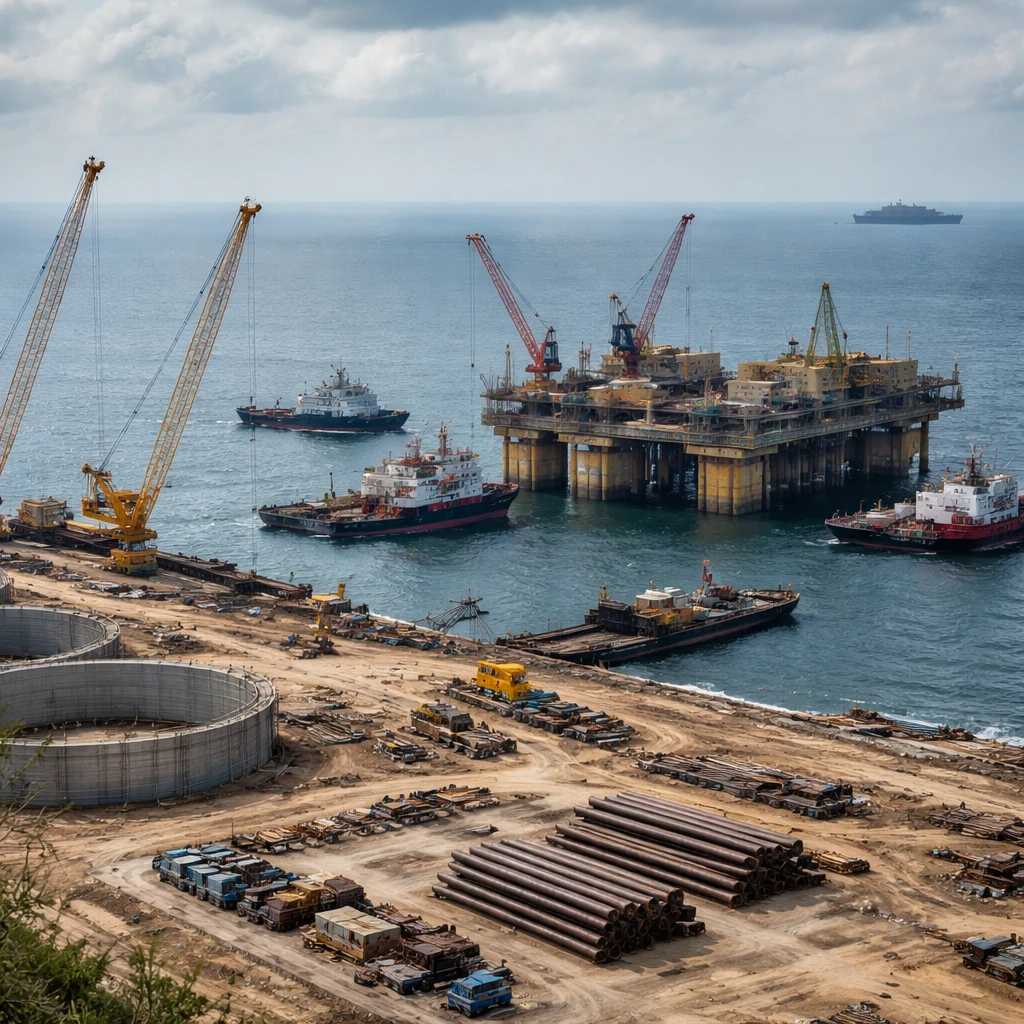
A recent decision from the 5th U.S. Circuit Court of Appeals has dealt a significant blow to Sentinel Midstream’s ambitious Texas GulfLink project—a $2.1 billion deepwater oil export facility located about 30 miles off Freeport, Texas. The ruling, which took effect on October 30, 2026, voided the previously granted license for the project, casting uncertainty over one of the Gulf Coast’s most high-profile infrastructure developments.
The judicial order followed a legal challenge from environmental groups including Better Brazoria Clean Air and Water, who argued that the project’s application area overlapped with that of a competing proposal—the Sea Port Oil Terminal (SPOT) from Enterprise Products Partners. The court determined that the U.S. Maritime Administration (MARAD) violated the Deepwater Port Act, which stipulates that only a single deepwater port license can be approved per application area, by granting licenses to overlapping projects (see 5th U.S. Circuit Court of Appeals decision).
As a result, while onshore work at Sentinel’s Jones Creek terminal continues, offshore construction must stop until the regulatory and legal landscape is clarified. The court’s decision also raises the specter of delays—and even redesigns—for other deepwater port projects under federal review that involve overlapping territory, industry observers note (see tradevae.com).
Legal and Regulatory Standoff
Sentinel Midstream maintains that its license remains neither suspended nor terminated, emphasizing that it is actively working with MARAD on pathways forward. The company has announced its intention to petition the U.S. Supreme Court in an attempt to resolve the legal challenge and restore certainty to the project’s permitting process.
This episode also highlights ongoing tensions between energy infrastructure expansion and environmental oversight. Since the Deepwater Port Act of 1974, legal challenges from environmental organizations have sought to ensure regulatory compliance and mitigate ecological risks associated with large-scale offshore projects.
Implications for Broader Offshore Oil Infrastructure
The outcome of Sentinel’s legal efforts will have ripple effects well beyond this single project. If the appellate court’s interpretation holds, any future deepwater port initiative must avoid overlapping with existing applications—potentially upending timelines, designs, and investments for major export infrastructure along the U.S. Gulf Coast.
For now, the Texas GulfLink project, which had targeted full operations by late 2028 and the capacity to load as much as 2 million barrels of crude oil per day, faces foreseeable delays and costly regulatory hurdles as the validity of its federal license remains unresolved.