
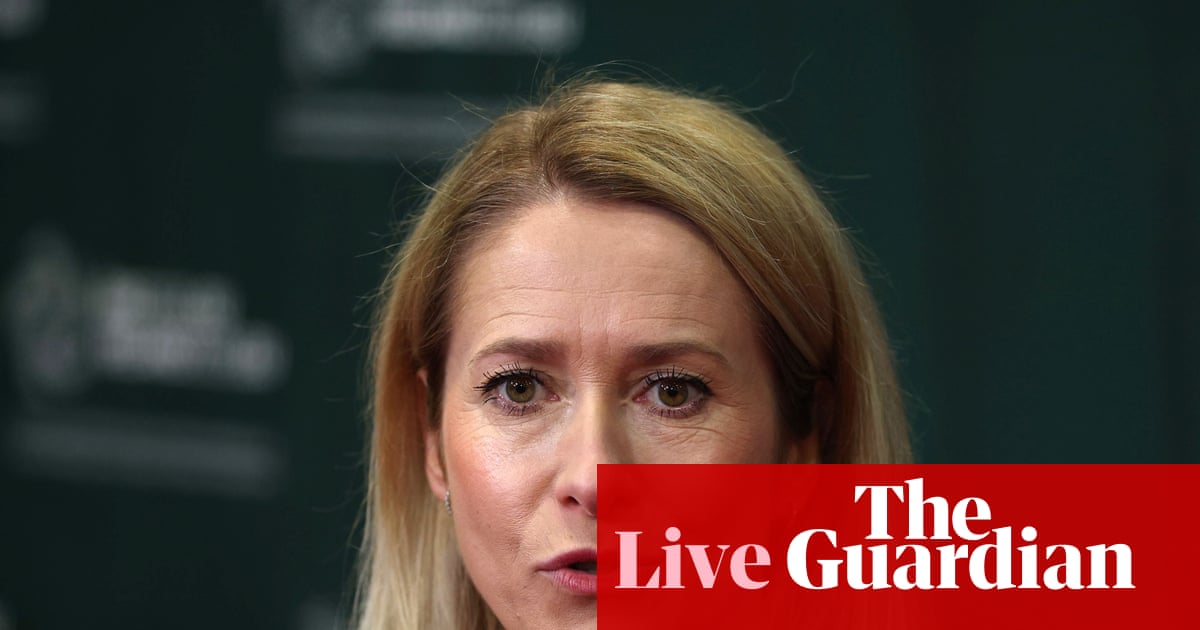
The European Union is grappling with internal tensions over its diplomatic representation in high-stakes Ukraine peace negotiations, as its chief foreign policy official, Kaja Kallas, finds herself conspicuously sidelined. The latest round of deliberations among EU leaders, confirmed as of November 17, 2026, has led to the formation of a negotiation team consisting of national security advisers from France, Germany, Poland, Italy, and the UK, alongside European Commission and Council representatives — but excluding Kallas, the bloc’s own top diplomat.
Kallas, who has served as the EU’s High Representative for Foreign Affairs and Security Policy since December 2024, publicly asserted that, in accordance with the EU treaties, she should lead any negotiations on behalf of the Union. She emphasized her responsibility to help define the negotiators’ mandate and the overarching European objectives and boundaries in peace talks. Despite these statements, her absence from the negotiation table was settled by consensus among member state leaders, reflecting divergent opinions about who should embody Europe’s voice on the world stage.
António Costa, President of the European Council, reiterated that a delegation representing both EU institutions and five key member states would attend the upcoming negotiations. This decision arises as the EU attempts to present a unified front amid deep divisions over strategy and the relative prominence of national versus institutional leadership.
Kallas has been vocal about the dangers of marginalizing the Union’s diplomatic engine. She has consistently argued that a legitimate, sustainable peace agreement between Ukraine and Russia cannot exclude robust European involvement. According to recent reports, she also warned EU leaders that adopting the sequencing of talks favored by Russia could sideline critical issues such as the ongoing ceasefire and inadvertently legitimize broader Russian demands, to the detriment of Ukrainian interests.
The move to sideline Kallas is a symptom of broader unresolved questions facing the bloc. Chief among these is the foundational issue of who best represents Europe in peace negotiations: national security advisers from major capitals, or the pan-European official in charge of foreign affairs? Some capitals see value in including countries like the UK as part of a wider European approach, while others support Kallas’s direct involvement, reflecting tensions that stretch back to the early days of the Ukraine conflict.
No final decision has been reached, and the matter remains under active discussion. EU leaders reportedly have two weeks to arrive at a choice that could shape the trajectory of peace-making efforts and set new precedents for the Union’s collective diplomacy.
The unfolding debate puts a spotlight not just on Kallas’s future role, but also on the EU’s broader capacity to act as a united force in a rapidly changing geopolitical order. For now, the exclusion of its top diplomat from the negotiating team represents an unusually public contest over the Union’s identity and decision-making machinery—at a moment when both Kyiv and Brussels face rapidly escalating challenges on the European continent.