
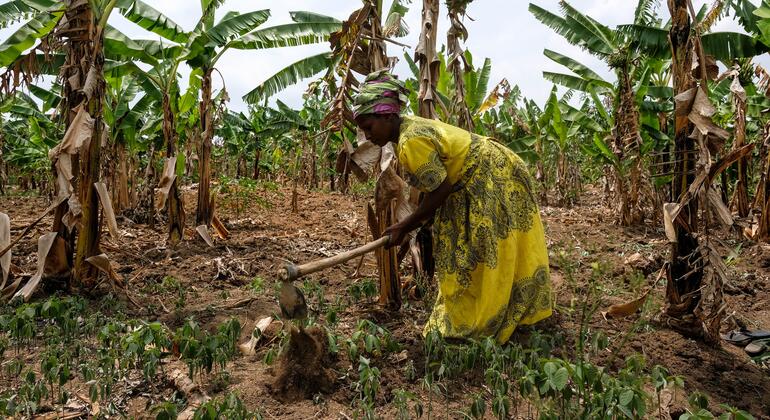
El Niño, the recurring climatic disruption, now threatens not only record-breaking weather but also a potential $11 trillion hit to the global economy, according to a new United Nations agency report. This sobering estimate comes as the International Fund for Agricultural Development (IFAD) highlights the intensity of overlapping crises—where droughts, soaring energy and fertilizer prices, and conflict are combining to test the resilience of food systems and rural livelihoods across continents.
The IFAD report, released at a moment when the 2026 El Niño has already driven up input costs from farm to table, points to a web of shockwaves rippling beyond harvest failures. Small-scale food producers and rural economies in developing countries face not only agricultural setbacks but also disruptions throughout food processing, transportation, and distribution. The scale of the threat has compelled IFAD to advocate for more comprehensive, bundled investments—measures that span not just agricultural inputs and market access, but also financial instruments such as credit and weather insurance. Modeling by IFAD suggests that integrating these supports nearly doubles the effectiveness of income protection for farmers under combined drought and price shocks, compared to financial aid alone.
While global climate and economic turbulence draw headlines, acute crises on the ground continue to escalate, as shown by the plight of more than 7,000 newly displaced people in Mozambique’s Cabo Delgado province in just four weeks. Years of insurgent violence have upended traditional fishing and farming communities, turning the region—roughly the size of Austria—into a patchwork of over 80 displacement sites harboring more than 205,000 people. According to the UN International Organization for Migration (IOM), local populations hosting the displaced often struggle under high poverty and limited infrastructure, with immediate needs focused on food and shelter. The persistence of violence, coupled with rumors of attacks, keeps families on the move and strains overstretched humanitarian support networks.
In Yemen, compounded vulnerabilities reveal themselves in the form of disease outbreaks among children living in crowded, displacement-prone communities. The World Health Organization (WHO), with backing from global health alliance Gavi, is launching an ambitious measles-rubella vaccination campaign targeting nearly a million children under five across 11 southern governorates. With measles and rubella continuing to drive morbidity and mortality—especially as families flee instability—the campaign deploys nearly 2,300 teams, including both stationary and mobile units designed to reach children even in Yemen’s most remote areas. Persistent insecurity and displacement complicate access, raising the stakes for every dose delivered.
What links these crises—whether the economic tremors of El Niño, Mozambique’s displacement, or Yemen’s vaccination effort—is an urgent need for protection that goes beyond isolated solutions. As IFAD’s president notes, resilience is not found in single interventions but in connecting investments so that hard-won gains in one aspect of rural life are not erased by shocks in another. Yet, as El Niño’s reach expands and violence persists, it remains to be seen whether global coordination can rise to the scale of these overlapping threats.