
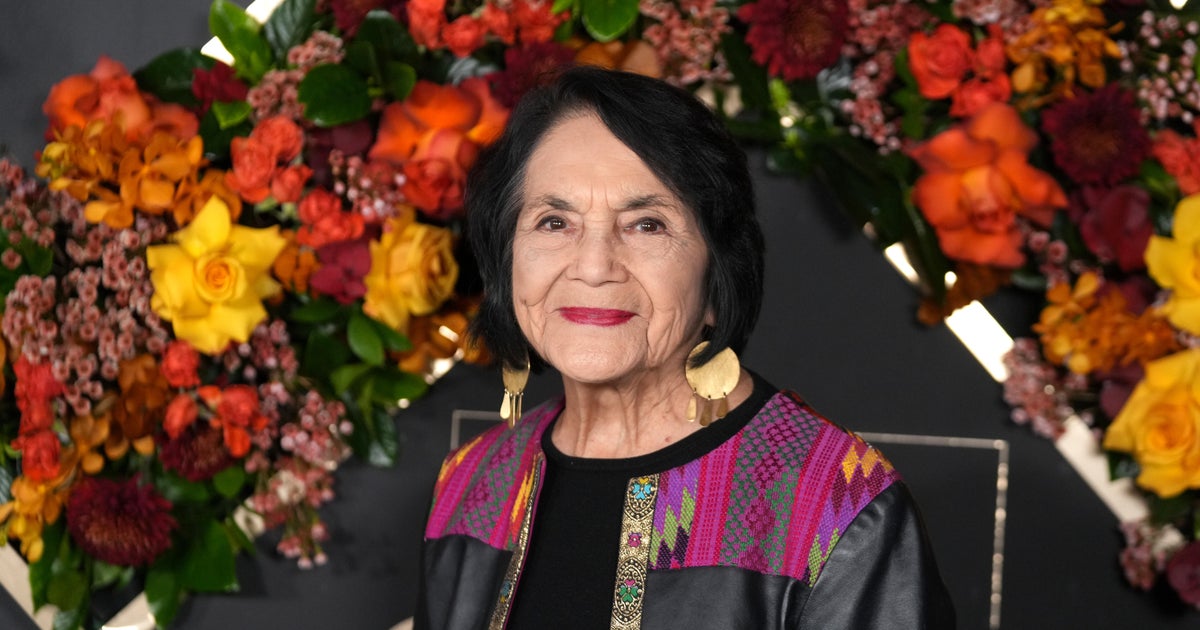
In a profound moment for California and the nation, Dolores Huerta—the legendary labor leader and civil rights activist—was honored with a memorial ceremony at the California State Capitol on November 16, 2026. This public event followed her death at age 96 in Bakersfield on October 28, drawing a diverse crowd including family, community leaders, and fellow organizers.
Huerta’s casket lay in honor beneath the Capitol’s rotunda, surrounded by flowers and banners emblazoned with her iconic rallying cry, “Sí, se puede!”—a phrase she originated that would ripple through decades of social justice movements and be echoed by national leaders. Attendees sang songs and recounted memories, while Indigenous blessings and speakers affirmed her lasting imprint on the American labor movement. (The Guardian, Nov. 16, 2026)
Born in 1930, Huerta grew up in California’s San Joaquin Valley and co-founded the National Farm Workers Association in 1962 alongside César Chávez. Her vision and tactic—marshaling strikes, fasting, and organizing boycotts—helped win key workplace protections for countless farmworkers. Over the years, Huerta’s advocacy broadened to embrace women’s rights and immigrant justice, earning her national honors such as the Presidential Medal of Freedom in 2012. (KPBS, Oct. 28, 2026; The Guardian, Nov. 9, 2026)
Huerta’s influence stretched from the grape fields to the White House, where President Barack Obama credited her example—and adopted her Spanish-language slogan—for his 2008 campaign. Her personal life was interwoven with her cause. She raised 13 children, some of whom now run foundations and educational programs in her name. Yet the reflections at her memorial also came as a period of reevaluation, with Huerta’s own posthumous revelations of sexual abuse by César Chávez in the 1960s prompting new and difficult conversations about the labor movement’s leadership. (KPBS, Oct. 28, 2026)
As participants left the Capitol, many described a sense of both gratitude and renewed determination. In speeches and quiet moments, Huerta was remembered not only for the victories she helped win, but for her unflagging belief in collective action—one that continues to inspire labor advocates, civil rights groups, and generations of activists. Calls for further research and dialogue around the history of the movement underscored the enduring complexity of her legacy.
Memorial events honoring Huerta have continued throughout November in Bakersfield and Sacramento, demonstrating the magnitude and longevity of her impact. For many, Dolores Huerta’s life remains a powerful call to action—Yes, it can still be done.