
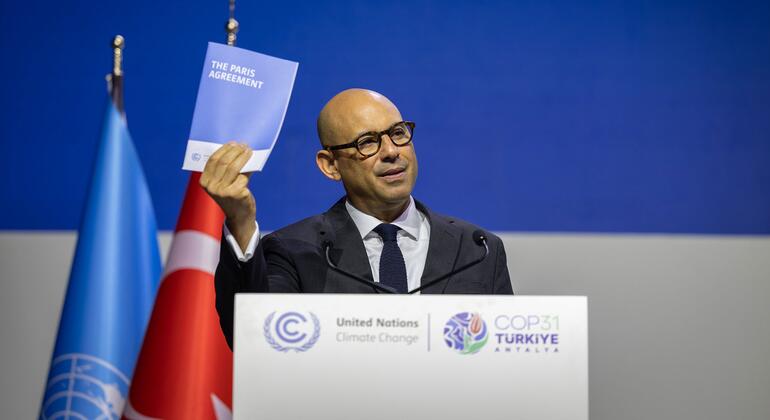
Between a fractious legacy of stalled negotiations and an urgent present marked by violent floods and searing droughts, nearly 200 nations have convened in Antalya, Türkiye, for COP31—the world’s largest annual climate summit—with a mandate to deliver more than intentions.
The Antalya Expo Center, draped in the iconic Turkish tulip, has become the temporary capital of global climate diplomacy. Over 90,000 participants have gathered, underscoring the growing pressure on governments to transform years of pledges into real-world progress. The opening plenary set the tone: UN Climate Change chief Simon Stiell warned that progress on both ambition and fairness remains inadequate. He urged delegates to shift their focus from setting distant targets to accelerating solutions felt in everyday life.
Moving Beyond Talk: Early Negotiation, Concrete Measures
This summit breaks with tradition. Rather than waiting until the chaotic final hours to forge political consensus, Australia—co-leading negotiations with Türkiye—has pressed parties to start shaping a presidency-led decision from the outset. Minister Chris Bowen’s move is seen as an effort to drive early alignment on practical measures, particularly those that can accelerate current commitments into action.
Yet, hurdles abound. The most prominent is climate finance: developing nations are demanding faster, more accessible support for adaptation and cleaner development. Complicated funding procedures and slow disbursement have long frustrated frontline communities and small-scale farmers—a frustration echoed in recent emergencies from Fiji to Bolivia, where drought has killed tens of thousands of livestock and hit over 100,000 families. Negotiators must also close differences on emissions cuts and a “just transition” for workers, as the summit’s deliberations move beyond rhetoric to the struggle over concrete resources and pace of change.
When Climate Change Becomes a Health Emergency
Day one placed human impacts at the center. The summit’s Food, Agriculture and Health Day highlighted risks driven by the intensifying El Niño: the World Health Organization estimates that 3.3 to 3.6 billion people now live in areas highly vulnerable to climate shifts. Extreme heat, for instance, is linked with rising premature births and fatalities, with outdoor workers and elderly most at risk. Though nearly all heat deaths are considered preventable, readiness hinges on integrating climate forecasting into public health systems—a gap the new Antalya Initiative for Health Resilience seeks to close, building on last year’s Belém Health Action Plan.
Food Systems: Cause, Victim, and Hope
Agriculture emerged as both culprit and victim. Food and farming drive a third of global greenhouse gas emissions and are under severe threat from shifting weather and water patterns. Still, farmers in countries like Fiji are leading with local adaptation, trialing new crop varieties and cyclone-resistant techniques. The summit’s review of the Sharm el-Sheikh programme on agriculture aims to give such local voices greater influence—and crucially, faster access to international funding. Speakers from global farmer organizations emphasized how lengthy procedures leave rural communities exposed as crises worsen.
Priority Themes and the Antalya Action Agenda
COP31’s presidency has steered the agenda toward ten priority themes, each with specific global implementation targets set for 2035. Among them:
- Zero Waste and Methane Reduction: Halting the rise in waste generation by 50% through circular economy solutions.
- Food Security: Embedding climate-resilient agricultural practices and comprehensive climate education worldwide.
- Climate-Resilient Cities and Buildings: Lowering building-sector energy intensity by 25% and strengthening urban resilience through financial initiatives like SURFF and the Antalya Compact.
- Climate Implementation Bridge: Expanding mechanisms to turn country pledges into investable projects, with new global pipelines for bankable investments in adaptation and mitigation.
- Youth and Education: Mandating access to climate education and meaningful participation for young people in designing solutions.
- Green Industrialization: Increasing circular materials use in manufacturing by at least 15% to reshape global production with the Antalya Green Industrialisation Compact.
Each theme is backed by associated initiatives or compacts; the Antalya Compact on Energy Efficient Buildings, for example, aims to mainstream energy-saving designs worldwide, while high-level dialogues focus on industrial decarbonization and resilience in public health and food.
Youth Voices, Unprecedented Scale, and the Road Ahead
Youth participation now has institutional weight. Simon Stiell reported that 88% of countries, as of this year, have adopted national climate plans reflecting children and youth perspectives—up significantly from previous years. The hope is to translate presence into influence, as younger delegates press negotiators to avoid backsliding and deliver practical results.
This year’s summit is not expected to produce a breakthrough agreement akin to the Paris Accords, but, for the first time, the design itself demands delivery over ambition. With over 90,000 delegates—the largest ever—COP31 may be judged less by its proclamations and more by its ability to bend entrenched habits toward rapid, measurable progress on finance, resilience, and equity. As António Guterres, in his last appearance as UN Secretary-General at a climate COP, told world leaders: “Face the facts. Follow the science. Choose the future. And never give up.”
Whether the Antalya gathering will mark the turning point from climate promise to climate delivery remains the unanswered question as delegates begin the hard work of negotiation within its halls.