
The sun rose over a gridlocked Antalya as heads of state edged through packed roads to open COP31’s Energy and Transport Day—while inside, diplomats and technocrats faced a congestion of their own: transforming energy systems for a world still wired for fossil fuels. Three years after a historic agreement in Dubai to transition away from oil, coal, and gas, the rhetoric at this United Nations summit was sharper, and concrete proposals amplified the urgency and difficulty of the path ahead.
Brazil’s Voluntary Roadmap: Ambition Meets National Reality
Pushing the conversation from aspiration to action, Brazil—host of next year’s COP30—formally presented its first universal roadmap to phase out fossil fuels. The blueprint does not dictate precise steps but frames how countries might confront interlocking dilemmas: declining oil and gas revenues, the need to diversify economies, exposure to soaring import prices, and the demand for new infrastructure. Ana Toni of Brazil’s COP30 presidency underscored that this is a voluntary, non-binding guide; ‘start now from wherever you are,’ she urged, advocating that nations set clear timelines and financing strategies, with benchmarks to reflect real progress by 2028.
The scale of the challenge is underlined at every turn. UN Secretary-General António Guterres, at the roadmap’s launch, warned that fossil fuel dependence is now an economic as well as a climate risk: since the latest Middle East crisis, the European Union alone has paid over €100 billion in extra import costs, echoing petrol and diesel spikes seen in 130 countries. Entirely replacing one supplier for another only shuffles the exposure—‘disruption anywhere drives up prices everywhere,’ Guterres said.
Türkiye’s Electrification Pledge and the Grid Bottleneck
Türkiye, the conference host, highlighted its own ‘35-by-35’ initiative: a technical but ambitious plan to increase global electricity’s share of energy use from just over 20% to 35% by 2035. This would require a sweeping shift—buses off diesel, homes heated without gas—and, crucially, cleaner sources of power feeding the expanding grid.
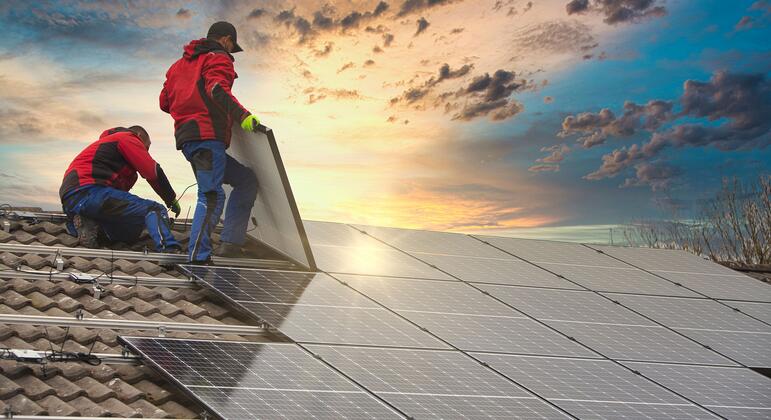
This is where both ambition and optimism hit the hard wall of infrastructure. Dario Liguti of the UN Economic Commission for Europe detailed a bottleneck largely invisible to the public: more than 2,500 gigawatts of energy projects, largely clean, are waiting for grid connections worldwide. Outdated transmission lines mean that even rapid solar and wind construction can stall, or operate below capacity. The call: invest in millions of kilometres of new, smarter lines, fast, if renewable energy is ever to reach potential scale.
Financing the Transition—And Who Gets Left Behind?
The declining cost of solar and wind technologies has done little to ease the toughest barrier for the global south and small economies: high borrowing costs. Olli-Pekka Kuusela of UNU-WIDER highlighted to UN News how, for poorer countries, even competitively priced renewables remain out of reach if capital is expensive. Development banks could narrow the financing gap with lower-interest loans, but so far, investment flows lag behind ambition and technology costs.
For regions like sub-Saharan Africa, the stakes are existential and developmental: half a billion people lack reliable electricity. Here, the energy transition is not merely about mitigation but about opportunity—a rare alignment where climate action could underwrite industrial growth and vital public services. But these benefits are threatened by a further paradox: new electricity systems are themselves exposed to climate risk. In Zambia, persistent droughts have crippled hydropower, forcing blackouts and rationing—a warning that resilience, not just change, must be planned and financed.
A Conference Built on Voluntary Steps and Implementation Gaps
COP31 remains defined by its dual structure of negotiations—binding talks on emissions, adaptation, loss and damage, and an expansive Action Agenda of pledges, targets, and coalition initiatives. The formal process sifts through technical sessions, finance flows (with new Green Climate Fund and Global Environment Facility reports), and ongoing priorities across food security, methane, zero waste, city resilience, and green industry. The Turkish presidency has flagged the gap between commitments and follow-through; the new ‘Climate Implementation Bridge’ is designed to help translate national plans into funded, implementable projects by 2035.
Yet beyond the press releases, the core COP31 dilemma is neither ideological nor abstract—it is logistical and political. National circumstances diverge widely: oil exporters weigh managed decline; importers scramble for price security. Progress on energy transition is uneven, and, critically, voluntary roadmaps and pledges have not yet morphed into internationally binding agreements—nor secured the trillions in investment and infrastructure needed to close the implementation gap.
Inside the conference halls, negotiators grapple with technical language and the search for consensus. Outside, traffic inches through Antalya, a fitting metaphor for the world’s uneven, overloaded grid—struggling to deliver on the promise of a clean energy future, even as the route ahead is finally being mapped.