
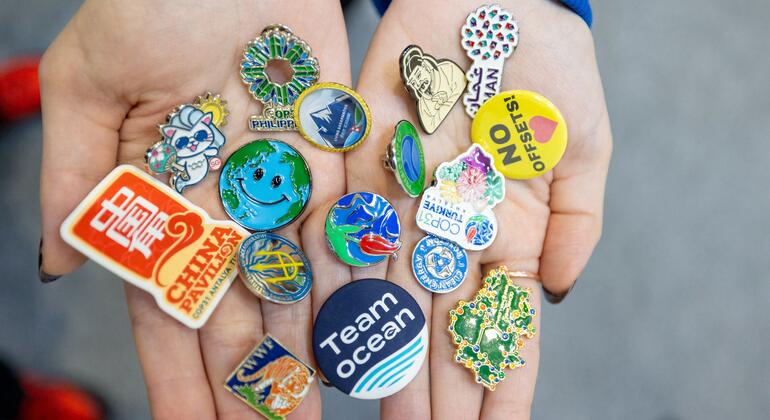
The United Nations’ thirty-first global climate conference in Antalya has reached a critical juncture, with ministers returning to face entrenched fault lines on negotiation points that could shape the planet’s climate strategy for years. The summit, bringing together governments, scientists, and civil society from every corner of the globe, has in recent days showcased groundbreaking technology initiatives—yet the sense of urgency on the ground is magnified by unresolved political battles.
Technology’s Double-Edged Role: AI Pledges and Climate Risks
Among the headline-grabbing developments is the Antalya Artificial Intelligence Pledge, a voluntary framework announced by Türkiye and the UN International Telecommunication Union to curb the environmental impact of rapidly advancing AI. Endorsed by 80 signatories and comprising 271 commitments by Monday, the initiative aims to steer AI innovation towards sustainability—addressing concerns over the surging energy and water demands of data centers. High-level speakers, including ITU’s Tomas Lamanauskas, warned that AI’s current trajectory could double data center energy use by 2030 and that emissions from leading technology companies have already seen a 50% rise in recent years. Despite the promise of AI in everything from forecasting disasters to targeting resilience funding, the summit echoed with reminders that the success of such pledges hangs on monitoring and accountability.
The growing reliance on AI has also revealed vulnerabilities. A new study highlighted unpredictable chatbot performance on climate facts, especially outside dominant languages, raising red flags for both the integrity of scientific discourse and the equity of climate information access. Initiatives like Earth Info Hub’s Beluga aim to bridge these silos by centralizing reliable climate data, a move welcomed at a gathering where activists and policymakers alike stressed the importance of evidence-based action amid a torrent of competing narratives.
Industrial Decarbonization: Turning Ambition into Action
Parallel to digital pledges, COP31 spotlighted a new Antalya Green Industrialization Compact, uniting governments in a bid to clean up industries—steel, cement, and more—responsible for vast greenhouse gas emissions. UNIDO’s Ciyong Zou and delegates from the Climate Club underscored the risk of ‘locking in’ polluting infrastructure for decades if urgent investments in cleaner technology aren’t made. Unlike past summits where such aims were perceived as futuristic, the message this week is clear: scalable solutions are available, but the need for finance and access, particularly for developing economies, is acute.
Political Deadlock: Divisions over Finance and the Fossil Fuel Transition
Yet, even as announcements on AI and green industry drew attention, the core climate negotiations confronted familiar obstacles. Ministers were presented with a draft of a comprehensive decision late Monday, but deep disagreements persisted—not only regarding its contents but even over whether such an overarching resolution should be adopted at all. At stake are disagreements over who pays for climate action, how vulnerable countries adapt, and the pace at which fossil fuels should be phased down. While activists warned against symbolic cover decisions that might distract from concrete measures, others criticized just transition mechanisms as hollow without true financial backing—one activist lampooned them as inviting workers ‘to a table with no food, no place, no cutlery, and very bad wine.’
A particular moment of tension arose over climate science. Several countries, especially those most exposed to climate threats, insisted on an accelerated timeline for the next Intergovernmental Panel on Climate Change (IPCC) report to inform the 2028 Global Stocktake. However, resistance from others has delayed consensus, threatening to leave negotiators without the latest scientific assessments before pivotal benchmarks. Figures such as Laurence Tubiana and Mary Robinson publicly urged negotiators to reaffirm their commitment to science to avoid undermining the credibility and effectiveness of the global process.
Initiatives in Action: Broader Climate Agenda
While debates in the high-level ‘Divan’ assembly grip attention, the parallel Global Climate Action programme—unfolding in side events and thematic days—has focused on monitoring real-world progress and exchanging practical solutions across sectors: decarbonizing energy, building urban resilience, and transforming food systems. These discussions are intended not just as showcases but as pressure valves and laboratories for accelerating the implementation gap highlighted throughout COP31, especially for vulnerable cities and countries already experiencing climate stress.
Unanswered Questions as Clock Ticks Down
As COP31 heads into its final days, participants await signs that the political momentum will shift towards consensus rather than overtime bargaining. The largest unresolved issues—constructing a fair finance architecture, committing to fossil fuel phaseout, empowering workers, and safeguarding the role of science—now rest with ministers facing tough, possibly historic, decisions. Activists, negotiators, and observers are united in one belief: without agreement on these fronts, this COP risks being judged not by its number of endorsements or innovations, but by its ability to bridge divides at a moment when the world’s climate ambitions are most at stake.