
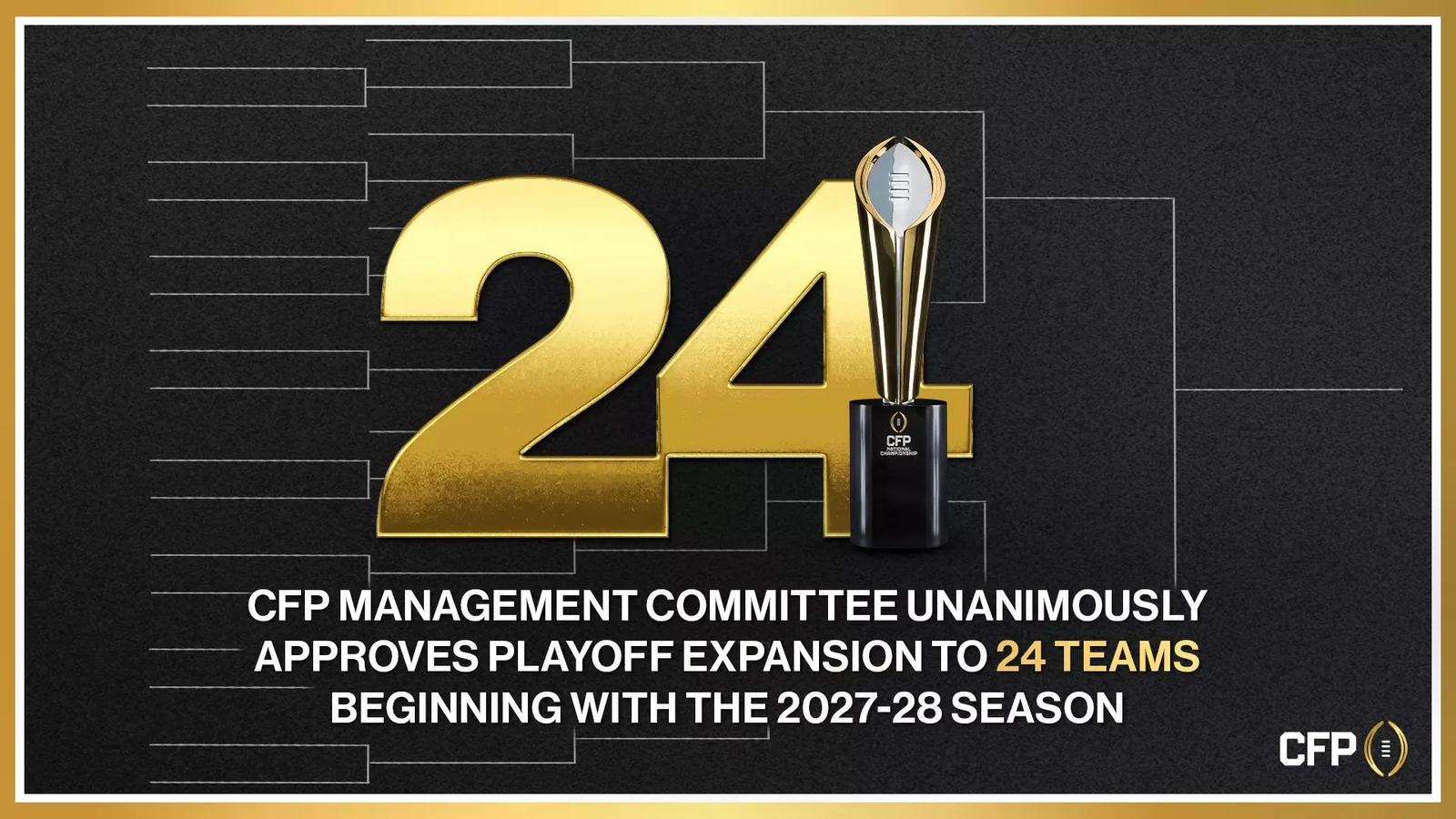
The College Football Playoff (CFP) is set for its most ambitious overhaul since its inception, with a unanimous vote by the CFP Management Committee confirming an expansion to a 24-team format beginning with the 2027–28 season. The move, formally announced November 9 in Irving, Texas, marks a seismic expansion from the 12-team model approved only two years prior and will directly impact conference structures, media coverage, and postseason traditions across college football.
Under the newly adopted structure, 24 teams will vie for the national title, with the playoff field comprised of four automatic bids awarded to the champions of the ACC, Big Ten, Big 12, and SEC. Another automatic spot will be reserved for the highest-ranked team from the remaining Football Bowl Subdivision conferences—American, Conference USA, MAC, Mountain West, Pac-12, or Sun Belt—while the remaining 19 berths will be filled by at-large selections determined by the CFP Selection Committee (CFP announcement).
The expanded playoff will feature 23 total games, including 16 on-campus matchups hosted by higher-seeded teams. Traditional bowl venues—the Cotton, Fiesta, Orange, Peach, Rose, and Sugar Bowls—will continue to host the quarterfinals and semifinals, preserving some measure of historical continuity within the sport.
This transformation is accompanied by a major new media rights deal: ESPN will hold exclusive broadcast rights for all CFP games through the 2031–32 season, reportedly agreeing to a $1.7 billion increase over five years for the expanded slate of games (Associated Press). The influx of revenue is expected to reshape the business dynamics of college football, amplifying both exposure and financial stakes for participating schools and conferences.
The format shift fundamentally alters conference operations as well. Conference championship games in the Power Four (ACC, Big Ten, Big 12, SEC) are slated for elimination, with new requirements instead mandating each Power Four school play at least 10 qualifying regular-season games. These must include a mix of conference matchups and contests against fellow Power Four programs or Notre Dame (CBS Sports).
Reactions from key programs such as UCLA and USC have been supportive, citing expanded opportunity and greater national exposure as benefits of the new structure (Los Angeles Times). However, some observers and analysts warn that the absence of conference championship games and a broadened playoff field may diminish the value of regular season play and tradition-heavy conference races, raising concerns about shifting priorities in the sport (AP News).
The specific bracket structure, including seedings and first-round pairings, will be determined by the CFP Selection Committee closer to the launch of the new format. With the change now officially adopted, the college football landscape is preparing for a season of dramatic transformation—one that promises to shape everything from athletic scheduling to postseason strategy and the sport’s defining narratives in the years ahead.