
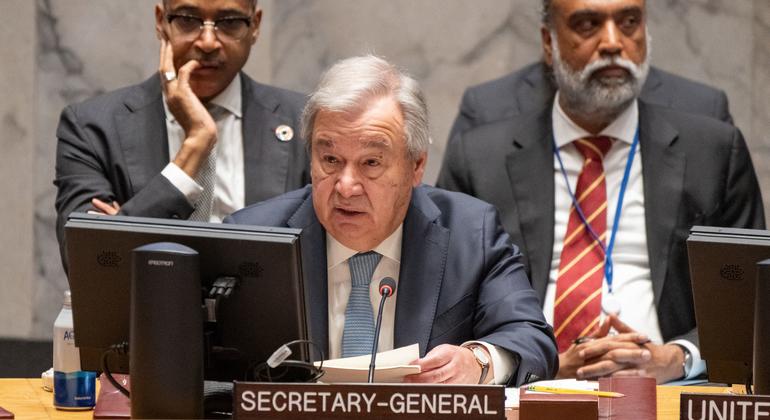
The world’s collective ability to confront the dangers of artificial intelligence continues to lag behind the technology’s rapid evolution—a rift the Bridgetown Special Summit on AI Safety now brings into sharp focus. Hosted in Barbados and co-chaired by UN Secretary-General António Guterres and Prime Minister Mia Mottley, the summit assembles 150 participants, including ministers from Norway and Finland, AI industry leaders, safety experts, and diplomatic representatives from the United States and China.
The urgency is widely recognized at the highest levels: while only three world leaders broached AI risks at the 2017 UN General Assembly, that figure soared to 135 this year. Calls to regulate and provide oversight for “frontier” AI models have gained traction, with Norway and Finland leading an initiative signed by 32 countries and the European Commission, and a parallel proposal from a recent Paris summit also drawing international backing. Yet, any consensus faces the thorny issue that countries’ readiness to govern AI varies dramatically.
At the heart of the summit is a proposal from the Secretary-General for a multilateral risk management framework—short of treaty or regulation, but intended as a blueprint nations can adapt for strengthening national AI safety infrastructures. As UN Special Envoy for Digital and Emerging Technologies Amandeep Singh Gill notes, while high-income states have hundreds of specialized incident response teams poised for technological crises, many low-income nations contend with six or fewer, leaving much of the globe exposed to risks that travel as swiftly as digital code.
Summit discussions steer clear of the contentious terrain of military AI and instead focus on practical tools for non-military safety: providing the means to test imported models, respond to cybersecurity breaches, and extend access and linguistic inclusion, all in service of closing the technology capacity gap. The specter of unequal AI development looms large—not just in technical sophistication, but in the ability to benefit from and safeguard against AI advances.
No binding agreement will emerge from this first gathering. Instead, organizers anticipate concrete calls to action and new pledges around risk sharing and support mechanisms. In a marked change from just a few years ago, AI is no longer a subject for distant speculation, but an urgent, borderless policy issue demanding both international analysis and action robust enough to keep pace with runaway advances.
Yet a central question will remain after Bridgetown: Can a voluntary global framework—and the enthusiasm of a rising roster of participating states—sufficiently bridge the gulf in AI readiness, or will nations left without technical muscle remain perpetually vulnerable, even as risks mount?