
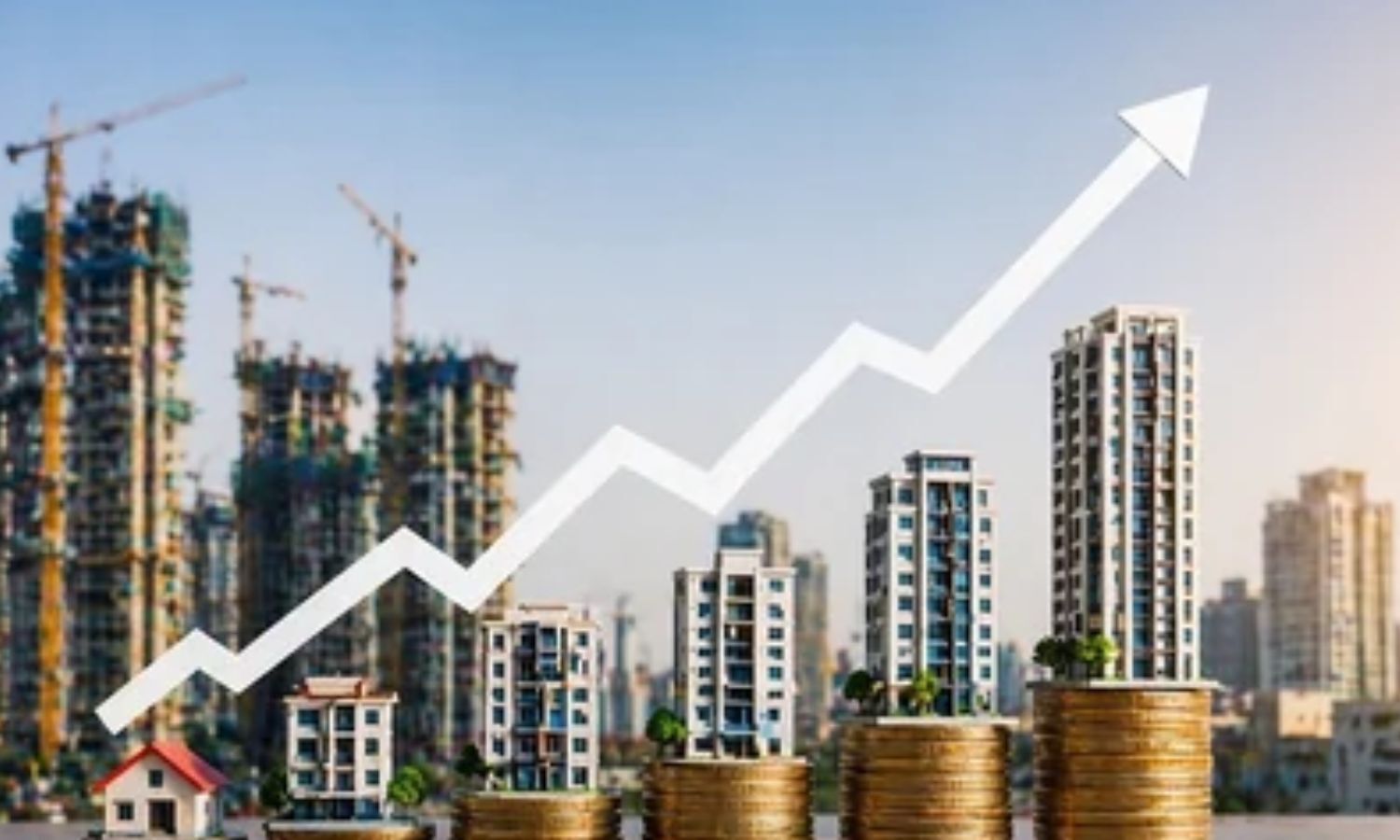
A marked shift towards premium residential properties is reshaping South India’s housing market, as buyers increasingly favor high-end apartments over affordable homes. From January 2025 to September 2026, developers across Bengaluru, Hyderabad, Chennai, and Coimbatore have seen unprecedented demand in the ₹1 crore and above price segment, fundamentally altering patterns of supply and sales strategies throughout the region.
According to industry analyses supported by consultancies such as Knight Frank and JLL, apartments priced at ₹1 crore or more comprised a commanding 72% of all sales in India’s top seven cities during the first nine months of 2026, up from 62% just a year prior. This represents both a deepening and broadening of a trend first documented in 2025, when premium homes captured half the country’s total sales—a year-on-year growth of 14% in that segment.
South India’s Growth Centers
Within southern India, Hyderabad recorded the most dramatic rise. Housing sales jumped 15% in the third quarter of 2026, accompanied by a striking 120% surge in new project launches. Industry observers have noted, however, that this rapid escalation in supply brings with it new concerns about inventory accumulation and potential market saturation.
Bengaluru, too, has experienced a sustained premium boom. In the same period, the city reported a 12% increase in overall sales, with most new developments clustered in the ₹80 lakh to ₹2.5 crore bracket—a range that straddles upper-middle and luxury market segments.
Meanwhile, Chennai and Coimbatore are seeing steady consolidation in the luxury housing sector. Notably, a prominent Chennai developer recently unveiled plans for nearly 1,000 additional high-end homes across both cities, further confirming the depth of regional appetite for upmarket offerings.
Market Forces and Diverging Fortunes
The flourishing premium sector stands in stark contrast to the struggles of the affordable housing segment. Sales of homes priced below ₹1 crore have fallen by 23% year-on-year, highlighting affordability as a growing concern for households at the lower and middle ends of the economic spectrum. Nonetheless, a confluence of factors—urban migration, stronger infrastructure, and heightened lifestyle expectations—appear to be powering buyers toward larger, better-equipped homes in prime urban areas.
Developers, recognizing the nature of this shift, ramped up launches by 15% year-on-year (to over 259,000 units) between January and September 2026, with price appreciation particularly sharp in Bengaluru and Chennai. Still, the market’s historic momentum now provokes questions about sustainability: while some reports highlight swelling inventories in cities with copious new builds, others maintain that demand for quality housing persists ahead of supply, keeping prices buoyant.
Challenges Ahead
This rapid evolution invites scrutiny over whether developers can manage new inventory prudently and avoid overshooting buyer demand—particularly in Hyderabad, where the pace of new launches has sharply outstripped recent absorption rates. At the same time, the persistent decline of the affordable segment presents a growing policy and business challenge, underscoring a need for more inclusive urban housing strategies.
The premium wave in South India’s housing market continues to transform the sector’s landscape, catalyzing investment, innovation, and at times, concern over long-term balance. With buyer preferences unlikely to revert quickly, the next phase will see developers—alongside policymakers—grappling with how to serve a market growing more polarized by price and aspiration.